What’s the BUZZ?

Jeskola BUZZ, coded by Oskari Tammelin, is a modular software music studio, there is nothing like it in my experience, and it is free.

I recently found Buzz 1.2, with builds as recent as 2016 – I thought this was a lost project as I have been using a buggy unstable version since the mid 90’s when Oskari lost ALL his source code (in a file system catastrophe). The old version “sort of works” on windows 10, but is not stable, crashes a lot. I am delighted to say this new version seems slick and pretty stable, and most of the most aggravating GUI issues have been solved with style and class.

This tool is like no other – it starts with a bewildering and esoteric collection of MACHINES. Machines are either GENERATORS (they make noise through a variety of synthesis techniques, or play/manipulate samples, used as leaves to sound branches), EFFECTS (these change sounds and are used in-line, on the way to the master desk), or CONTROLLERS (these modify machines live):
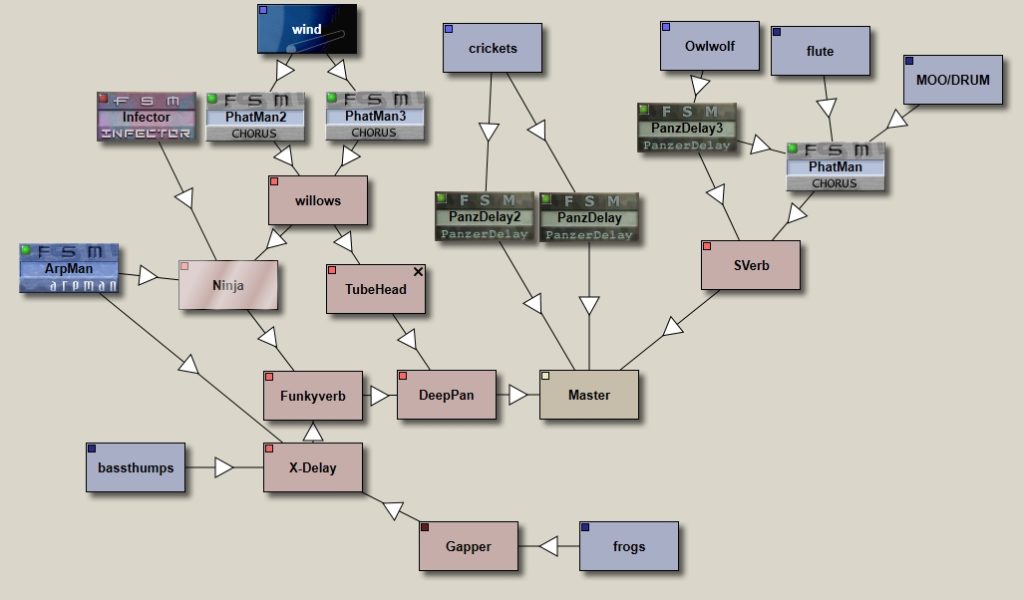
BUZZ Machines
Buzz noise making apparatus assembled from MACHINES

Once you have assembled a noise making apparatus (ie. picked your machines and effects, and wired them together to end at the MASTER, you then need to define PATTERNS for your noisemakers:
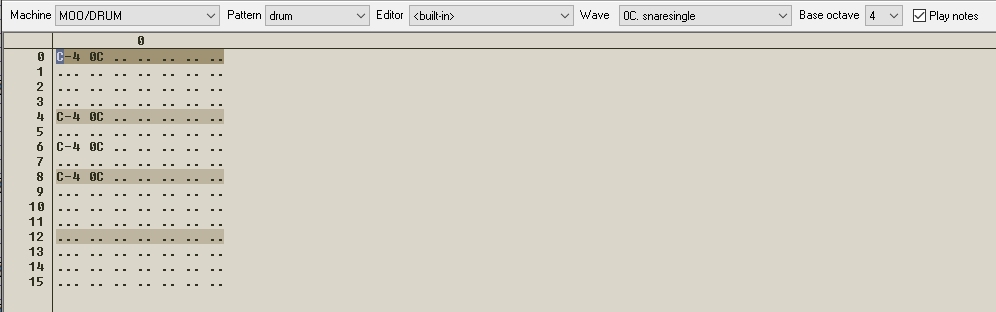
a BUZZ PATTERN
Buzz Machine Pattern

Once you have defined patterns (either series of pitched notes, parameter lists and/or triggers), you plug these patterns into a sequencer to play them alongside other patterns:
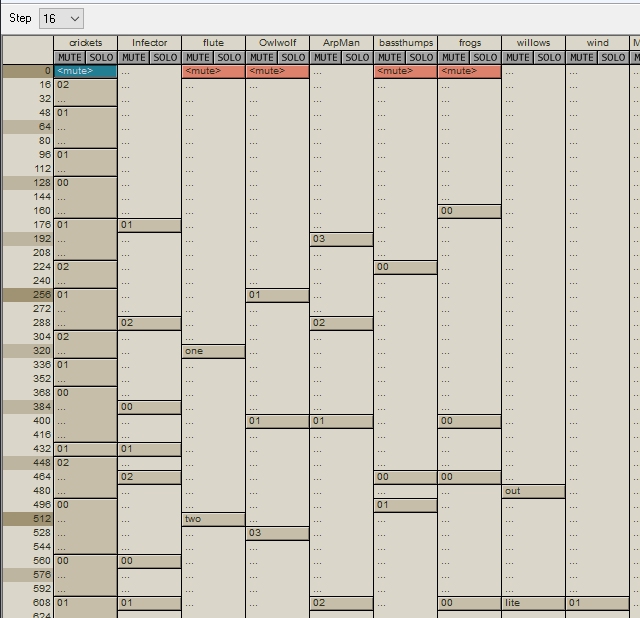
BUZZ SEQUENCER
Buzz SEQUENCER

This program allows me to make noise I find musical – as synthesisers go it seems pretty nerdy, I am hampered by the fact that I have little musical notation I understand (I cannot easily read sheet music), but have a fairly good ear for pitch and tone, can understad C5, D3 etc, and am not afraid of HEXADECIMAL which is used for level settings (00-FF), so have been winging it fairly successfully. There are LOTS of machines I can drive, even more I have no idea how to use, yet – what an adventure.

I look forward to combining this with noises from my Theremini – could be a hoopy mix, we shall see.
Context

I have been interested in music synthesis for as long as I can remember – indeed as a kid I used to “collect” music cassettes of music artists that pioneered the new toys that were synthesisers: Walter Carlos (Switched on Bach), Jean Michelle Jarre (Oxygene), Vangelis (Spiral), Kraftwerk (everything), Gary Numan (Pleasure Principle) … the list became endless as the music industry embraced this new instrument.

Not feeling like I had a musical bone in my body, I had never imagined making music was for me, until I came across a program called Buzz, and, encouraged by a stellar group of students (Max, Anthony and Sam) started making noises under a collective called UoD.

I had dreamed of owning a Theremin ever since I had heard one in the mid 80’s in a vintage recording of Clara Rockmore playing “The Swan” accompanied by piano. My best mate, Michael, and I talked about this obsession and many times hatched plans to get one. Originally we were going to buy a kit and solder it together, then we were going to get a classic Moog theremin, then we dithered, re-invented the conversation and took it through another 4 rinse cycles all talk, no action.

Sadly, this year (25th January 2021), Mike passed on, and I am not sure I have yet come to terms with the fact that I now live in a world where he is not. After careful consideration, I decided fuck it, let’s finally do this thing, dedicating the musical (?) exploration to him (or rather his favourite non de plume: Dr Winston O’Boogie). My only hope is that the noises I make using it do not cause him to spin in his grave.

The Theremin was invented around 1920 by Russian physicist Lev Sergeyevich Termen – commonly known later as Léon Theremin. This blog premiered around the 100th birthday of this spectacularly bizarre instrument. It is widely thought that synthesizers are a relatively modern invention – certainly easy to use ones are, but the genesis of FM synthesis and related generative electronics contain a plethora of noise-making apparatus that eventually coalesced into playable instruments. The Theremin is a fairly rare beast – nothing like it existed before, little compares to it now, but it recedes into musical obscurity only if no one uses it – I intend to try.

DISCLAIMER: After a LOT of research, I decided to purchase a Moog Etherwave Theremini. Purists will immediately bristle, arguing the Theremini is not a “real” theremin, because it is a digital re-work of an analogue instrument. Fair enough. Operationally, you play it the same, the noise it makes (after firmware updates) are (to my ears) identical, you play it without touching it and is universally considered “weird”.

I chose the Theremini because of the extra things it can do beside sound like a classic Theremin. I will not apologise for this decision, but as I learn to use it, I may regret the choice – we shall see. I am currently learning pitch control, classic theremin, no effects. It is difficult. That is the appeal. Anything worthwhile is often peppered with difficulty.