
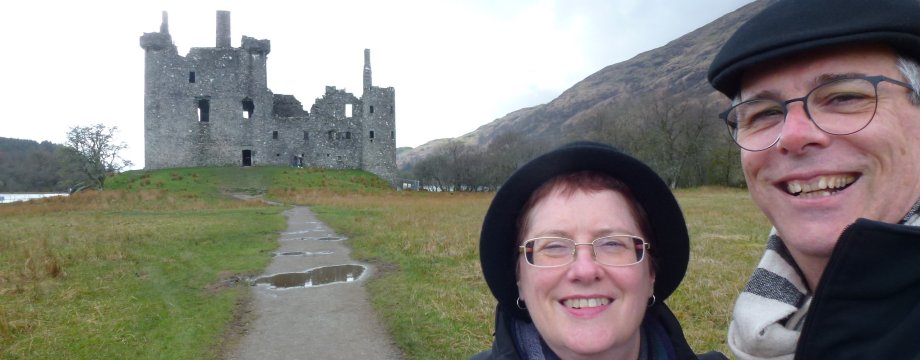
After our morning among the giant Tingle trees, we began the journey east towards Albany. We have gotten used to the large distances between centres in WA, so broke the trip up into manageable chunks, with either tea breaks, wee breaks or scenery stops as driving tired is nobody’s idea of a good time.
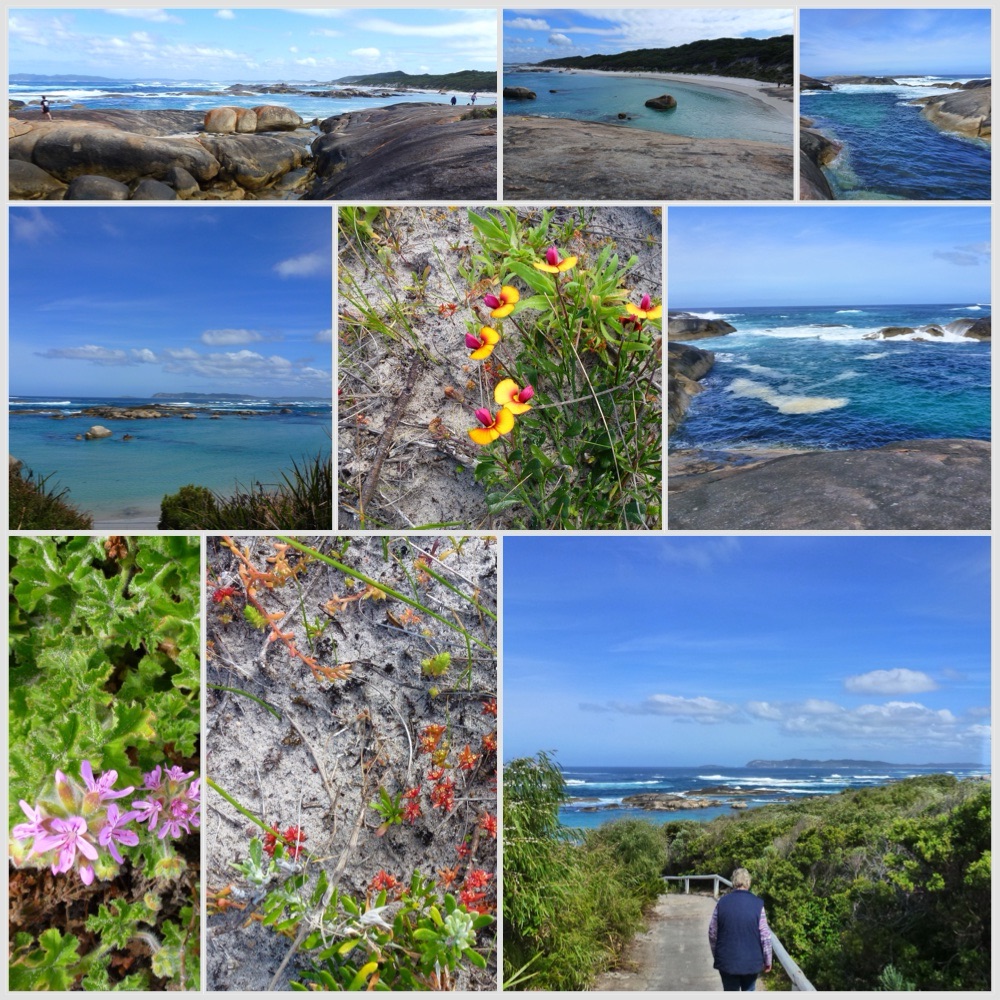
Our first scenery stop was Greens Pool – a sheltered inlet on the coast that has a lovely beach beside a rocky headland. Huge granite boulders and rock shelves protrude out into the wild southern ocean seas and the water looked lovely but cold. I can imagine this area is popular in the summer months because it offers sheltered waters ideal for swimming and snorkeling – only the brave wetsuited looneys were in the water today. We rock-hopped around the headland with the hope of seeing Elephant rocks, but they were inaccessible due to pathway redevelopment.
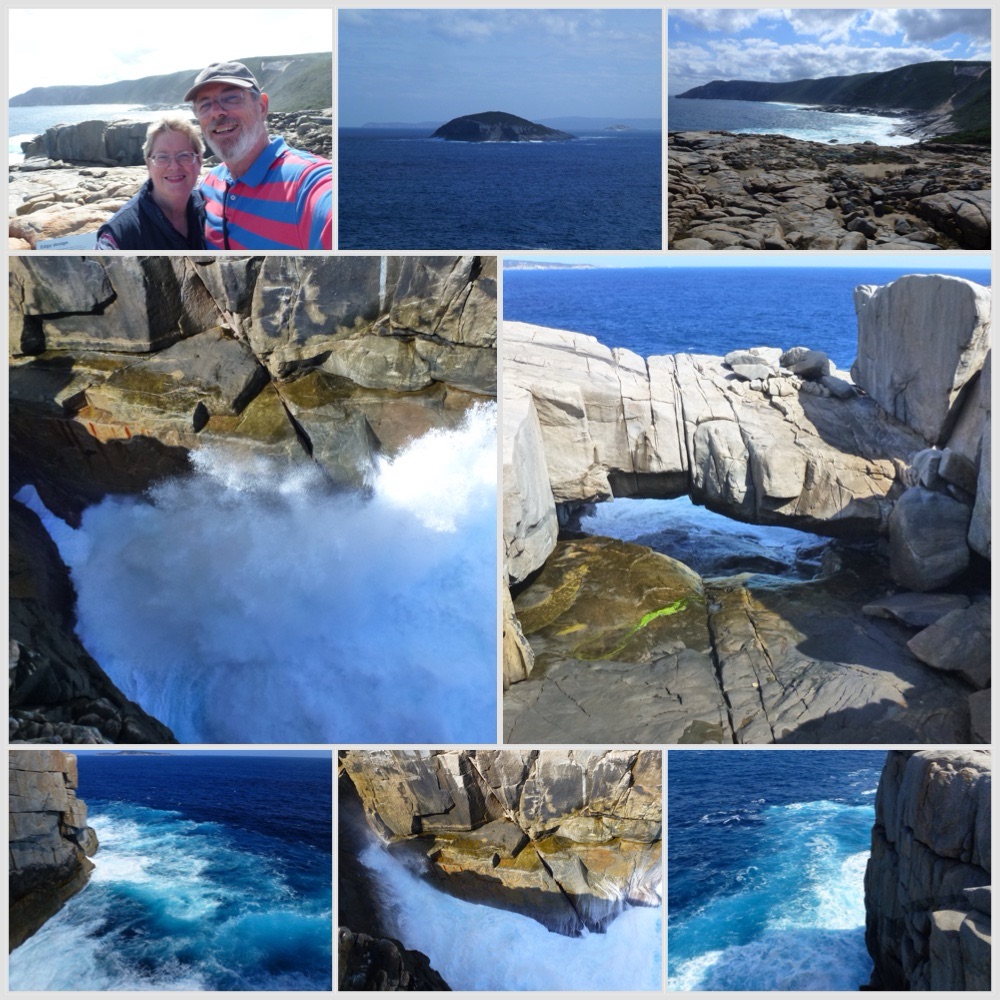
We then motored towards Torndirrup National Park and explored the coastal features there – again huge granite headlands cracked and carved by the pounding surf into “The Gap” – a developing channel inland that surf and surge pound relentlessly, sending sheets of salt spray everywhere. We then walked around to “Natural Bridge”, a span of rock that has been undercut by the ocean. So spectacular as the waves crash and boom underneath, judging by the cracks in the “bridge”, this too will crumble with time. We have been impressed by the rugged coastlines, with such variety to explore.
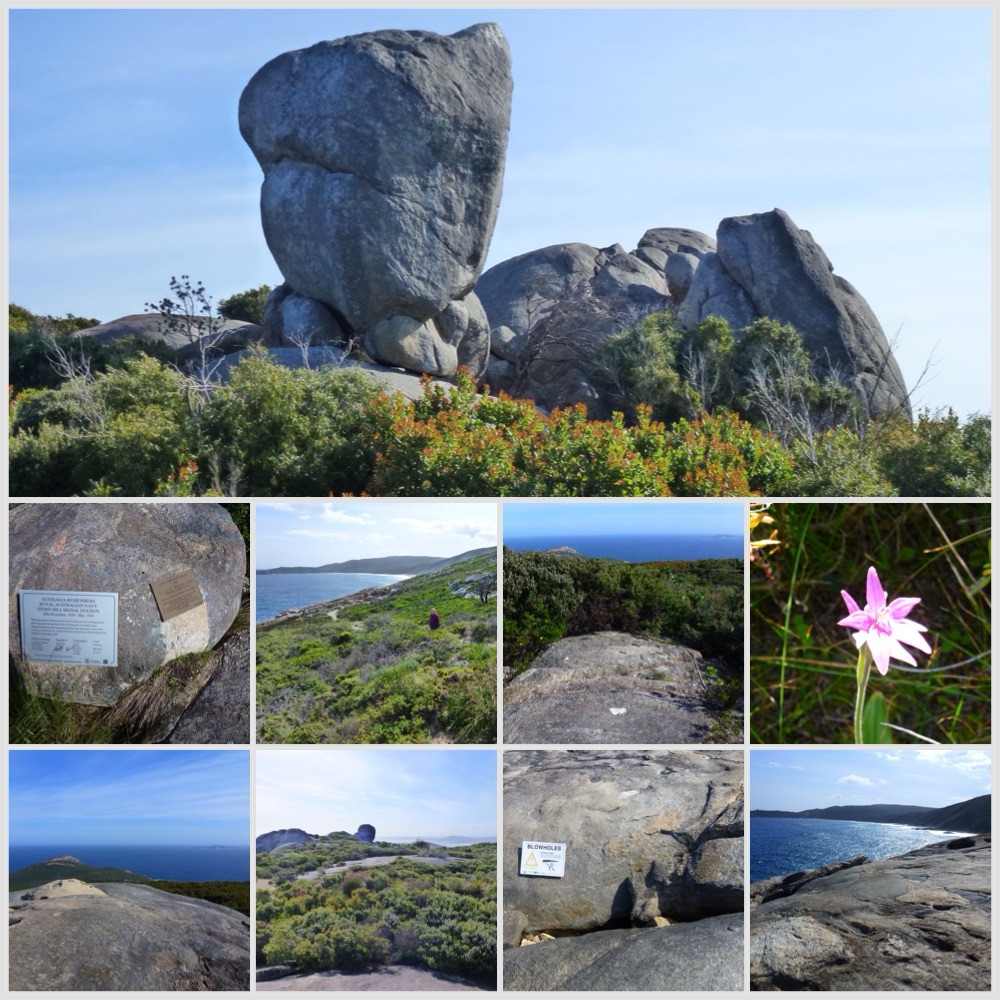
We then drove to “The Blowholes”, and rock-hopped another rugged stretch of coastline, in this case the waves are in the process of undercutting the rocky coastline. When large waves come in they crash under the lip of the stone and there is a huge compression noise as salt spray gushes out of the small opening further up the rock platform. The noise and feeling of the sound was deep and angry, all very impressive. We drove to Stony Hill and walked to the top – this area was once a lookout post during the war, remnants of the fixtures and placement were still visible. From atop the hill we got magnificent 360 degree views of the surrounding area.
Suitably rested and fresh aired out, we popped back in 13boop and headed into Albany to a small apartment accommodation to unpack, reorganise and rest before a fabulous Steak dinner at Rustlers Steak House. It was late, we were tired and we had a good night’s sleep.
Next day we were up and out doing some exploring the township of Albany. It was a grey day, a little cold and windy but we did some of the public art trail around the city centre. I am not sure I like the town layout – they have opted for a bunch of divided roads, one way streets and waaaay too many roundabouts – driving around was confusing. We then drove to the Museum of the Great Southern.
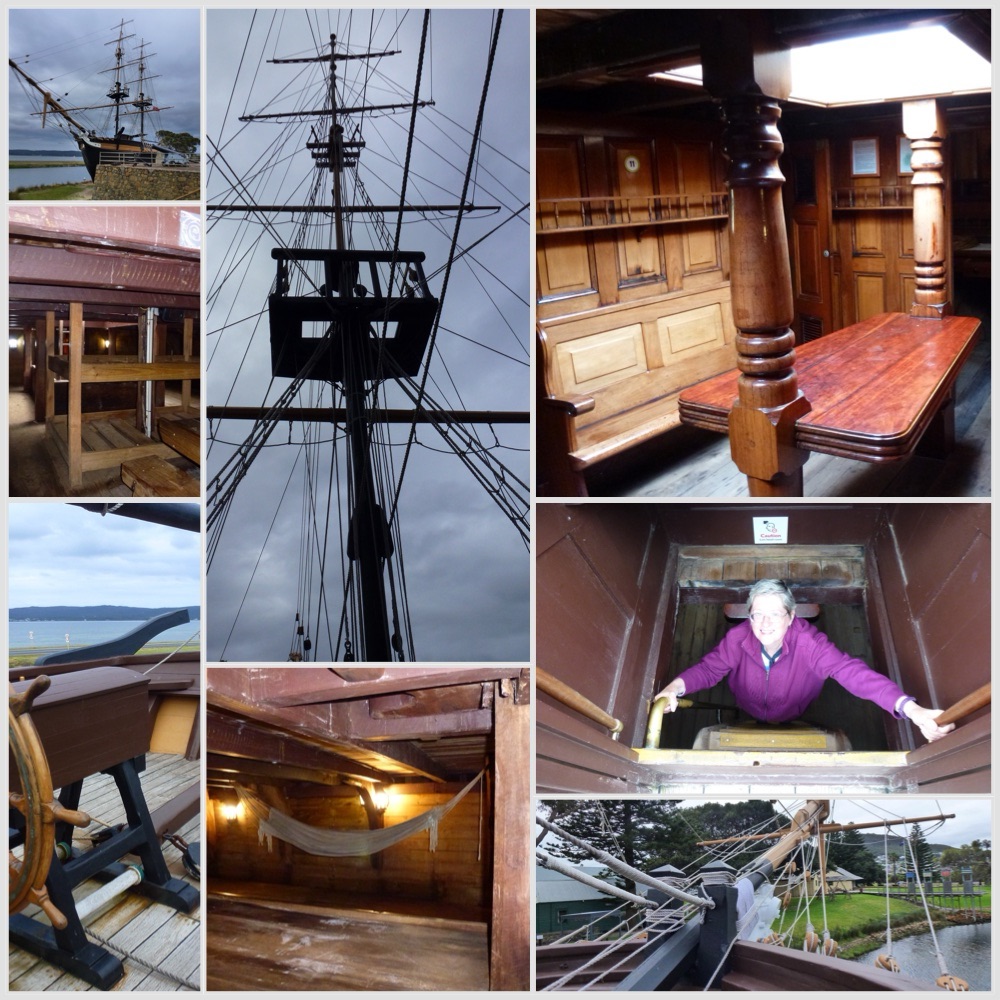
They had in dry dock a replica Brig – apparently a very common type of square rig ship in the times of colonisation – this one was modelled after a ship that made the journey to Albany from Sydney. You could explore above and below decks and this was fascinating if very cramped. Across 3 levels below decks there were living and storage facilities – some half height. I guess people were shorter then because the bunks and hammocks were tiny. We learned there were about 60 people, sheep, chooks, rumours of a cow and supplies aboard this tiny vessel – I cannot imagine that many people crammed into such a tiny space for months at sea, nor how they managed supplies, water, animal feed and waste – clearly the pioneers were made of sterner stuff. Such an interesting visit. The museum also had a fascinating collection of artefacts and stories from indigenous and invader perspectives. The museum was part of an historic building cluster, with schoolhouse, bakery and other buildings either set up as shops or display areas.
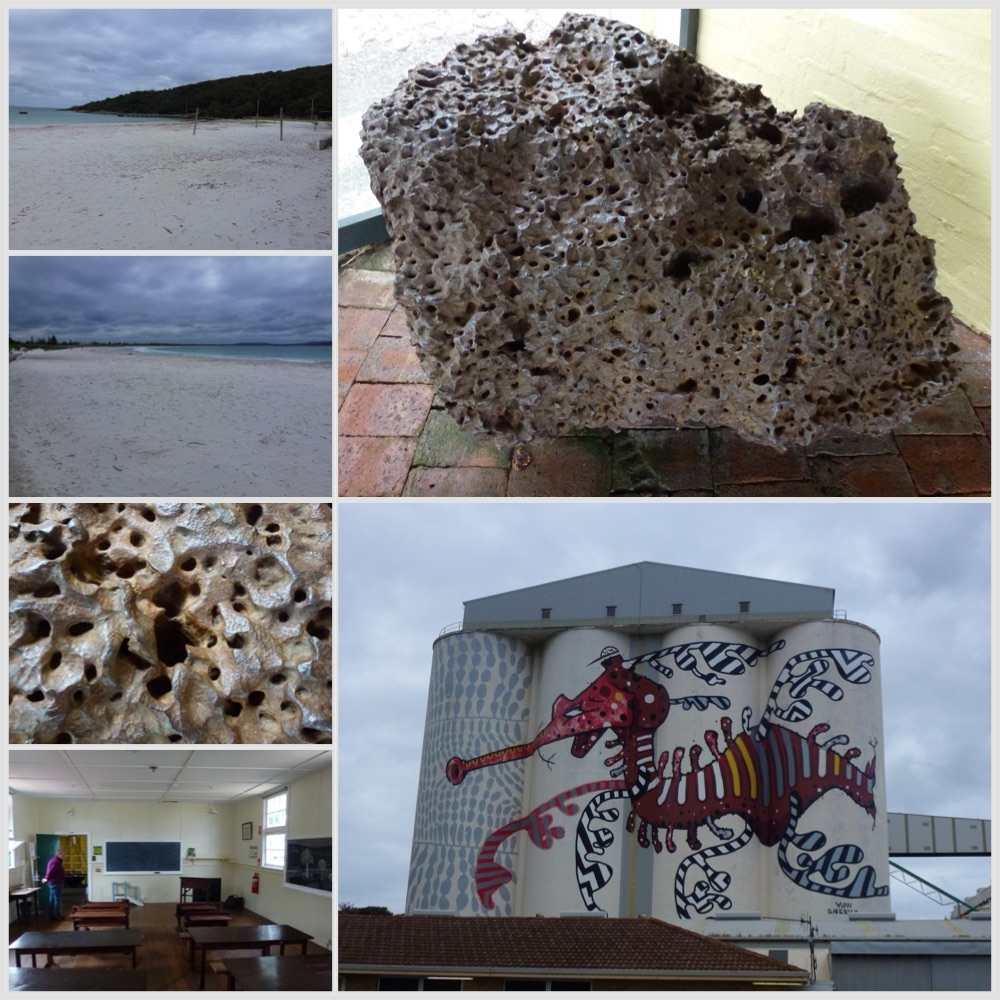
The museum also had a meteorite – I have never seen one before – this iron “sponge” weighs many tons. After we were done at the museum, we headed out for a scenic drive around the area, locating another bit of “Silo Art” – this time a lovely leafy seadragon. Tired out, we headed back to our accommodation and began the process of “tetris packing” to re-locate our belongings into just 2 suitcases and 2 backpacks. We started the process of shedding those bits of our travel pantry we no longer needed, cooked a hearty evening meal and retired knowing we had a long day driving the next day therefore an early start.
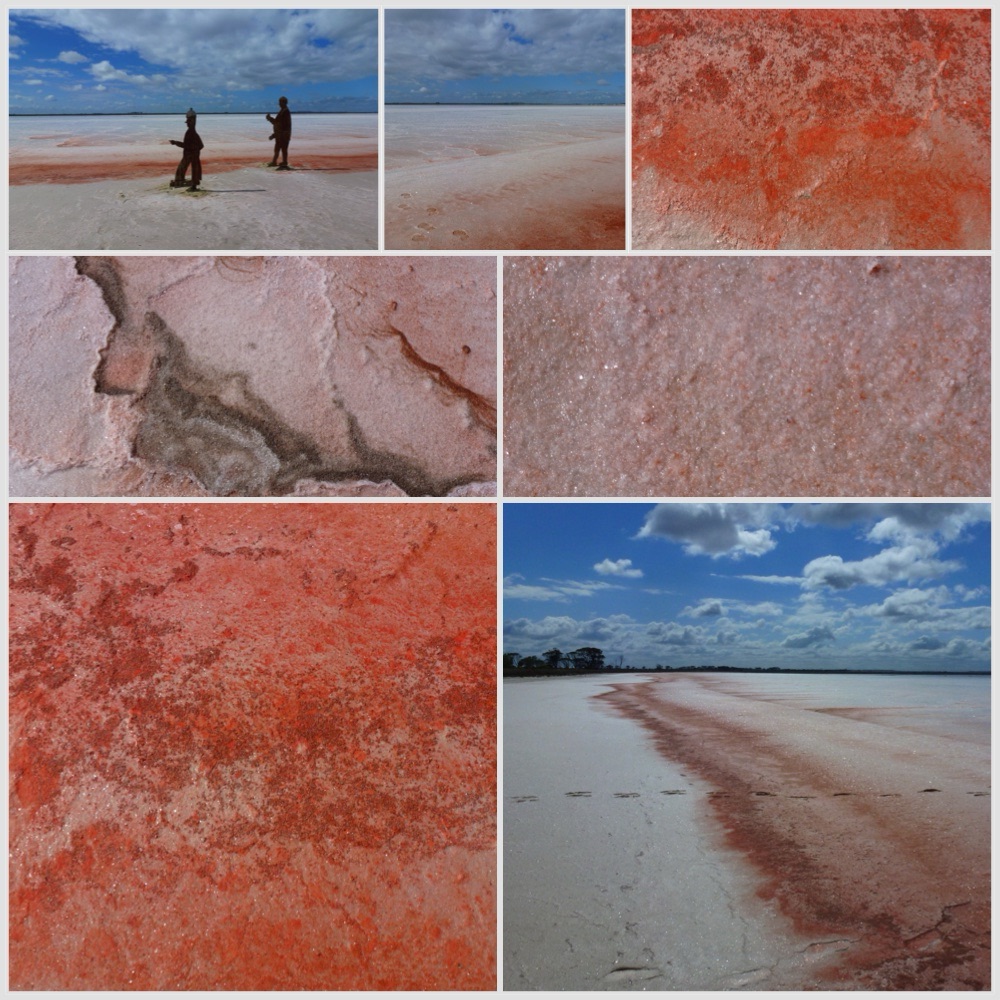
Next morning, after a nice breakfast, we packed up 13boop and headed north, away from the coast. The landscape changed as we headed into the southern wheat belt, and we noticed on google maps things marked as lakes – one of them we drove near so we stopped and had a look – it was a vast salt lake, stained pink by bacteria and mineralization. Walking on the lake bed it crunched underfoot, sheets of salt crystals – all very alien.
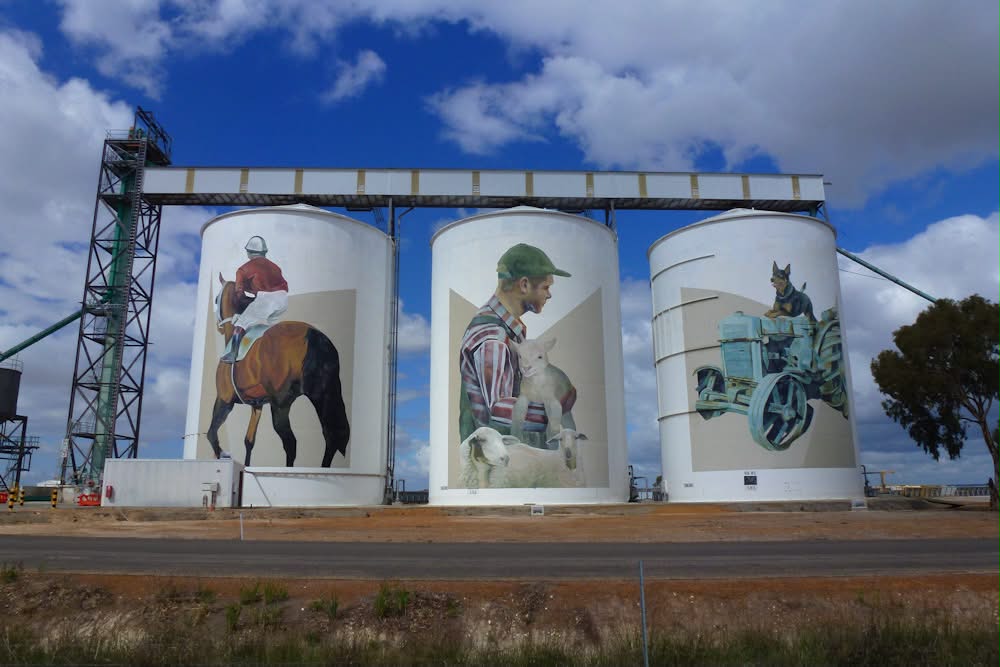
We had a number of planned stops but near Lake Grace we stopped to view some more Silo Art. In the wheat belt we noticed loads of silos and vast storage sheds, presumably for the wheat and canola growing here. Clearly the conditions are just right because we saw mile after mile of fields full of healthy crops. It must be a nightmare in salt management given how many salt pans are around also.
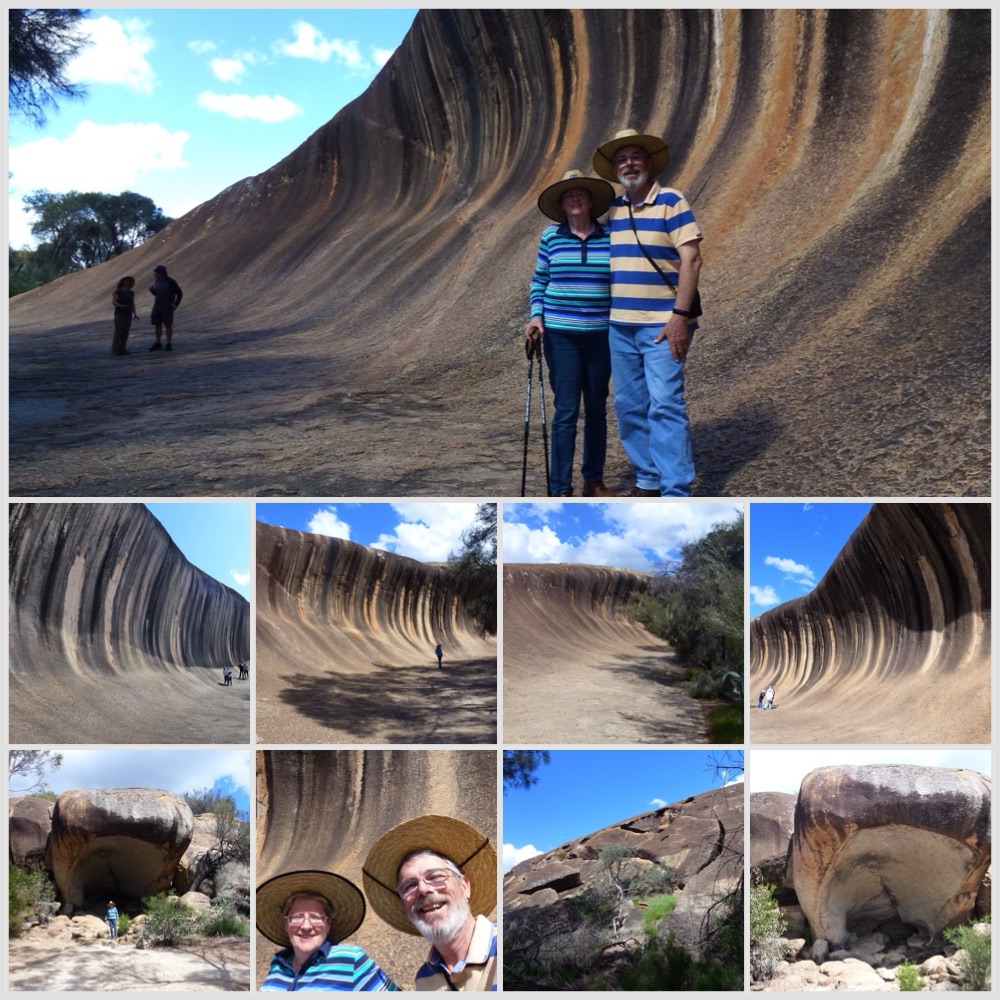
Heading inland towards Hyden, we visited Wave Rock. Curiously, Wave Rock is the only thing I knew about Western Australia before coming here – I, as a kid, learned about this odd bit of geology in high school geography, and never thought I would ever get to see it. We arrived just before lunchtime, so had a walk around the base of the rocky outcrop, discovered “Hippo’s Mouth” then walked back to see the wave. Visitors apparently winge about the lines of stains, remnants of mosses and lichens leaching down, but I think it really helps define the extreme shape of this weathered overhang. We stood for the obligatory tourist photos, tried to sit on the extreme curve and look comfortable, only to slip down.
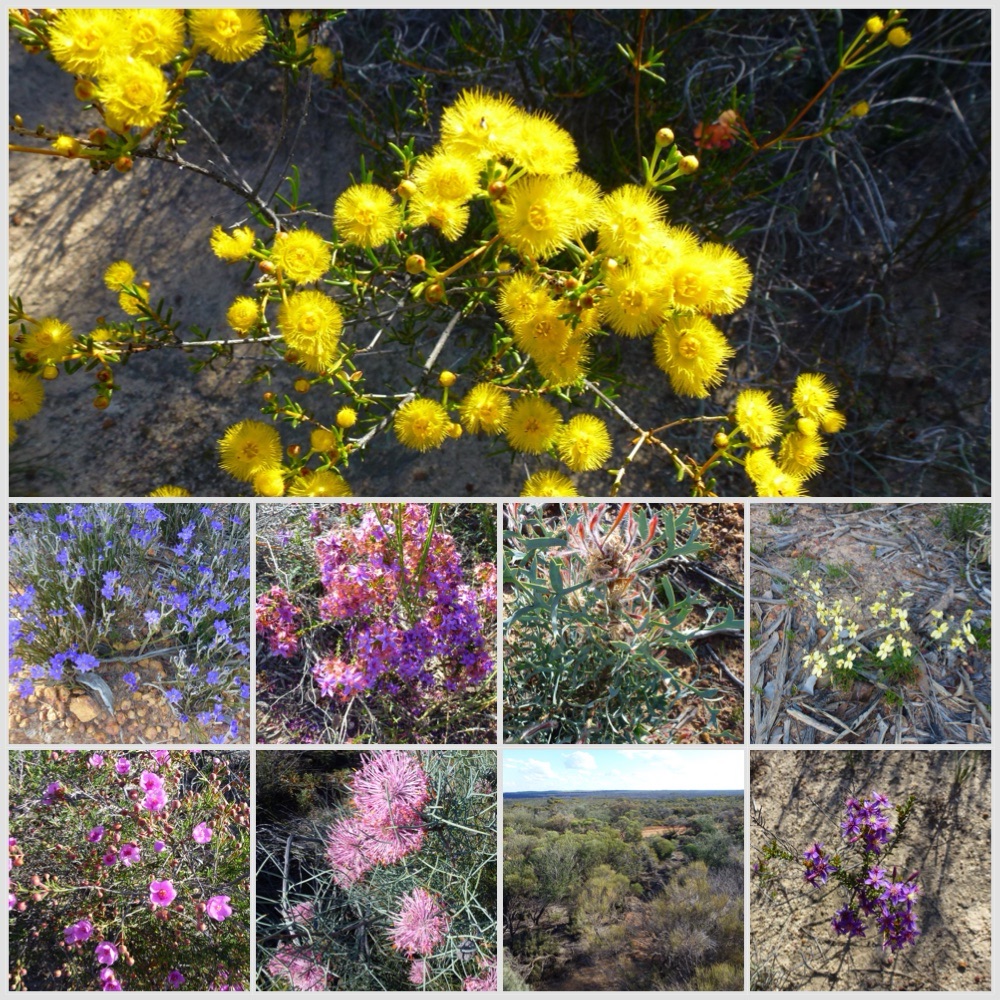
We had lunch, refreshed we headed on to Corrigin, and just outside of town, opposite the “Dog Cemetary” there is a wildflower circuit that we decided to do – our last hurrah looking at wildflowers in WA. We were suprised by the diversity, we saw some that we had not seen and we drove, stopped got out and wandered, drove some more etc around the circuit until we had had our fill. We returned to Corrigin, to a roadside motel – our final night in WA.
We walked over to the local pub, Corrigin Hotel, for an evening meal, a bustling oasis in an otherwise sleepy town. The chef did a bang-up job preparing something that catered for Jo’s food intolerances, we both had a delicious meal and some beverages to unwind – sometimes pub grub can be fantastic. Back at our accommodation we did the final finessing of our tetris pack for our getaway in the morning.
Next morning we zoomed back to Perth, through wheat country mainly, on large empty roads. We dropped back 13boop in time, had a bit of a wait at the airport – time for lunch and some R&R before our flight home.
WA Takeaways – wildflower season is amazing – get your timing right and there are wonders to be seen everywhere. Be prepared to travel distances. Our hirecars did 2,468km north of Perth and 2,214km south/east, the distances between centers can be daunting but you can break it up with side-quests pretty easily. Overnighting (at least) on Rottnest is a must – it takes time and effort to see the island, but it is worth it. The wine districts are worth exploring, offering a huge variety of styles, types and tastes. The food culture is interesting (they don’t really have a breakfast culture – we struggled to find variety of interesting breakfasts). Optus coverage is patchy (to be polite), with large chunks of our travel out of range – fortunately most accommodation has wifi which helps. Google OFFLINE maps are fabulous – we navigated seamlessly both on and off network (by ensuring we downloaded the maps the night before for the area we were about to explore).
It was an interesting trip for us – if you have followed along I hope you got a sense of what we did. Looking forward to more travel.