
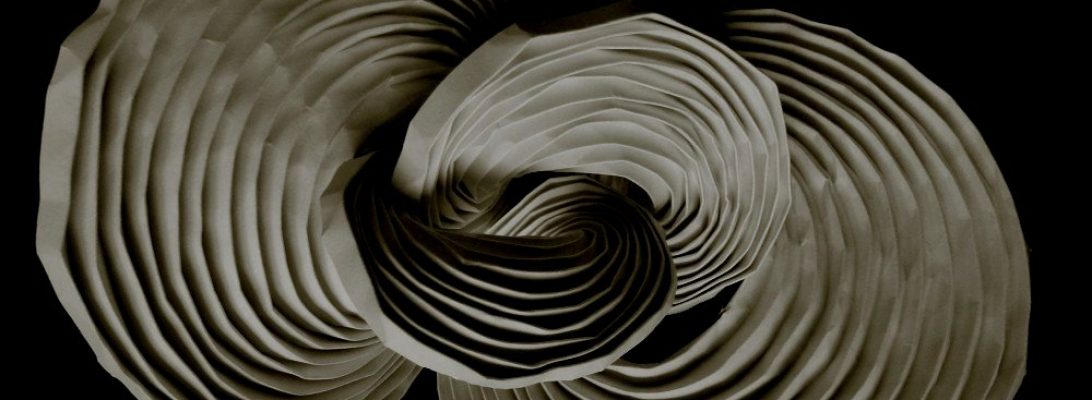
Looking through my resident model collection, I realised I no longer had a rendition of Robert Lang’s “Black Forest Cuckoo Clock”:

I had previously folded this model with regular mono-colour thin crispy Kraft paper, but that model was part of a WTF competition, won by Sebastian Limet in France, who became the owner of it.
I decided to try a presentation fold, using a lovely black/natural Kraft paper I have a few rolls of (remnants of a purchase from IKEAA, back when they stocked it). The model EATS paper like anything, the sheet you fold it from is in the proportions of 10:1, so I decided to go 3.2m x 0.32m which introduced a serious problem – materials handling of such large media requires planning and a strategy.
Pre-creasing was achieved using Lang’s suggested “measure major landmarks” as opposed to gridding it all up and then folding from that grid (the method I used last time). Apparently the benefit of the “measure”?” method is no extra folds on visible surfaces (as opposed to a residual grid).
Continue reading
