
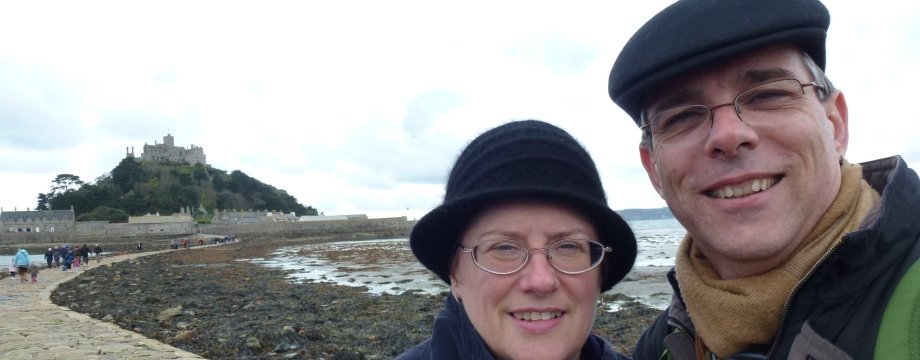
From Kalbarri we headed north – the goal was Denham, our next digs. The distance was about 400km, so naturally we needed to break it up so that the driver (Peter) was not too fatigued.
The journey along Highway 1 was pretty uneventful, although there was a little more traffic coming against us and a lot more road trains. Road trains are pretty scary articulated vehicles, often over 35m long, that really barrel along. I have yet to need to pass one, but dread that eventuality.
Beige fury, our current hire car, has a bit of punch and handled the open road and 110km/hr speed limit pretty seamlessly. I got pretty good at picking empty stretches of road to pass slow caravans etc. Pretty impressed with the performance and handling of the Mazda 3 actually.
We stopped for lunch at the Overlander Roadhouse adjacent to the turnoff for Shark Bay, also picked up coffee for Jo and a Pepsi Max for the driver (hydration matters on such long drives, bladder breaks do also).
Heading out into the Shark Bay Wildlife Conservation area we drove some long straight roads up the peninsula. The area is vast, contains some unique and delicate ecosystems and is so different to what we are used to.
First stop was Shell bay, a curious “beach” comprised of tiny shells of a bivalve that thrives in the saline microclimate. It appears there are some of the worlds largest seagrass meadows offshore, this creates a one way barrier that causes the inner waters to be twice as salty as normal seawater- perfect for a narrow range of species, the tiny cockle being one that has thrived in vast numbers.
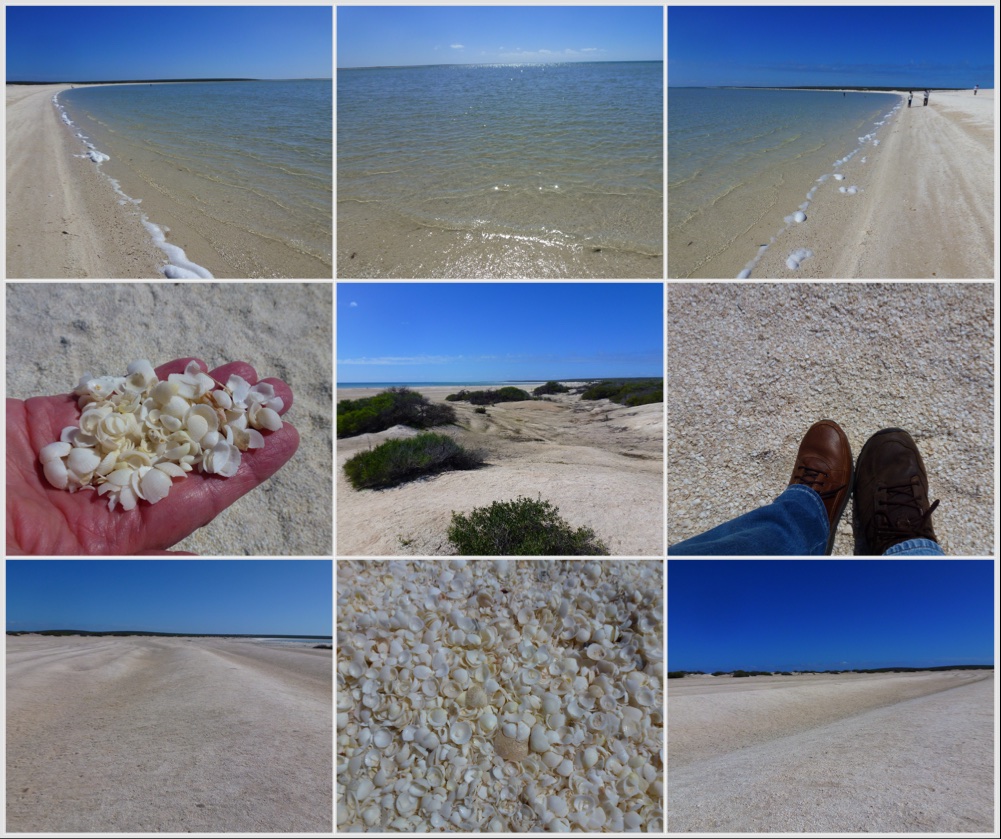
We walked on the beach, down to the waterline, such a strange but unique place. Apparently you can swim there, but are more buoyant, and emerge with a salt crust. With no handy shower to clean up post swim, we decided against a dip even though it was so warm and inviting.
Continuing on towards Denham we drove adjacent to bay waters, in a few places it was close both sides but mostly sea views were to the east of the road. The conservation park showcases a number of unique microclimates. Low patches saw red salt-tolerant plants in natural salt pans. These were littered up the peninsula.
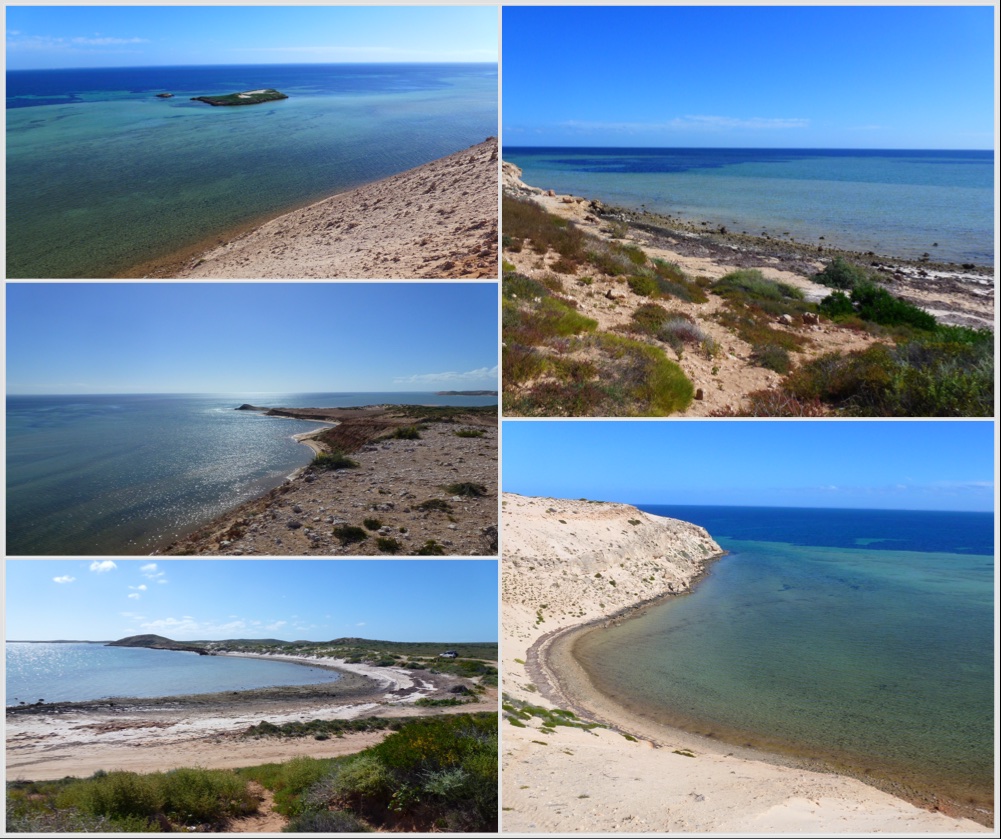
It was a long drive, but we took the opportunity to check out scenic coastal features along the way. At one clifftop lookout we could see the shallow azure water and saw a pair of dolphins fishing around a little island. Jo used her binoculars to discover the island also had loads of birdlife nesting among the vegetation, and a large flock of what looked like cormorants on the rocky outcrop on on end of the island also.
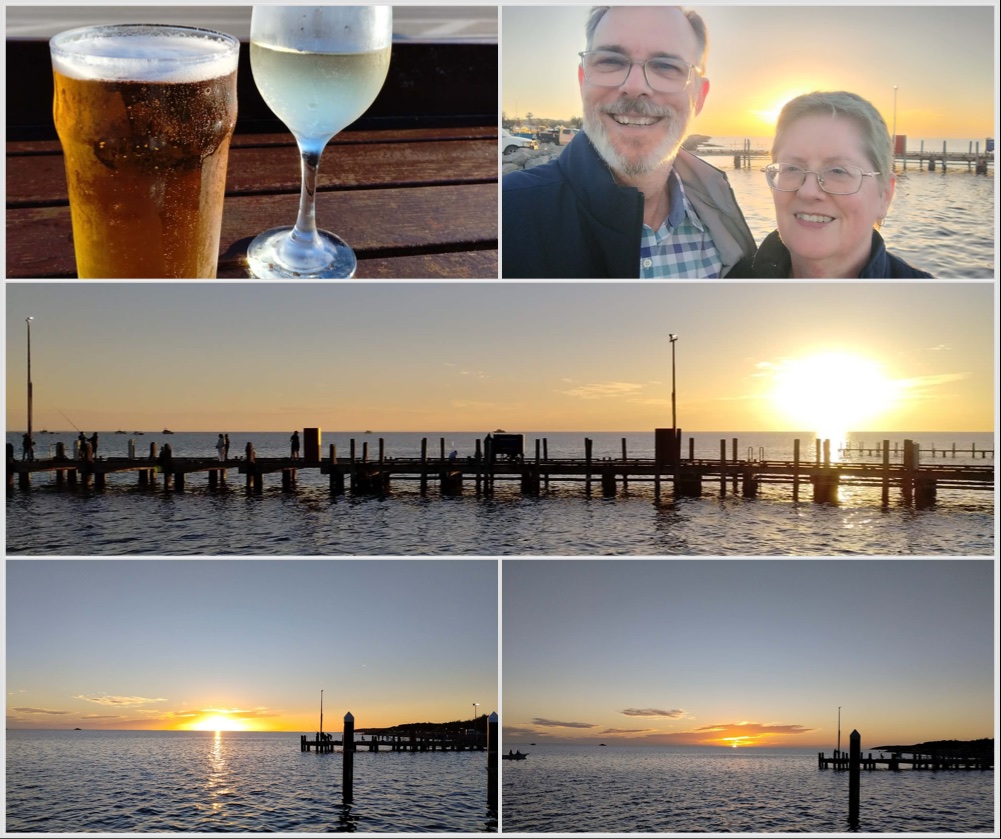
On to Denham, we checked in to our accommodation, a fairly basic cabin and decided it was time to see the sunset from the Pub. A short walk and we were in the beer garden of the most westerly pub in Oz – The Shark Bay Hotel, an old pub but well frequented. Had to laugh, Jo asked what cocktails they did, the lovely lady behind the bar only had pre-mix spirits. Armed with a Moscato for Jo and a lovely pint for me, we took up residence at the outside bar and bathed in the warm late afternoon sun.
Walking out onto the jetty, we watched locals catching squid and saw the sun dip below the horizon before walking home for dinner, some meal prep and a sleep – long but interesting day.
Monkey Mia
Next morning, up blearily at 6:30am, showers, tea and we were off further to the Northeast to see the dolphins at Monkey Mia. The viewing started at 7:30am, and it was over 30mins to drive there so we got going pronto. Overcast, blowy and cold, we rugged up- mornings can be a bit chilly here.
In days gone by people used to wade out among wild dolphins, feed, cavort and that seemed like a good idea, until researchers noticed young dolphins not bothering to learn how to hunt because of the free food, natural patterns of behaviour were not transferred, male dolphins getting aggro etc.
I am so impressed the researchers managed to reverse this to the current situation where we visit the dolphins habitat and the dolphins choose to visit us – not because they get any viable quantity of free food but because they are curious. The researchers know all the dolphins (over 60 in this colony) by name and appearance, and actively monitor calving, growth and condition. The Shark Bay Area is a rich safe haven so conditions are ripe for thriving.
We stood on the beach next to the area designated as the dolphin experience zone and waited. Soon there were 5 dolphins playing in the water, looking at us, scooting along after fish, jumping etc. The rangers are targeting individual mother dolphins for a token feed and not feeding males or calves at all.
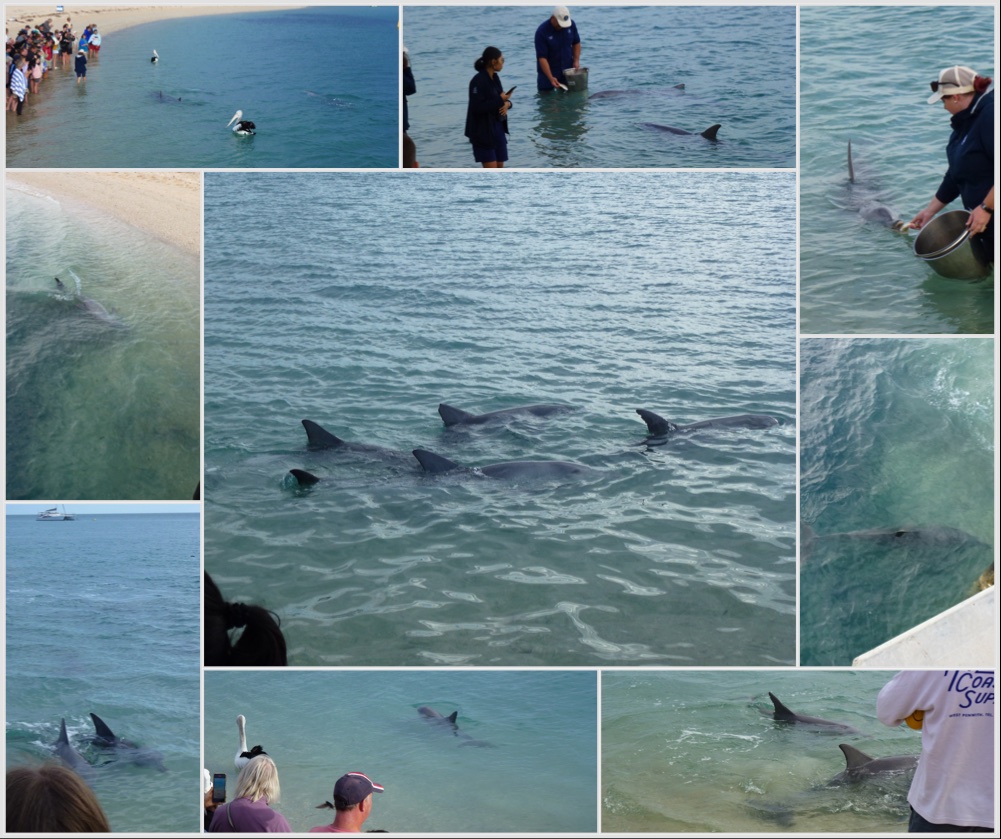
The group we saw comprised 2 mothers and a couple of generations of calves. They were content to look at the weird humans oohing and aahing, what a weird bunch we are. From the adjacent jetty you could get a real sense of their size and the speed and agility. I was really surprised by their acceleration, even in shallow water, and how they could turn in a flash. They were clearly curious, but buggered off afterwards and the second viewing didn’t happen because the dolphins were too busy dolphining elsewhere.
The weather closed in, grey and blowy with rainy squalls. We had a late breakfast at the Monkey Mia resort cafe, then leisurely wended our way back to Denham. We stopped to stretch our legs at Little Lagoon, a very salty lake like puddle littered with friendly warnings about stonefish, which was a bit disconcerting. We also stopped at the Fish Factory at Denholm and bought some beautiful Red Emperor fillets to cook for dinner.
In the afternoon we decided to explore the Shark Bay World Heritage Discovery and Visitor Centre back in Denham. This is a real gem – more of a local history museum, it also has an art gallery of local artists work, small cinema that shows a 3d movie about the dramatic story of the WWII battle between HMAS Sydney II and the German raider HSK Kormoran, one of Australia’s most enduring maritime mysteries. It was a compelling timeline driven explanation of Australia’s worst naval tragedy. The discovery centre proper offers a dense themed exploration of the local history, locations, indigenous peoples, areas, wildlife and settlement history. Video loops explaining scientist personal studies, residents of Dirk Hartog Island perspectives on the lifestyle and more were really engaging. There was a rich collection of artefacts, maps and so much more. We both really enjoyed taking the time to work around the displays – so much information, so interesting, so well presented (would recommend).
Dinner, packing ready for our journey to the wildflower fields further south on the morrow as we prepped to say goodbye to the Shark Bay conservation area.