
Leaving Denham, we had nearly 500km to travel to our new digs just outside of Dongarra. We did this in stages, ensuring rest breaks. Most of it was highway driving, mostly big empty roads but I did have to overtake a 4 trailer Road Train at one stage which was mighty hairy.
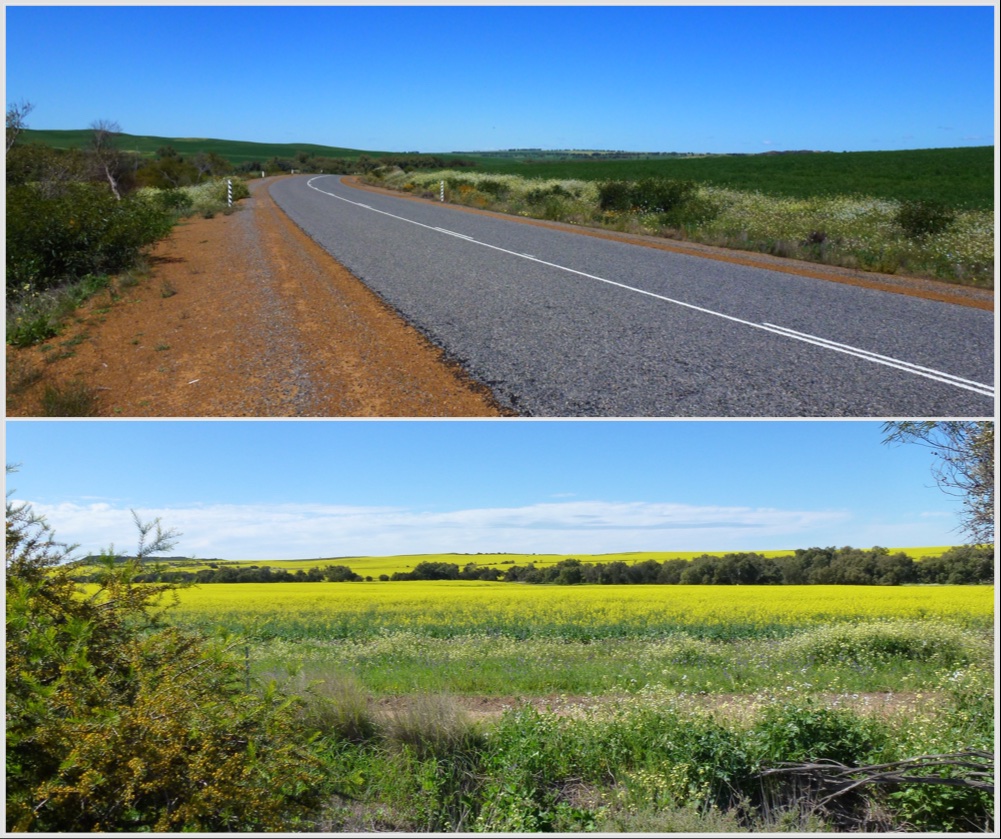
Once past the national park areas, the scenery opened up into rural scenes, flat undulating fields filled with of canola (bright bright yellow), oats (green and white) and wheat and barley as far as the eye could see. It was variously overcast/showery but during the drive we saw all sorts of weather. The roads were in good condition and overtaking lanes reasonably placed, we made good time.
We stopped for lunch and a bit of a stretch at Northampton in cutie little garden park that was clearly a Mecca for caravan pullers. It is interesting how often we have seen public waste traps for vans to empty into, clearly they have geared up to support touring visitors.
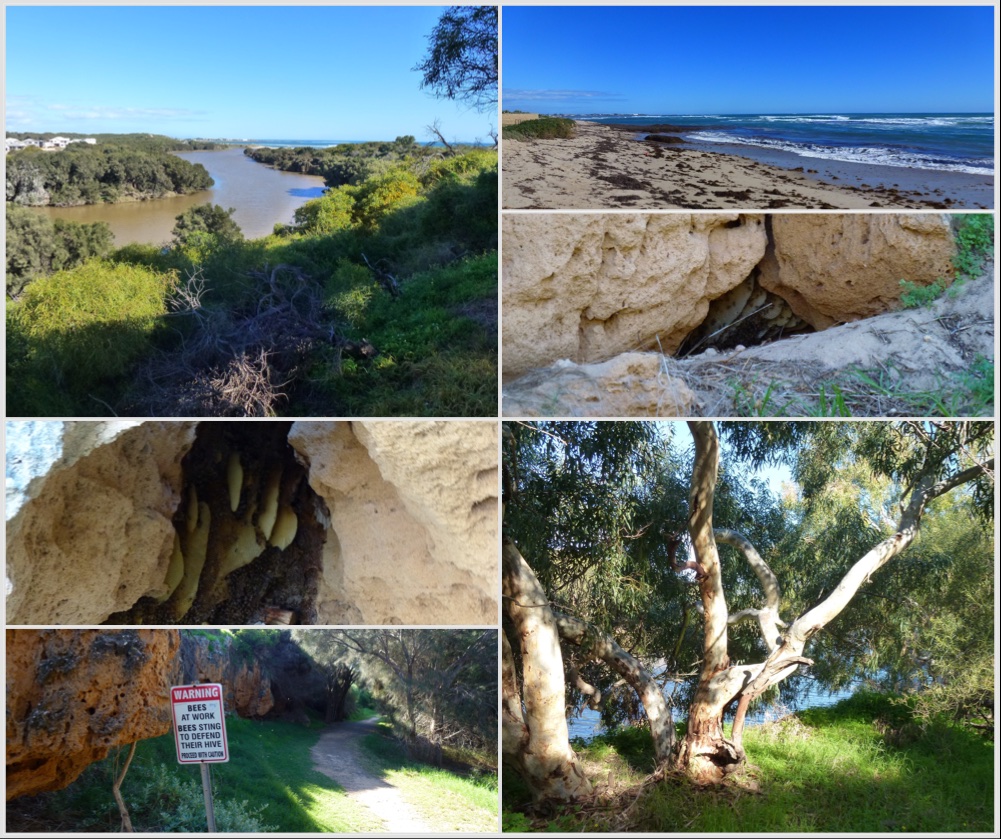
Arriving in Dongarra, before going to our accommodation, we visited the visitor centre and went on a walk down by the Irwin Estuary. The Irwin is another of the major rivers here that seems to meander all over the place. The walk took us down beside some soft low sandstone cliffs, to our surprise we encountered 3 honey bee hives, 2 of them with visible honeycomb tucked away in recesses in the cliff. So interesting. The beach was pretty windswept and covered in chopped up seagrass, am sure it is nicer in summer months.
Our digs for the next couple of days is a self-contained apartment that is part of a large shed – spacious, well appointed and very comfortable.
We checked in late, quickly settled in and did some food prep for the next couple of days, melted into a pair of dangerously comfortable recliner rockers and rested after a long day on the road.
Next morning, refreshed, we drove to Mingenew, spoke to a helpful staff member in the visitor centre, they suggested a number of locations within range for us to explore wildflowers. She suggested the scrub behind the hockey fields, on and around Mingenew Hill, and a journey further afield to Coalseam Conservation Park.
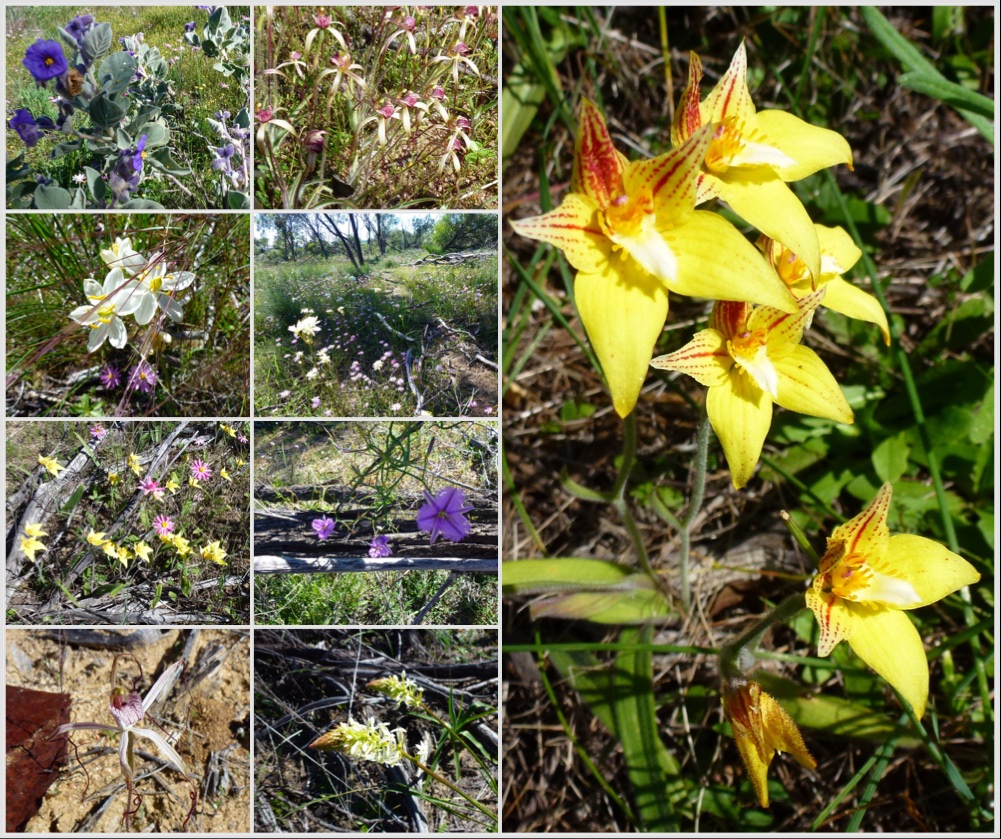
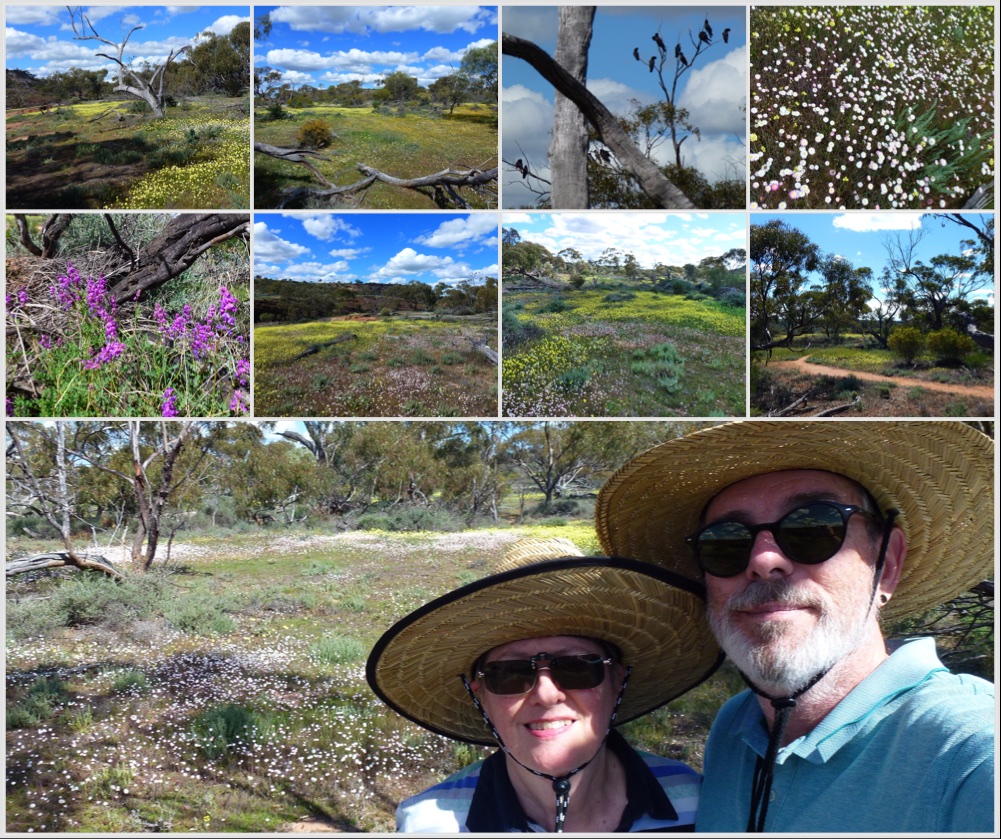
Parking behind the local hockey field, we set off into a wedge of bushland adjacent and before too long we were finding abundant examples of many wildflowers we had not seen. I was particularly driven to look for native orchids, especially spider orchids, and it was not long before we started finding little clumps of them. Finding them is tricksey – I am used to large blooms on orchids, some of the natives are teeny tiny, spotting them involves a technique of standing still and systematically scanning for changes in texture and colour. The spider and cowslip orchids we found were beautifully delicate, had lovely fine markings and seemed to proliferate in the shadows of more established plants. So chuffed to see them in the wild.
We clumped around in the hockey field bushland for what seemed ages, walking further afield because we kept finding new flowers. Some, it turned out, were in Jo’s book, lots were not and some were exotic weeds. All very interesting.
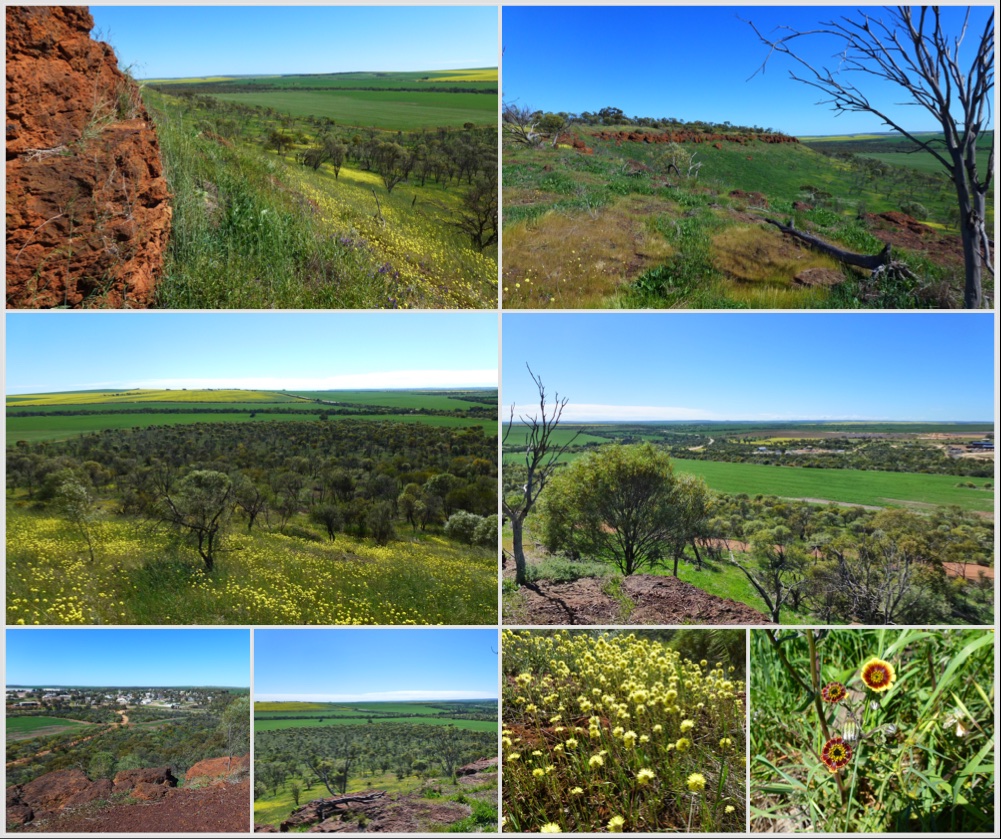
Next stop was Mingenew Hill, an ironstone lump in the local landscape, a remnant of a distant ridge that had been isolated then rounded off due to erosion. The climb up was steep, but littered with meadows of everlasting yellow pom-poms which winked happily in the light breeze.
We clambered up, realising we would need to take a different path down because of the steepness and loose gravel underfoot. Up top afforded clear views of the surrounding countryside. The vegetation seemed adapted to very dry conditions and we did not really see much of anything as far as wildflowers go. Clambering over rocks as we came back down I was grateful we remembered our walking poles – neither of us is as stable on our legs as we used to be.
Back in the car, big drink of water, shedding of some layers and we were off to Coalseam Conservation Park. Geography nerds would love this area as erosion has exposed ancient layers, including a narrow band of low quality coal – hence the name I suspect (Australians are often so literal when they name things)
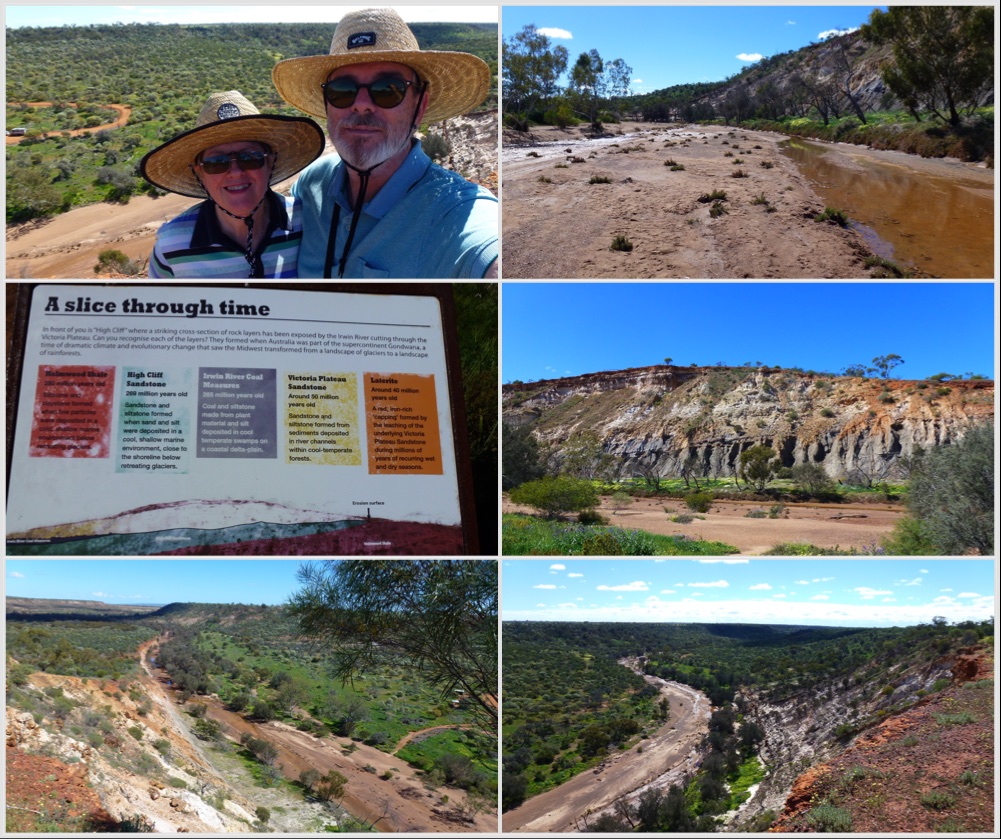
We explored River Bend down at river level – the Irwin River meanders all through this region. Above us we could see lookouts at the top of the cliffs – Irwin River lookout was a stop on the driving circuit so we explored the locale, again noting not much of a variety of wildflowers. We then drove to Fossil, where you can get close to the coal seam, then headed on to Miners where we stopped for lunch.
After lunch and watching the rainbow lorikeets tearing apart gum tree flowers we then went for a walk on the far side of the river, crossing via a rickety set of stones set into the rapids.
The area was once a working coal mine, but now has winding paths and large areas of wildflower meadows. We ambled though some drifts of single flower species and others of mixed. A large mob of black cockatoos had taken up residence in tall trees nearby, screeching and cackling happily. We happily wandered for ages before realising we had to do the return journey. It was a nice relief returning to the car. The journey home was uneventful apart from seeing loads of lush pasture.
We settled back into our accomodation, refreshed, rested a while then headed out for dinner – a beach cafe booked and confirmed was the destination. When we got there it was closed, which was a bit annoying. We headed to the local Hotel and had a good pub meal instead.
After a good night’s sleep, we were packed up and on the road again, headed for the Swan Valley.