You are using an insecure version of your web browser. Please update your browser!
Using an outdated browser makes your computer unsafe. For a safer, faster, more enjoyable user experience, please update your browser today or try a newer browser.
The Covid pandemic forced us to put off our travel and retirement plans until 2023. We are finally on our way, with plans to visit Paris, Lisbon in Portugal, Barcelona, driving through Provence, then on through Switzerland and then home. We are still conscious of health and personal hygiene, but to date I have had Covid twice and Jo has yet to catch it.
The anticipation and planning has been intense, Jo has been honing the itinerary for nearly a year, so we are fairly organised, as usual, with some very exciting travel ahead.
Living in Australia, we are plagued by the tyranny of distance. Travelling to the far side of the planet necessitates extensive transit and we have decided to put up with the long haul while we can, leaving closer destinations until it becomes unbearable.
Transit is a pox, and it is peppered with lots of things you cannot control like other people and their behaviour and personal hygiene, facilities and their condition etc. Scrunched together you sort of assume others will be considerate, we had a pair of constantly coughing people beside and behind us for the second leg, and are hopeful nothing eventuates from being exposed to them apart from disgust at how inconsiderate they were to all that surrounded them.
We have long decided that first and business classes do not offer us bang for buck, opting to spend the considerable savings of going economy on more things we enjoy while on holiday. That said, there is economy and there is economy. This year’s initial flight was divided into two legs, Brisbane to Dubai (14hrs) and Dubai to Paris (7 hrs). Given we flew out at 9pm, we chased the dark pretty well the whole trip and that is a looooooong night of more than 25 hours in transit. There are only so many movies you can watch or pages you can read to while away the time, but I marvel at people who can contort and sleep. Annoyingly neither of us have ever been good plane sleepers.
Try (lol, do they?) as they might, planes are about as comfortable as bus travel. As someone blessed (or plagued?) with legs that are not detachable, this cramped form of transport is uncomfortable, but various skeletal issues makes sitting cramped in one position for any period of time profoundly unpleasant. Couple that with no sleep and modular feeding at all hours of the night and it is tricksey to arrive fresh and ready to go. We try to control that as much as is possible, and give ourselves time to bounce back at our destination.
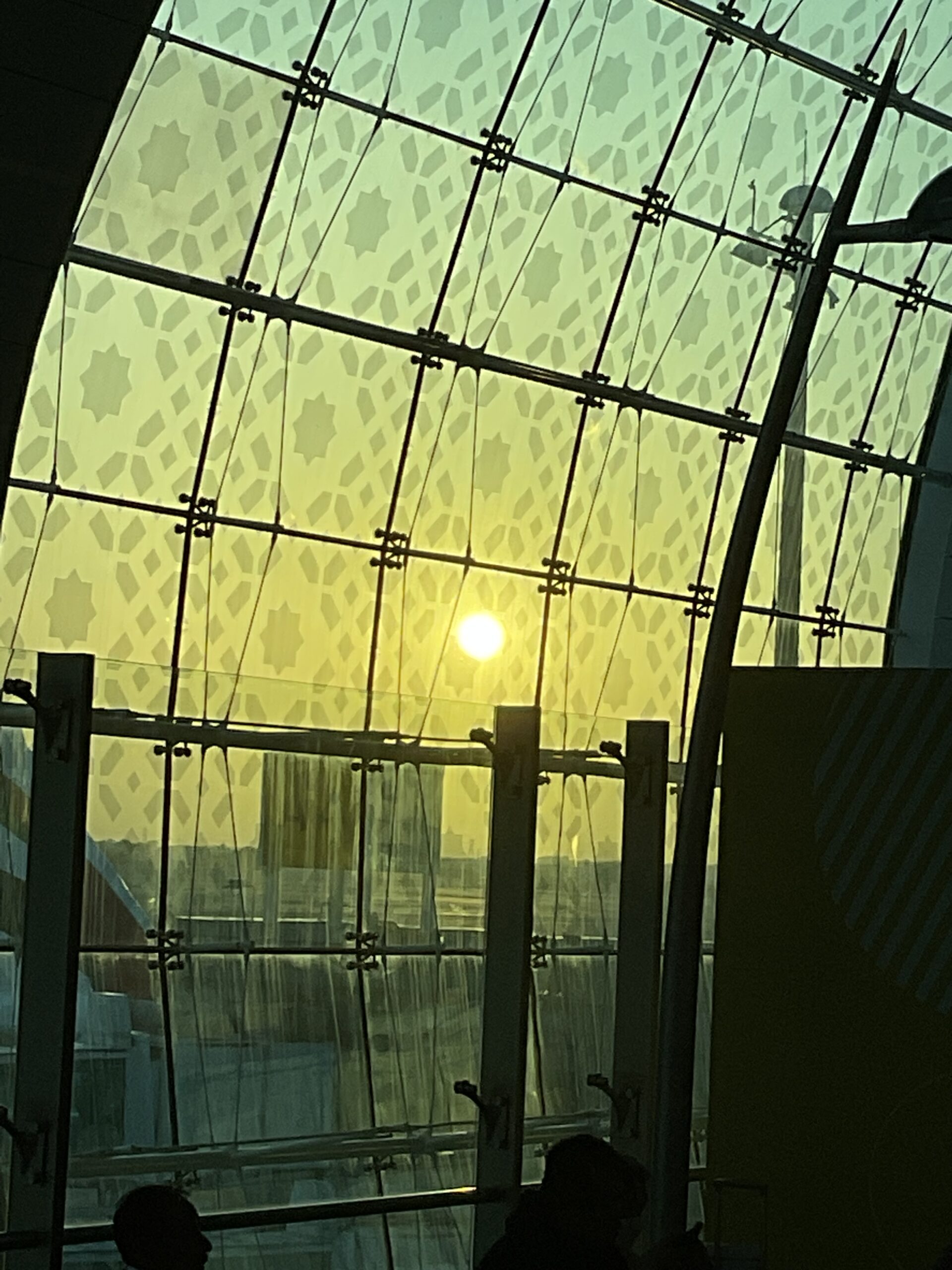
We flew both legs in a Boeing A380 Airbus, those bulging double decker planes that look like they have not got enough wing to actually fly (the bumble bee of the fleet). We get an aisle seat so it is easier to get up, and I walked a number of laps at 30000ft just to keep my legs working. Transit through Dubai was fairly quick, but we did see the sun rise there again, similar to our first ever trip.
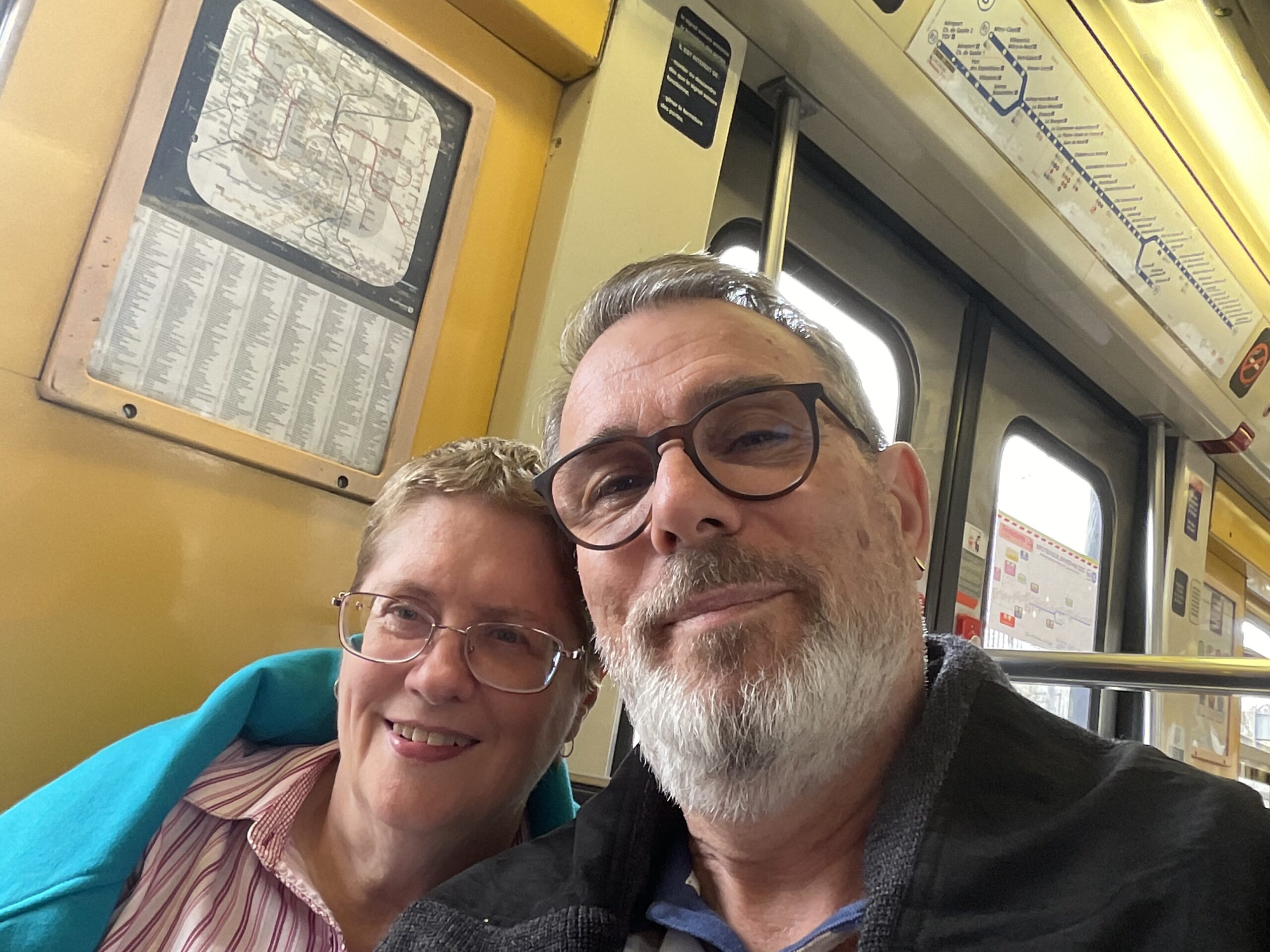
The second leg gave us a second breakfast and a fairly seamless trip into Charles De Gaul Airport in Paris in the early afternoon. After a long queue at passport control (pretty sure officers were on a “go slow” protest, part of wider civil unrest in France at the moment, and something we will try to distance ourselves from as much as possible) and an even longer wait for the automated luggage system to vomit out our bags (beginning to suspect they had been sent to Venezuela by accident), we searched out the Train ticket office and bought our passage over to our Arrondissment and metro tickets that we can top up if we use more than 10 each.
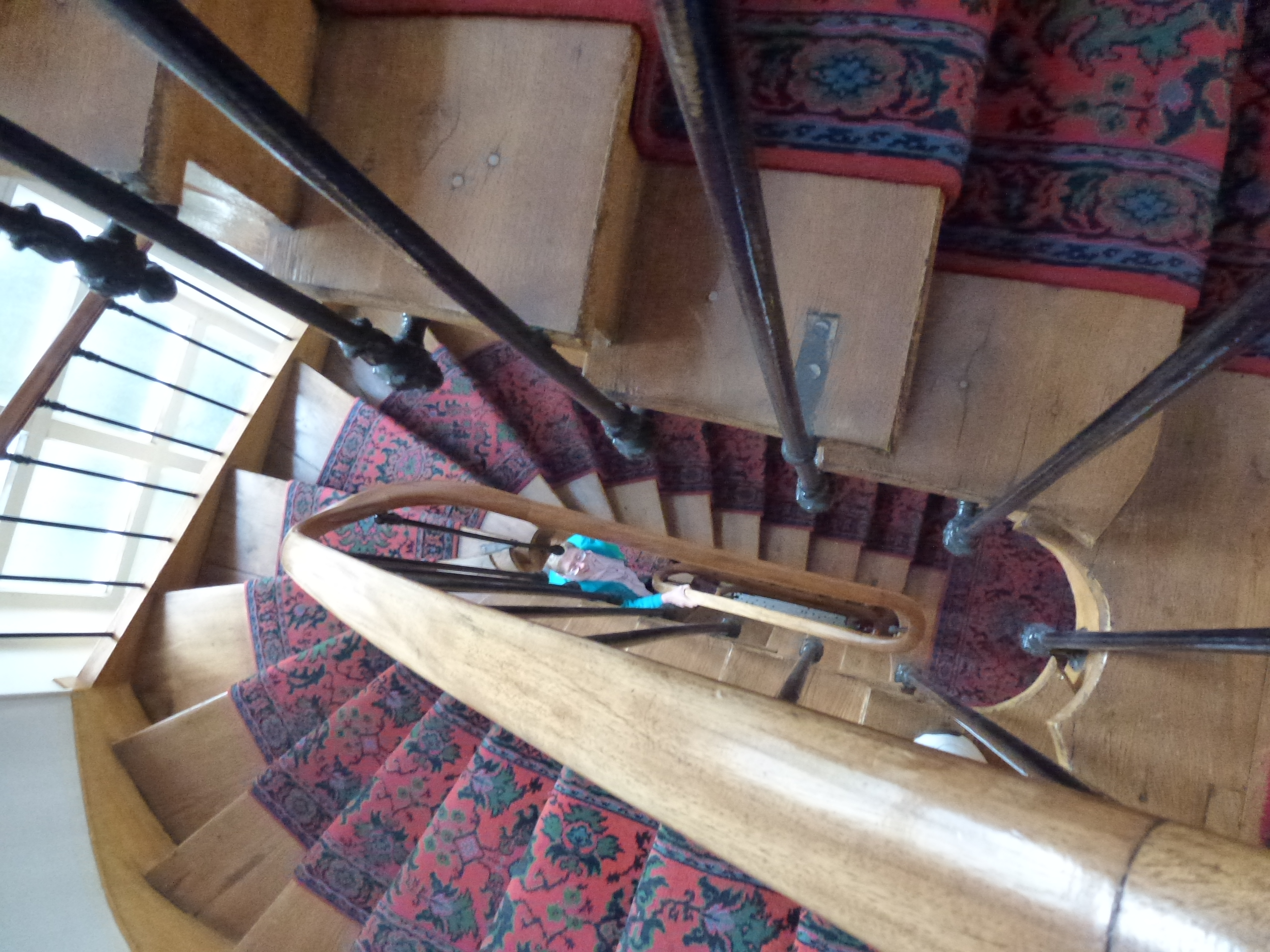
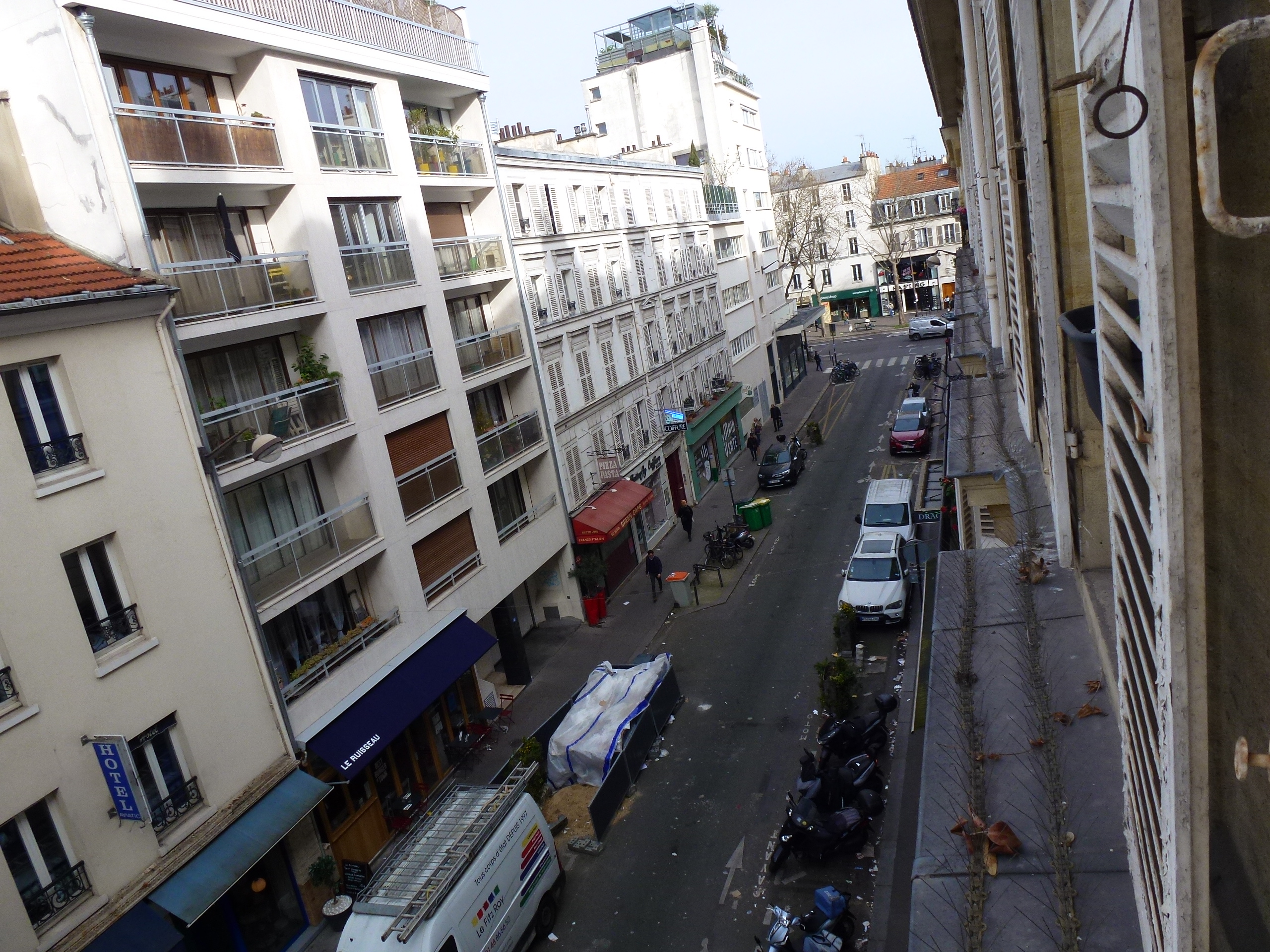
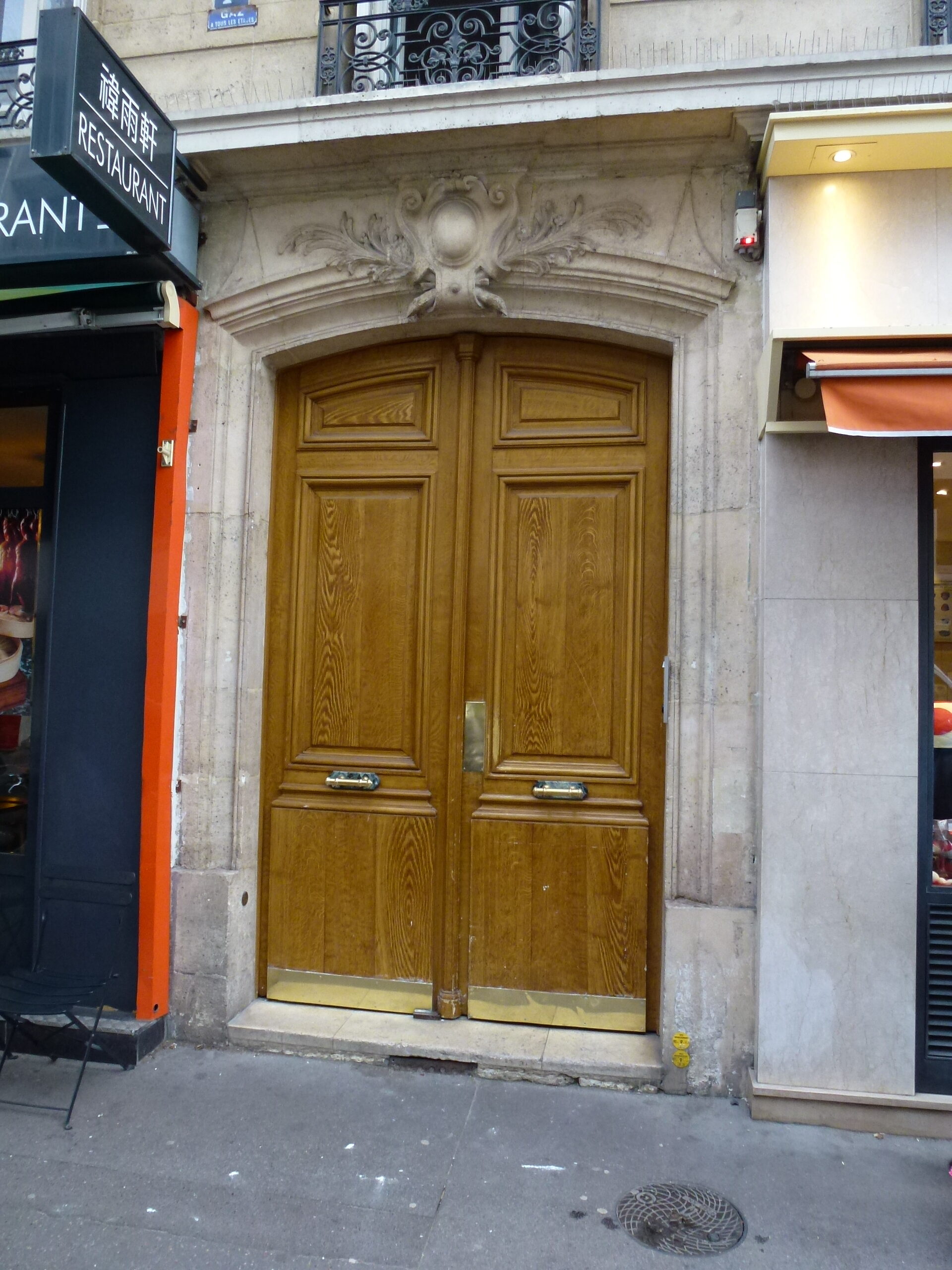
The RER train service to Denfert-Rochereau took about 45 minutes, then we lugged suitcases from the station to our apartment, a relatively short walk on cobbled streets. We had clear instructions from our Air BnB host with the code for the front door, this lead to a central courtyard and a staircase CLIFF of 3 flights of spiraling narrow stairs. Jo established a base camp at floor 3 and then I manhandled the suitcases one at a time nearly rupturing myself in the progress. Doing this lagged and fragged was hard work.
Our standard practice when taking up holiday residence is to first survey heating, hot water, bedding and then kitchen facilities. This informs what we need to purchase, then we do a short essentials provisioning run: milk, tea, sugar, eggs, butter, water, wine, baguette etc (the essentials), then back to the apartment for soft buttery scramble before a shower and a long overdue sleep.
Our location is always carefully chosen so we have good access to transport, supermarket, bakeries and coffee for Jo. Our block this stay has 4 boulangeries and patisserie’s alone, so I think we will be fine. Serious grocery shopping can wait until tomorrow, time for bed.
One of many reasons to travel to Cambodia is to visit the myriad of ancient temple complex ruins. Indeed Angkor Wat was on our bucket list, but in researching this trip it became abundantly clear that there are lots (read really lots) of temples to discover, from many eras, in many styles, in various states of decay and restoration.
We booked a 2 day personal tour through angkorguidesam.com and chose the 2 day classic (mini & grand tour) which looked like it was both extensive and informative. Our guide, Somondy, turned out to be absolutely fantastic, astutely judging our levels of fitness and fatigue, guiding us to the very best vantage points, helping us avoid the hordes of Chinese tourists, and really being personable and informative about all things Temple and Cambodia. We cannot speak more highly of him, his guidance really made the 2 days unforgettable.
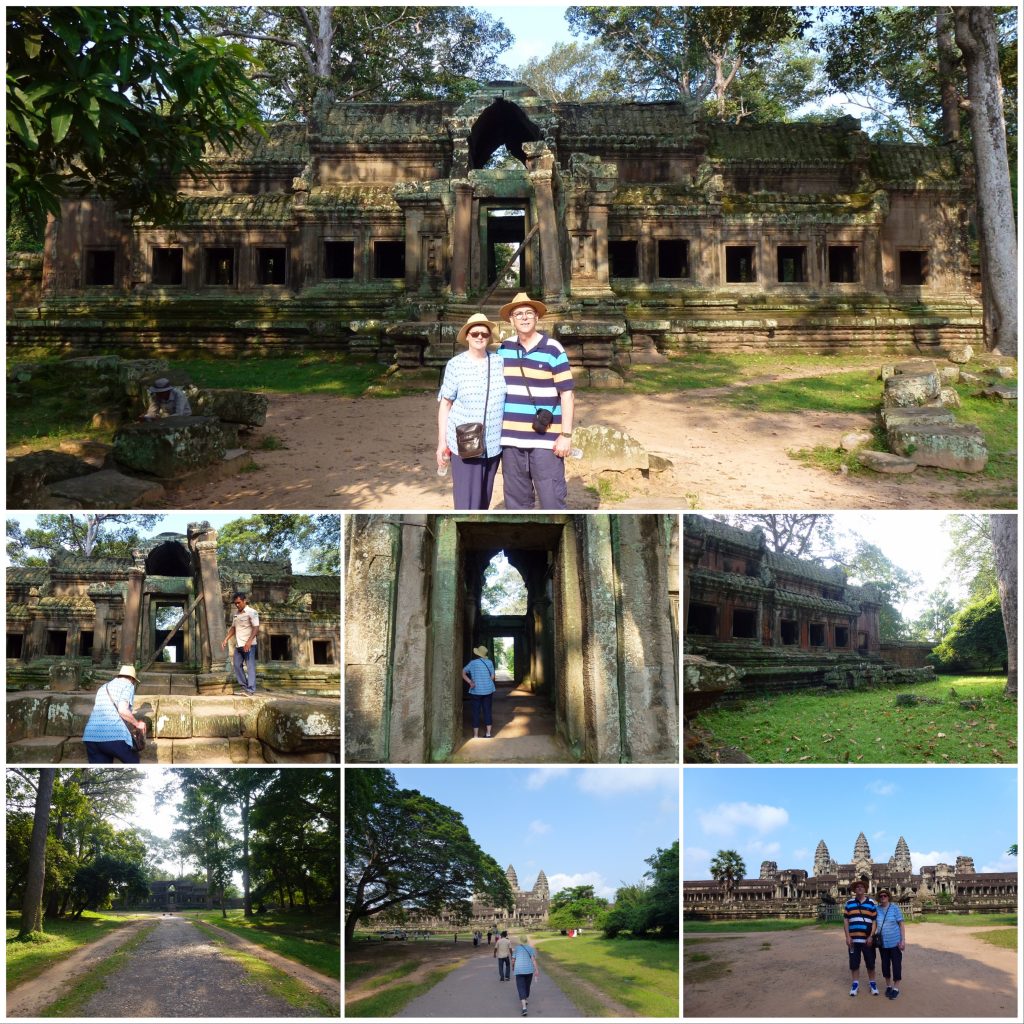
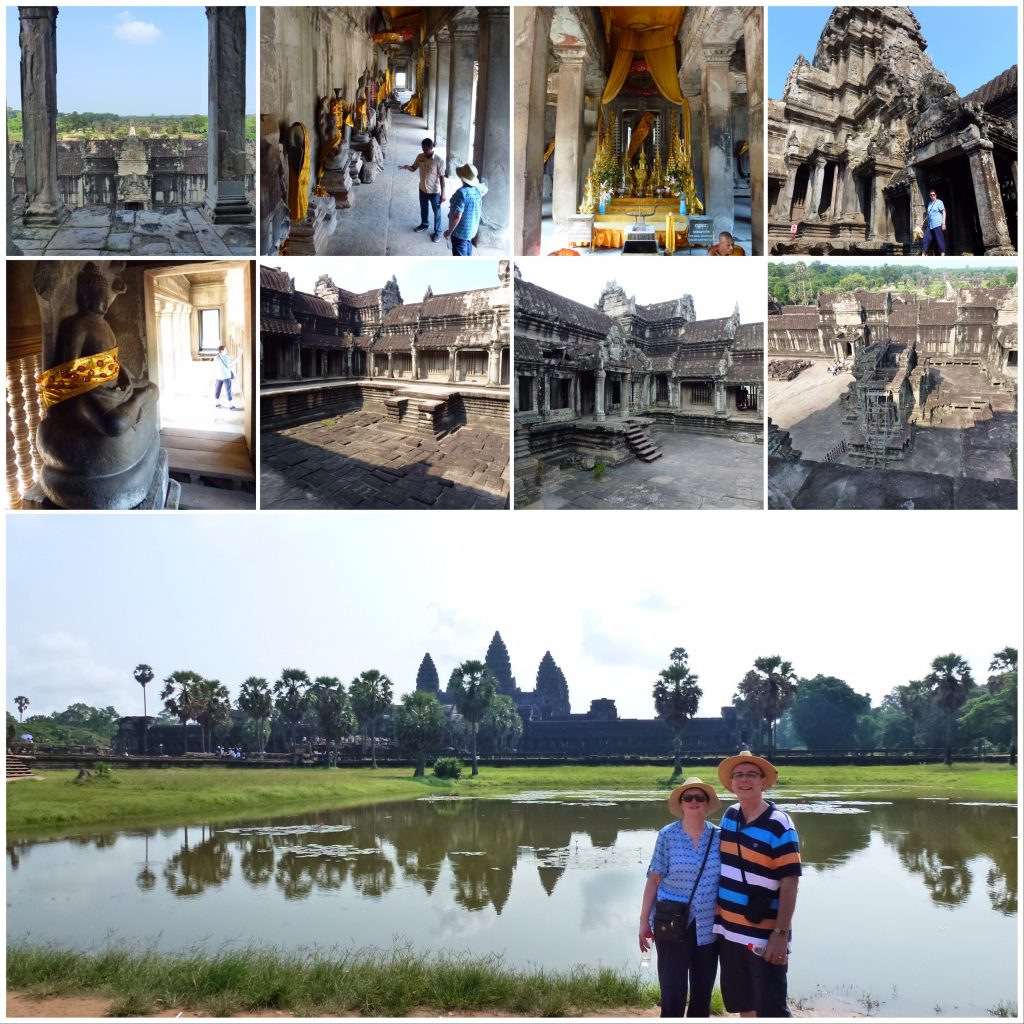
Day 1 we started early (to avoid the crowds and the heat) and headed to the tourist ticket centre (you buy a pass that lets you access the temples for a number of days, it has passport photos and other details, that are checked at temple entrances for all non-Cambodians, natives are free to visit all temples, as they are still considered places of worship). Passes secured we then headed to Angkor Wat, probably the most famous of the temple complexes.
Some context: ALL currently accessible temples have been reclaimed from the jungle – some to varying degrees. Due to the tropical climate, jungle grows really fast. Banyan tree seeds are deposited in the roofs of buildings by bird and monkey poop and grow between the stones, gradually tearing the structures apart. Add to this the fact that much of the land here was saturated with bombs during the war, and studded with land mines (still a massive problem) and we realise that visitable sites have had a LOT of work done on them to restore, reconstruct and stabilise stone structures built centuries ago WITHOUT MORTAR (yep, just mounds of perfectly joined stacked stones). This in itself is remarkable, but the scope and scale of these temples is mind blowing. Add to this that most of the temple complexes are built on swampy land, that relies on the natural buoyancy of the water table so they do not sink and you begin to appreciate the magnificence of the engineering, let alone the architecture, which is something else entirely.
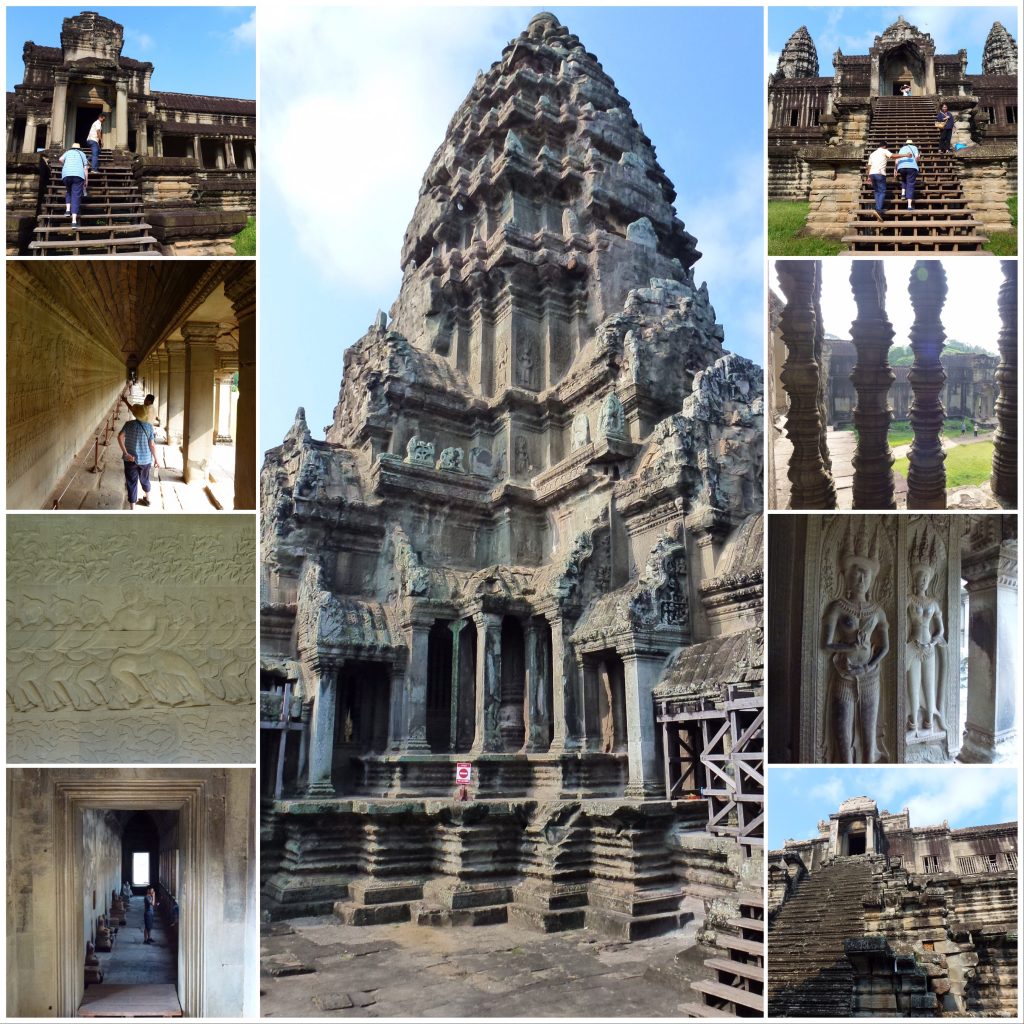
Angkor Wat is square ish, about 1.4km per side, has a 200m wide moat (hand dug), massive outer walls, 4 gated entrances, each a compass point, inner walled compound, consisting of stone plinth, stairways to the upper levels, cloister-like galleries encircling mountain-like towers surrounding a central tower at the highest level. I thought I understood its scale, until we entered the east gate and began walking to the inner compound. Rising from the ground are massive stone buildings, with cliff-like stairs. The journey towards enlightenment is supposed to be a struggle – this is enforced by the design of the buildings – to go higher you have to negotiate breathtaking flights of stairs.
The building complex is astonishing on many levels, but from an astrological perspective it is aligned so the king can watch sunrise through planned meridians on both summer and winter solstice, Angkor Wat is the worlds largest calendar. The configuration of the towers and their designs are informed by seasonal information, lucky numbers and complex astrological calculations that, alone, are amazing. When combined with the engineering and architecture, it is little wonder lunatic conspiracy theorists suggest aliens dunnit.
We explored, climbed to the top, marvelled at the geometry and layout of what must have been a thriving place of worship, then left by the west gate (most people enter here). The vast terraces still hold remnants of buildings like libraries, but the miasma of timber dwellings, promenades and other infrastructure necessary for living is long since lost – timber is food for termites, Cambodia is rife with them.
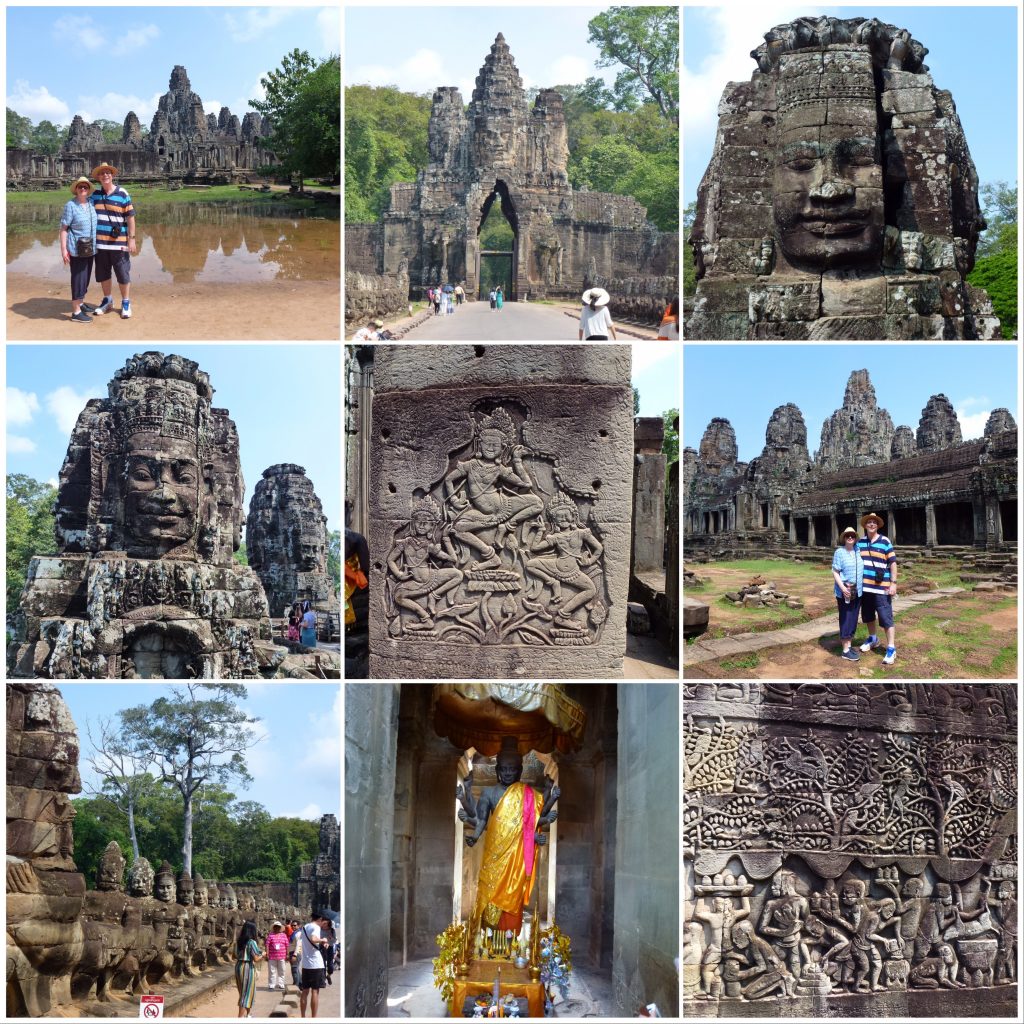
From Angkor Watt we then headed to Angkor Thom, an even BIGGER complex (at 10 square kilometres) and began exploring the many temples within this walled and gated compound. There are 5 gates, oddly 2 on the eastern wall (one called the “ghost gate” was used for funeral processions to cremate outside the temple). Here we first saw clear evidence of good and evil: 54 gods playing “tug of war” against 54 demons using a Naga (or many headed snake) as the rope, with Buddha looking on (because, apparently only Buddha can appreciate the balance between good and evil, and value them both). We saw statues of Buddha sitting on a coiled naga, with the head of the naga (a multiheaded cobra) providing shade everywhere. Sadly most statues were incomplete, missing heads, hands and feet (because the Khmer Rouge discovered these bits of antiquity fetched good prices on the black market, and funded their war efforts this way).
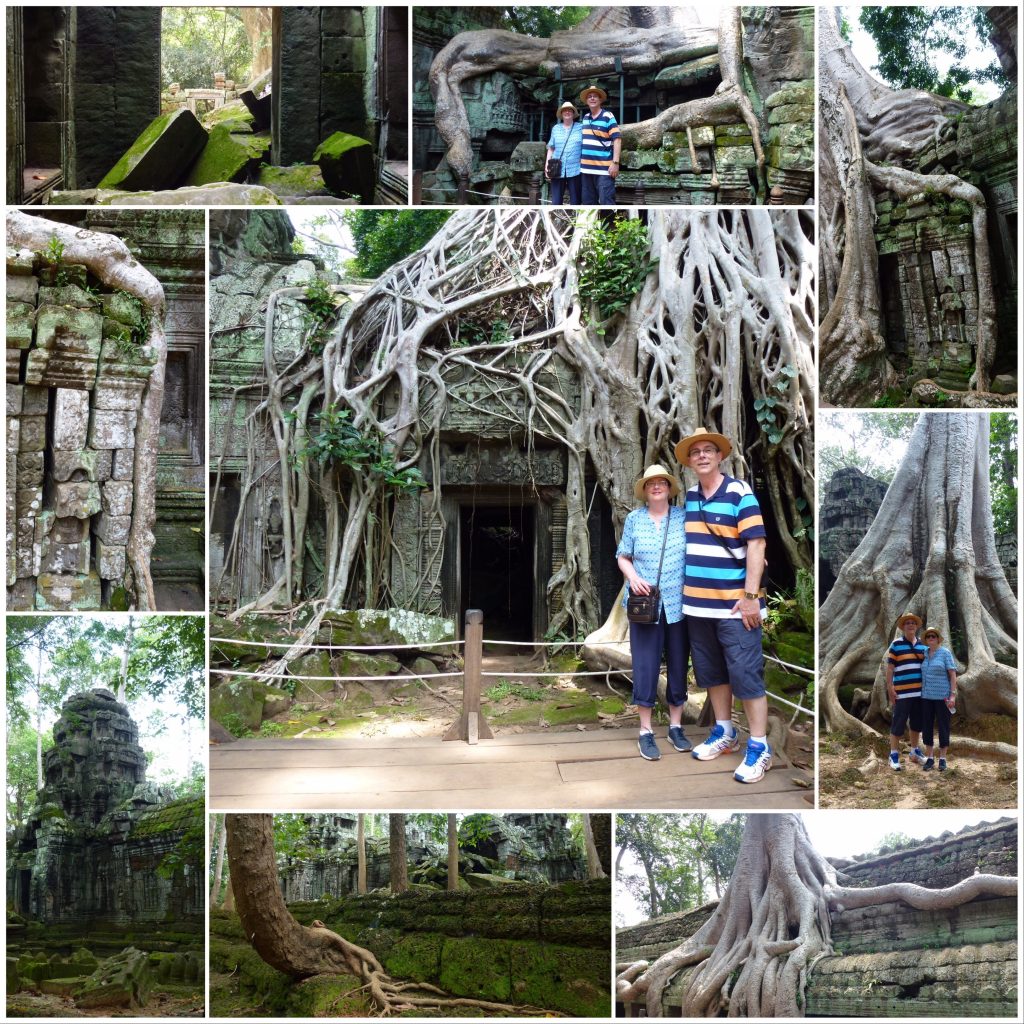
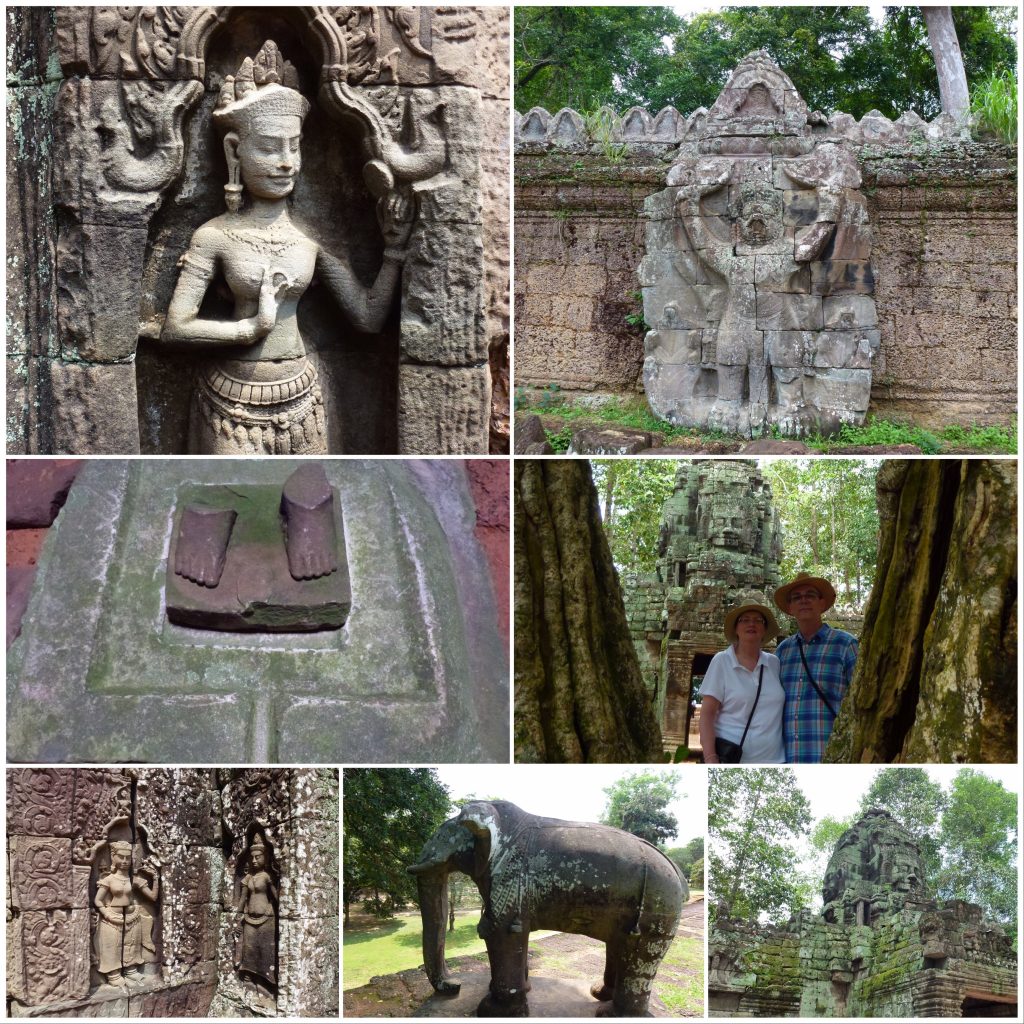
Inside Angkor Thom we walked through the towering South Gate, through the Bayon complex (named after a French archaeologist who re-discovered it). Bayon was the first temple we saw with huge faces adorning the compass points of each tower. Serene faces thought to be images of Buddha or the king, or gods and demons (no one is really sure). From here we headed to Baphuon, a small tumble down jungle temple we both loved. We then trekked to the Wall of Royal Palace, then up and over the Elephant & Leper King Terraces, remnants of infrastructure on a massive scale. Our guide then decided to stop for lunch, we ate well (if a little expensively by local standards) before heading (at lunchtime) to the jungle temple “Ta Prohm”, used in the filming of “Tomb Raider”. This strategy seemed to be a good idea, and worked brilliantly to avoid the herds of Chinese tourists that had been bussed to lunch.
We really loved the tumble-down jumble of temple remains, mossy carvings, and Banyan Tree root cleaved structures. Vast piles of rubble, partially collapsed passageways, tree root curtains and dramatic precarious gaps in leaning massive walls made for striking scenery – perfect for Lara Croft to find the hidden treasure we all know must be there somewhere. Adjacent were vast fields of numbered mossy stones, awaiting someone to piece together one of the universes most complex jigsaw puzzles.
After Ta Pron, we drove to Ta Nei, another “jungle” temple, closed to public view inside because of the tumble-down ceilings, trees growing up through walls and general jungle taking over again vibe. Conservation and preservation will eventually come here but for now it’s charm lies in the fact that a great and powerful building is undone by time and nature. It is difficult to remember all the names, or whether I forgot anything as the day was long, it was baking hot and so humid you could cut the air with a knife. None the less, when we finally said “enough”, I think we had seen all but one of the temples on the itinerary for the day, had walked miles, sweated buckets and expended more energy than we thought we had. None the less it was a brilliant day, so many moments of awe and wonderment, so difficult to convey with mere words or pictures.
Day 2 was the outer circuit, car travel far and wide to see temple complexes further away and, to our surprise, we saw a whole lot of different styles, both in architecture, configuration and decoration styles. There were a few ancient kings who were really prolific with their building plans so some commonalities were also seen.
Our first temple, East Mebon, was an “island” temple, originally in the middle of a huge man-made lake (long since dried up and filled in), this temple was a tribute to the water element. Each corner, each level was adorned with beautiful full-size carved elephants. Each of the meridians was guarded by lions (clearly the carvers had never actually seen a lion, but the imagery was at least consistently inaccurate).
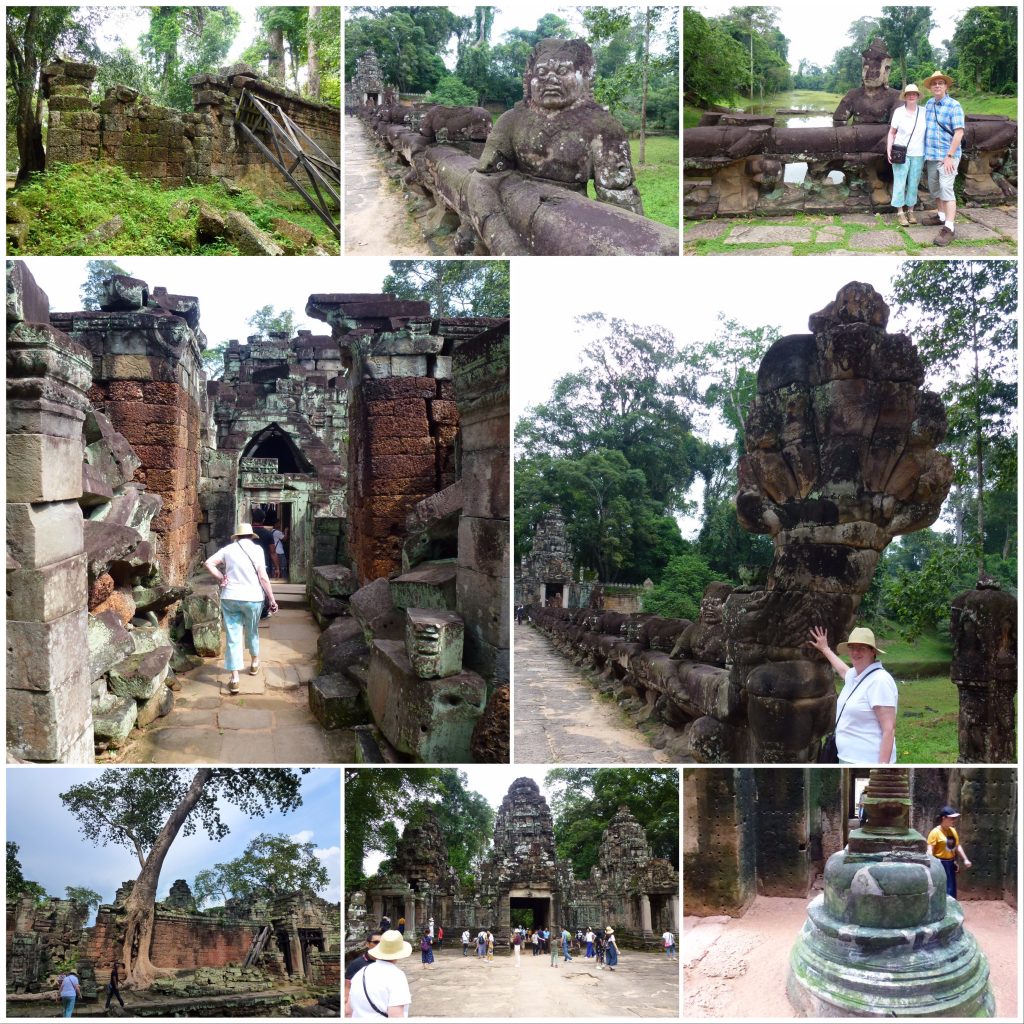
On to Ta Son temple, and we were shown that most of the structure was made of bricks (as opposed to quarried limestone or sandstone as was usual). Amazingly, the structure was still largely original, and had brilliantly withstood the test of time. The climb up was perilous, down even wobblier but we made it, puffing and perspiring as the humidity was on the increase, storm clouds rumbling in the distance. Our next stop was Neak Poan, the “hospital” temple on a man made island in the middle of a newly refilled lake. This temple was really different as it offered spiritual healing. Each of the 4 elements were represented by animal fountains at each of the compass points, issuing holy water into pools that pilgrims bathed in to cleanse their spiritual impurities. The central pool had a shrine to Buddha and offered enlightenment. Pilgrims in ancient times came here to pray, cleanse and heal. They bathed in and drank the water. These days, if you drank the water you would need to go to hospital I think.
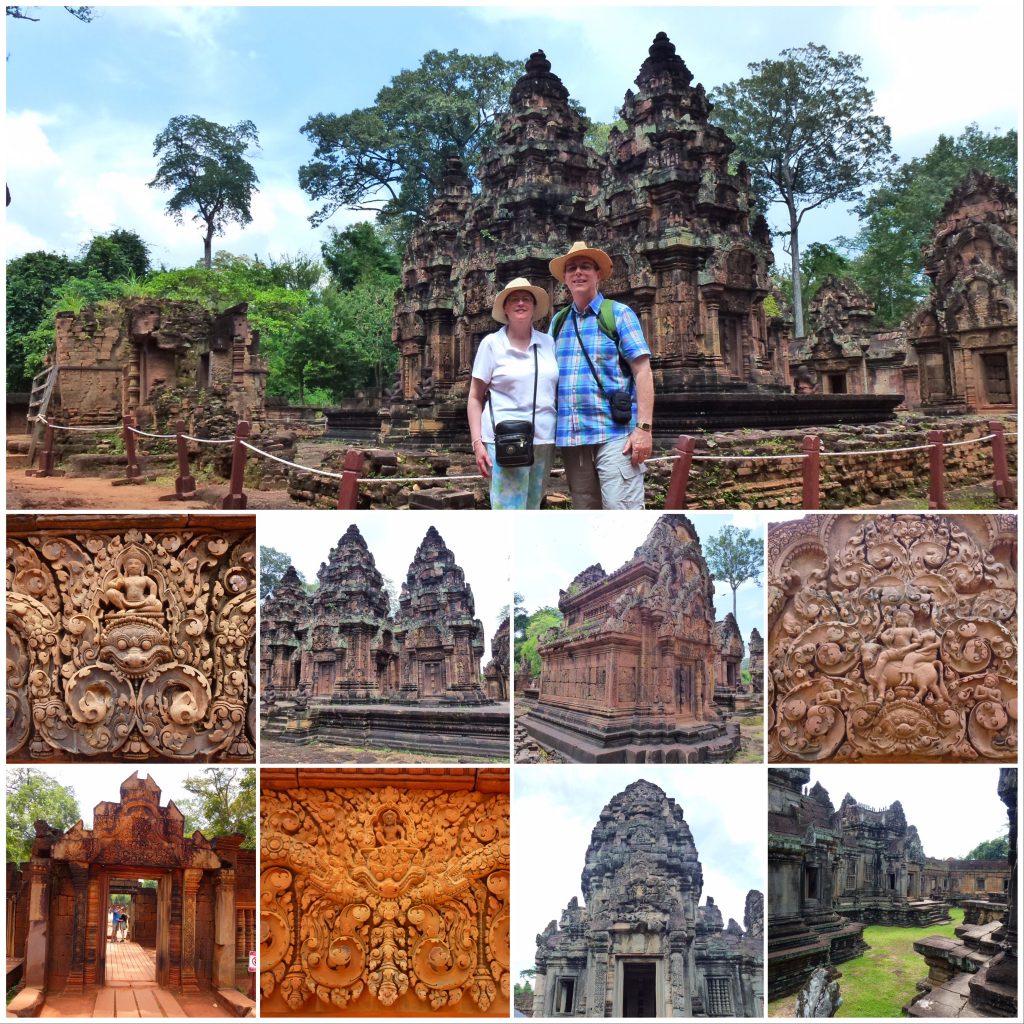
We lunched early, adopting the strategy of visiting temples at lunchtime to avoid the crowds. This far out there were fewer tourists – the roads were rough and the going a bit stomach churning, but only recently accessible by car, so getting popular. After lunch we went to the “Lady Temple”, a small but exquisite rare pink sandstone temple with some of the best ancient carving that exists. Every surface was covered in deep relief work, crisp imagery and decoration, complemented by the pink sandstone made this one of our favourite temples. Charming scenes of gods and men, dancing ladies, animals and floral motifs, just beautiful.
Our last temple was the partially restored Banteay Samre, a temple in the style of Angkor Wat, but much more compact. Built to house the remains of a kings son, it had a lovely collection of inter connected outbuildings around a central tower, covered promenades, naga balustrades and fine carving, a perfect end to what was an astonishing experience. You run out of superlatives, suffice to say we were very happy with our exploration of some of the temples in and around Siem Reap, and would recommend visiting in the cooler times of the year.
We had a tour booked today in the afternoon, so after a sleep in and leisurely breakfast, we decided to head into town to see what we could see. It is clear this is a hotel and party zone, hundreds of hotels and a bunch of blocks dedicated to bars, more to restaurants. We had a “Tuk tuk” (a motorcycle with a passenger compartment as a sort of trailer) take us to a destination, sort of. I am not sure the driver spoke English and we seemed to go around and around until, by luck, we found something close to where we wanted to go. It was then that we realised we did not have our card of the hotel for the return journey, but assumed all would work out.
We looked around, firstly Genevieve’s Fair Trade village (on recommendation) and then various “made in Vietnam” craft collectives, community projects and the like. It is clear the Cambodian people are gentle, polite to extraordinary lengths and quiet spoken (except in markets and road stops where they are trying to hawk their wares.
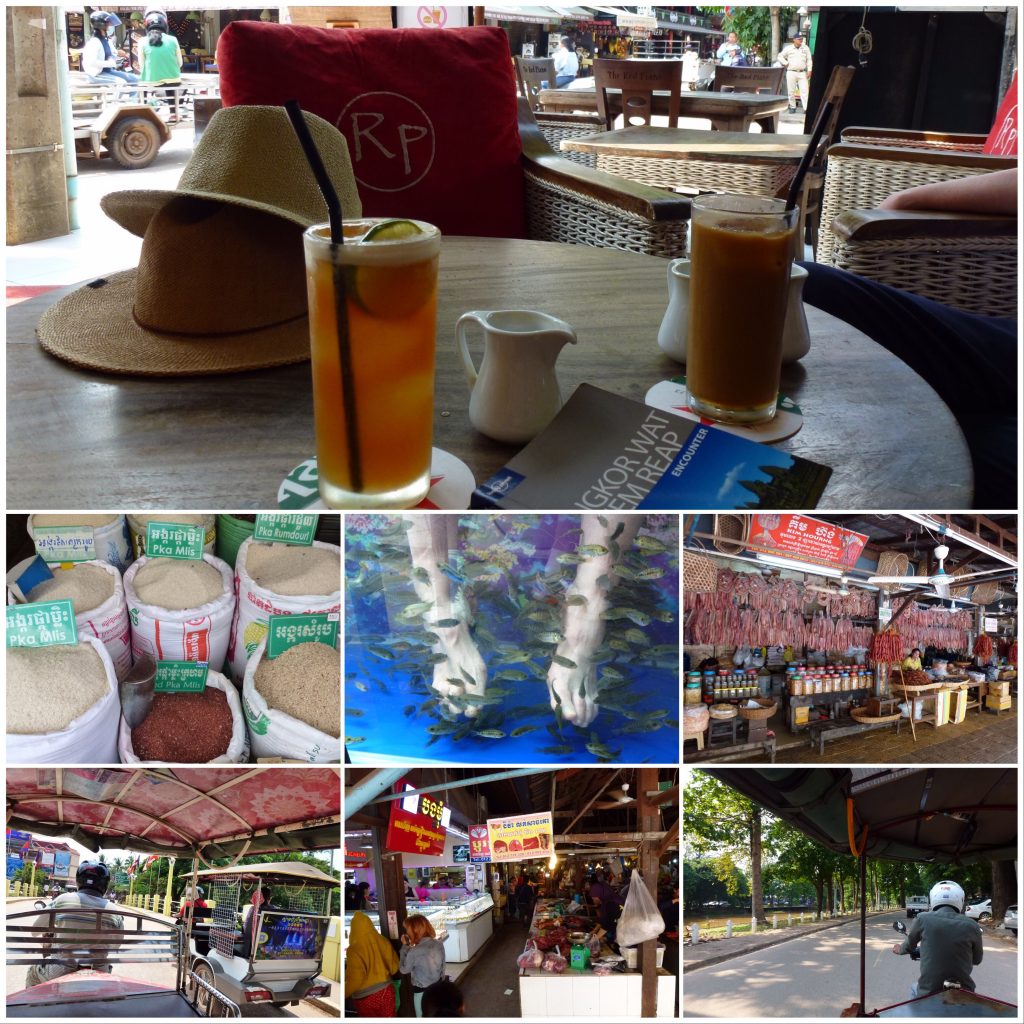
We then went to cool off, and chose The Red Piano, a famous local location, Jo got an iced coffee fix and I got a lime tea – very refreshing and cooler under a fan in the shade. Nothing prepares you for the humidity here, it is like a wall that hits you when you enter it from an air conditioned room and saps your strength almost immediately. The early mornings are coolest, with the peak of discomfort in the afternoon. We have taken to carrying water – heavy but really necessary for rehydration. After Jo had her coffee hit, she decided a “fish massage” was just the thing, and dangled her tootsies in a tank full of attentive fish, who proceeded to nibble for a half an hour – she thought they did a good job. Let us hope they are fed more than tourist feet.
We then wandered around the central market, stiflingly hot, narrow passageways with fine silver jewellery right next to a pork butcher cleaving with abandon. Live fish beside durian candy, tea with tobacco, spices with patent leather shoes, Noisy, colourful, an olfactory assault but so interesting. We purchased some bits and bobs then caught a Tuk tuk to lunch at “Tevys Place”, a local restaurant that featured in Jos food research.
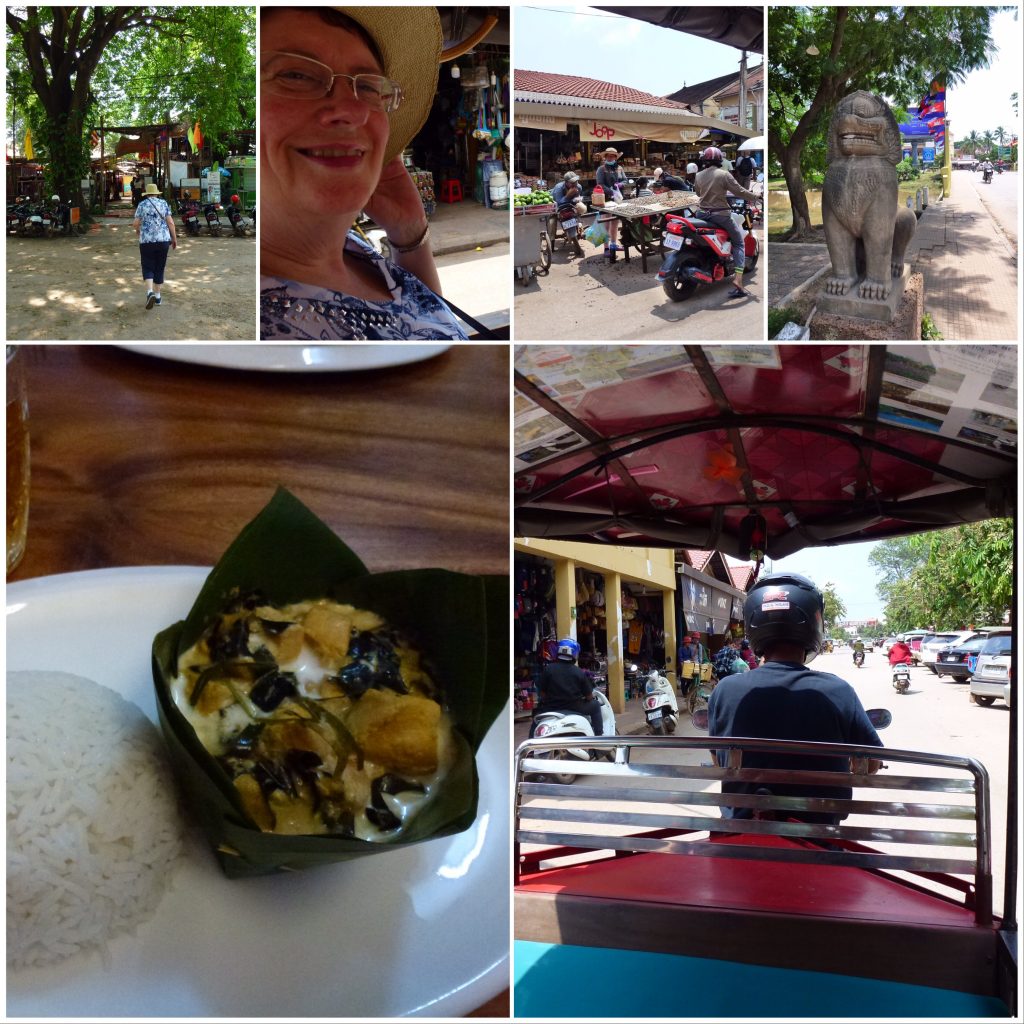
We have a list of Cambodian dishes we wanted to try, and lunchtime was Fish Amok time. Simple presentation in a banana leaf cup, a subtle blend of spices, fish, a green vegetable that was a lot like spinach and coconut cream made for the perfect accompaniment for rice and a delicious lunch. The local Angkor draft beer is excellent for rehydration also, great for me, with Jo having a fruit juice mix.
After lunch, the adventure of trying to get a Tuk tuk back to the hotel began. Our driver had no English, but tried to reassure us that he knew where to go, then took off in entirely the wrong direction, we saw a LOT of Siem Reap before we could convince him to head in the right direction, only to overshoot the road and go up the wrong one for another lengthy diversion. Eventually we found “concrete drain road”, named because …. and were deposited, windswept and over it at our hotel. Time for a swim and cool-off in the pool before tour pickup.
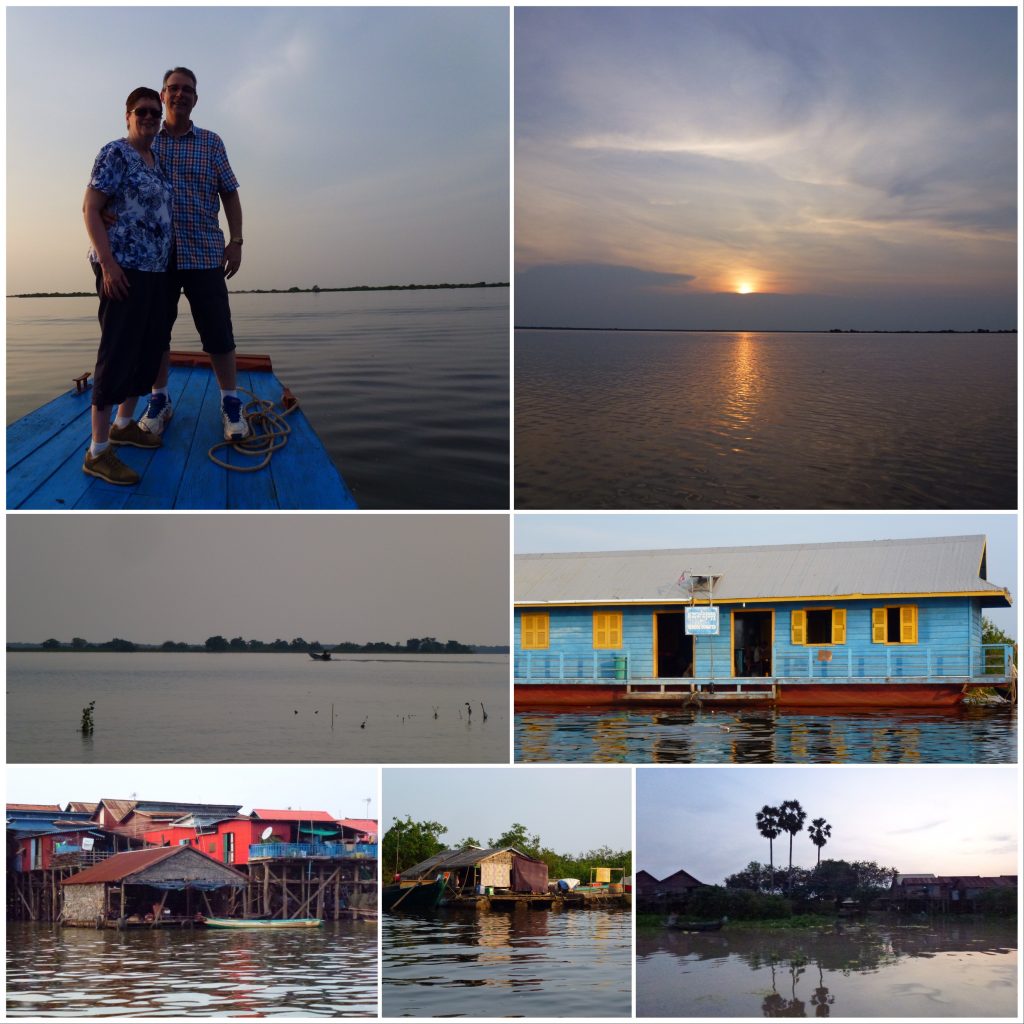
We chose “Community First: Kompong Khleang Floating Village Tours, because the tour fees go straight back into supporting “Bridge of Life” projects in the community we visited. The tour guide was originally from the village we were to visit, so had a lot of local knowledge and many relatives still living there.
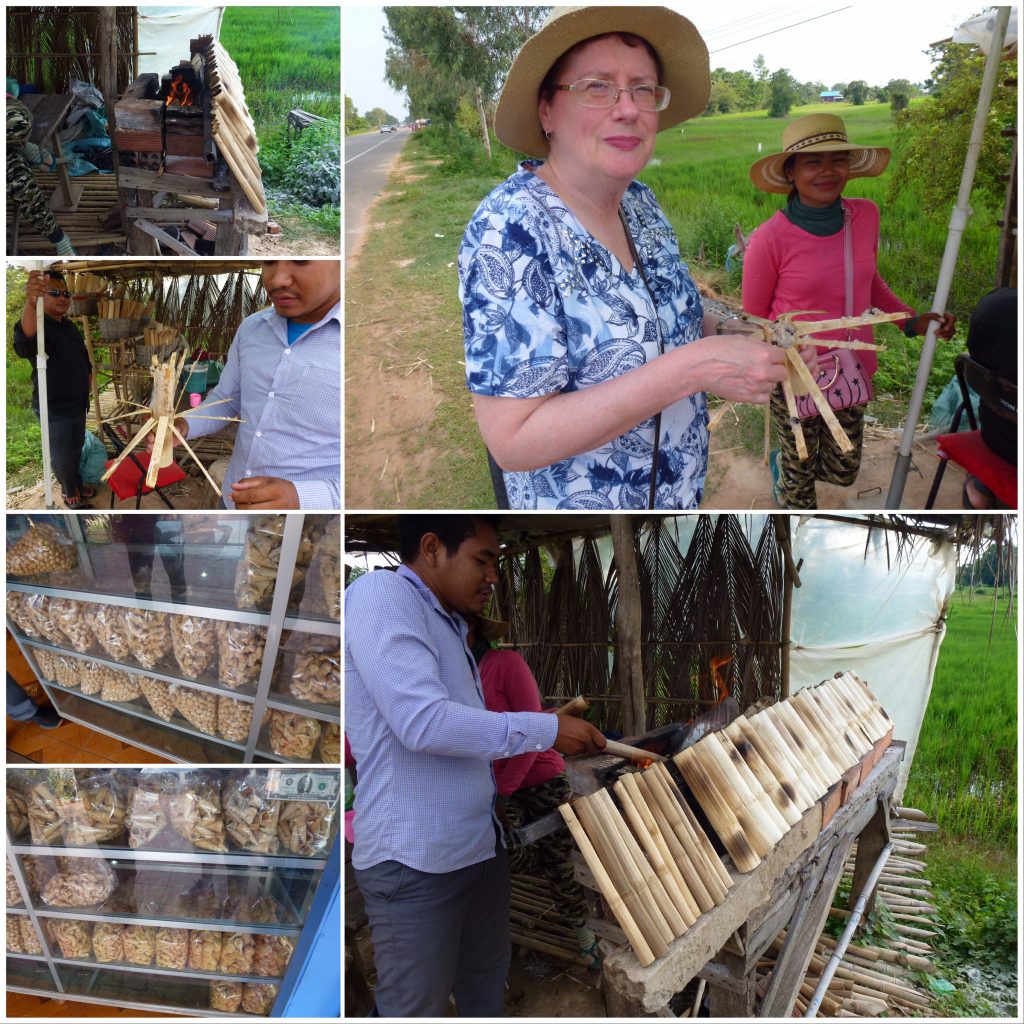
We started on a bus (small comfortable multi-seat minibus) and stopped along the way to try typical Cambodian snack foods. First up was sticky rice, cooked in bamboo with black beans and coconut cream. The long bamboo cups were charred over an open fire, then peeled to remove the black so they were thin enough to peel back revealing a cylinder of rice “cake”. It was hot, creamy and delicious. I can see why it is so popular as a snack food, and was astonished to see how many vendors lined the main road selling it. I also saw vendors with bottled liquid I assumed was sugar cane juice or some form of hooch, turned out to be petrol for motorbikes and tuk tuks.
Next stop was a Khmer baker, and samples of Khmer donuts (little deep fried rice flour and coconut snacks soaked in sugar syrup, “worm cakes”, which were rice flour shortbread of sorts in the shape of grubs – delicious (my favourite), then some dried mango (sheets of fruit leather). Fortified with snacks, we then left the bus for a long narrow motorboat to begin our river cruise.
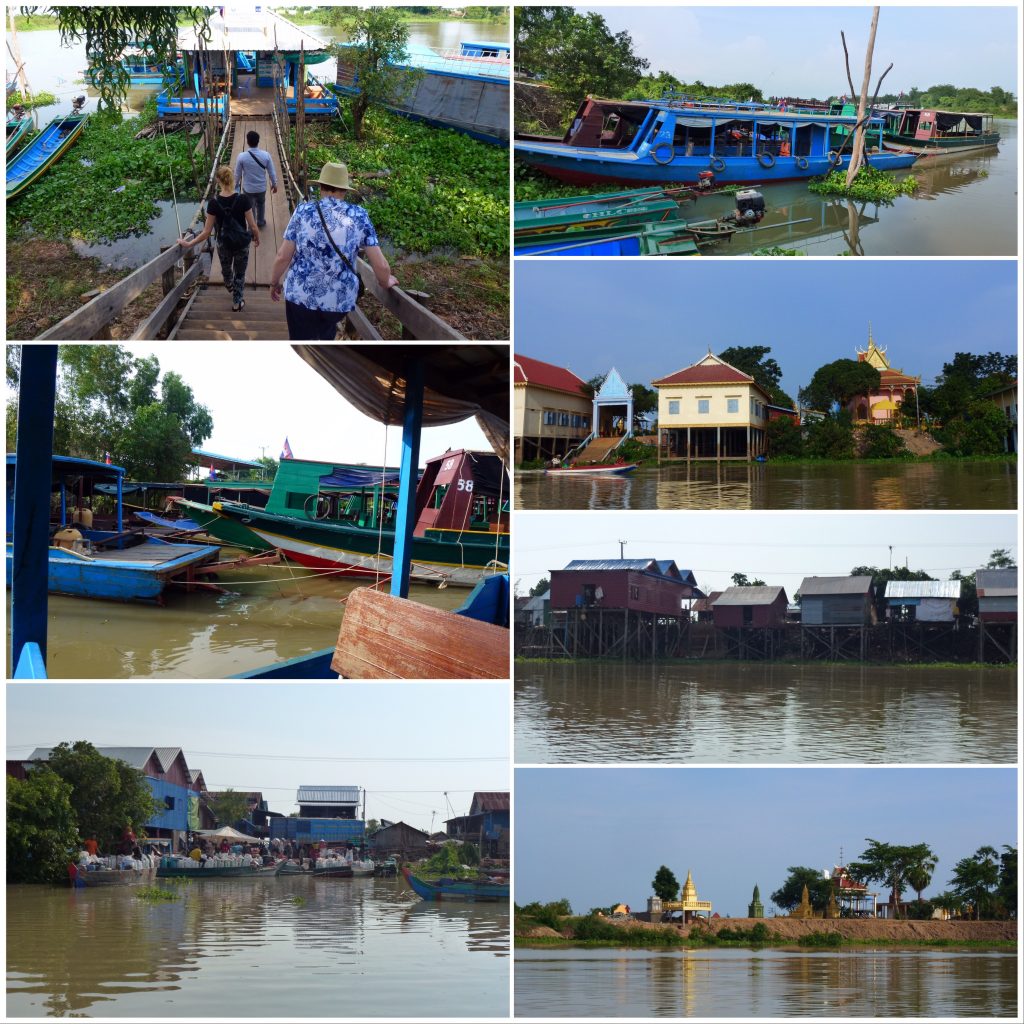
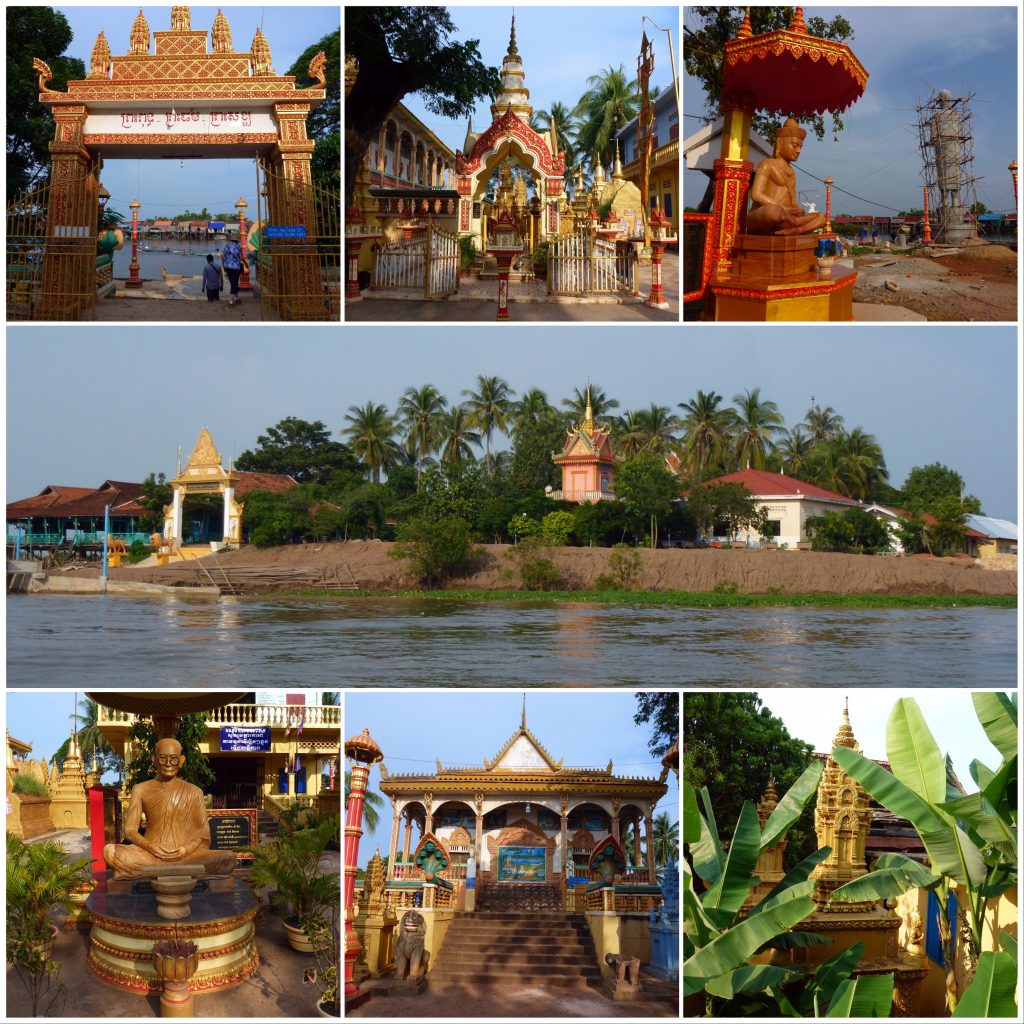
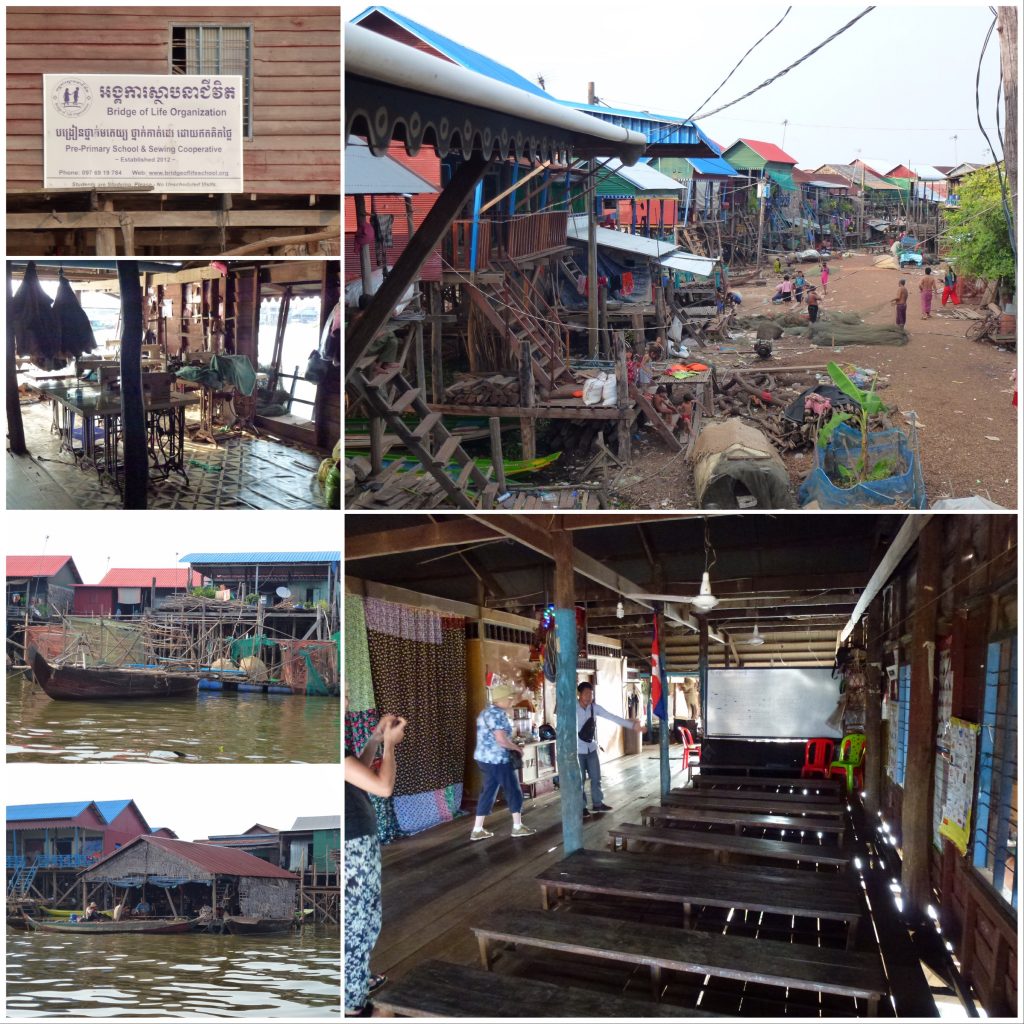
The area we explored was the waterways swollen by the wet season rains. Locals had 2 strategies for coping with the huge variation in water level: either build your house on tall stilts, or make your house float. We saw both. Most houses clustered around small fingers of dry land, but most were surrounded by water with boat the main form of transport. We visited an island that housed a monastery and public school (their computer lab was a Bridge of Life project), learning that class sizes were 50+ in a tiny room with one teacher. Interesting what we take for granted. We saw heaps of happy kids (everyone is so nice) and classrooms, temples and pagodas. We saw people washing in the water, drinking and cooking from it, learned that their plumbing emptied into it and figured people here have strong constitutions.
We were further upstream, to learn that most of what we were boating over is actually their farmland in the dry. Locals have 2 jobs: fishing in the wet (the waters are incredibly abundant) and farming in the dry (the soils, when the water recedes is very fertile). Amazing to think that they experience a total change of lifestyle twice a year.
We visited a Bridge of Life year 1 classroom in a small but densely populated village, and a sewing school, all useful projects that suit the locals. Apparently local primary schools are the best way to educate the little ones before they can swim, and hence travel by boat to a primary/secondary school. Literacy is hard work, with a 50 or so letter alphabet, 20 vowels and a bunch of letter modifiers, the language is musical with tones making the same letter sequences mean different things.