Pompeii and “real” Pizza in Naples

We could have taken a tour, we know, but we decided to organise the day ourself and it turned into a corker. Having sussed out the local trains, metro and tram system, we woke early and briskly walked to the train station, taking an intercity service to Naples, going downstairs to the metropolitan station at Garibaldi and hopping on a service out to Pompeii excavations. It was a bit of travel, but interesting to see the country side contrasted with the inner city sprawl and high density living outside the city.image
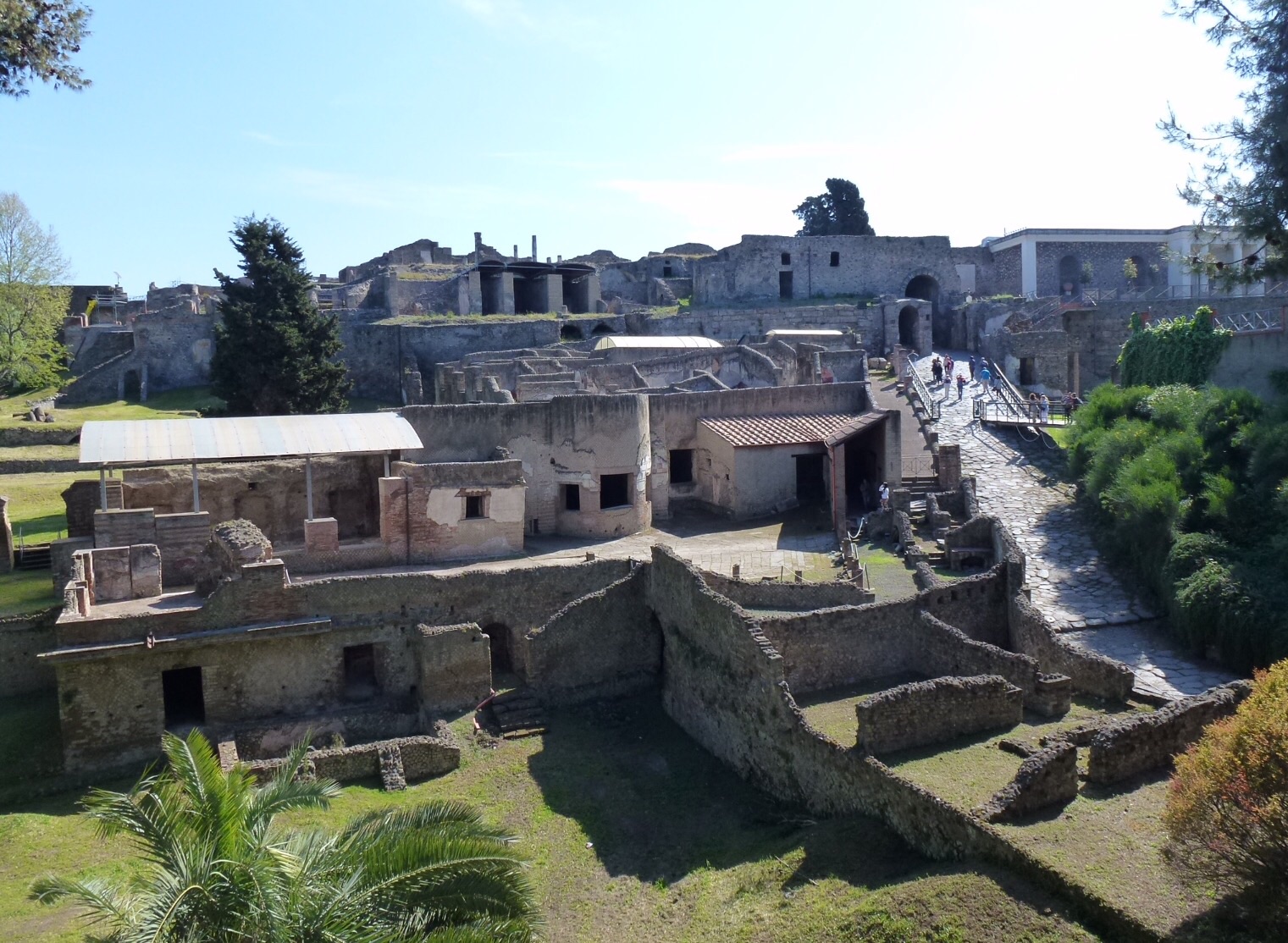
Arriving at Pompeii, we successfully navigated the insistent ticket scalpers and bought entry tickets to the ruins at the gate, found free toilets and had morning tea (some crunchy ricotta filled pastries we picked up at the Rome train station supermarket- yeah, I know, weird right. Interestingly our experience of train station food in Australia is miserable, in stark contrast to the fresh and delicious food and drink offerings in Europe – when did Australians and The English stop caring about quality and value for money for travellers?) before heading off to explore.image

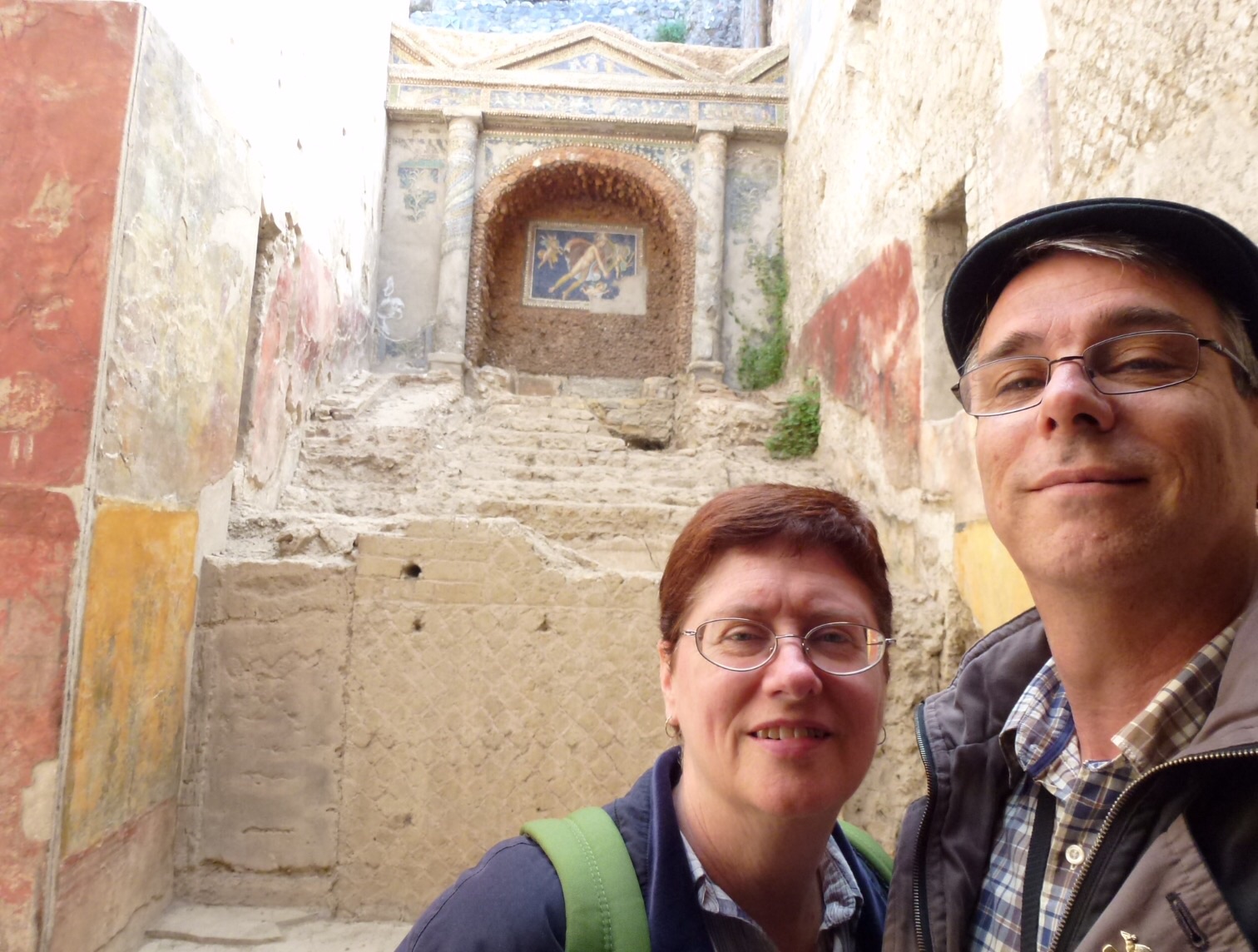
We entered the site, along a basalt boulder street into a bathhouse come brothel. We began to appreciate a number of things about Pompeiians – they loved life and liked to party. We saw elaborate painting, heated floors (hypocaust) and baths and bedrooms, as you would expect.image
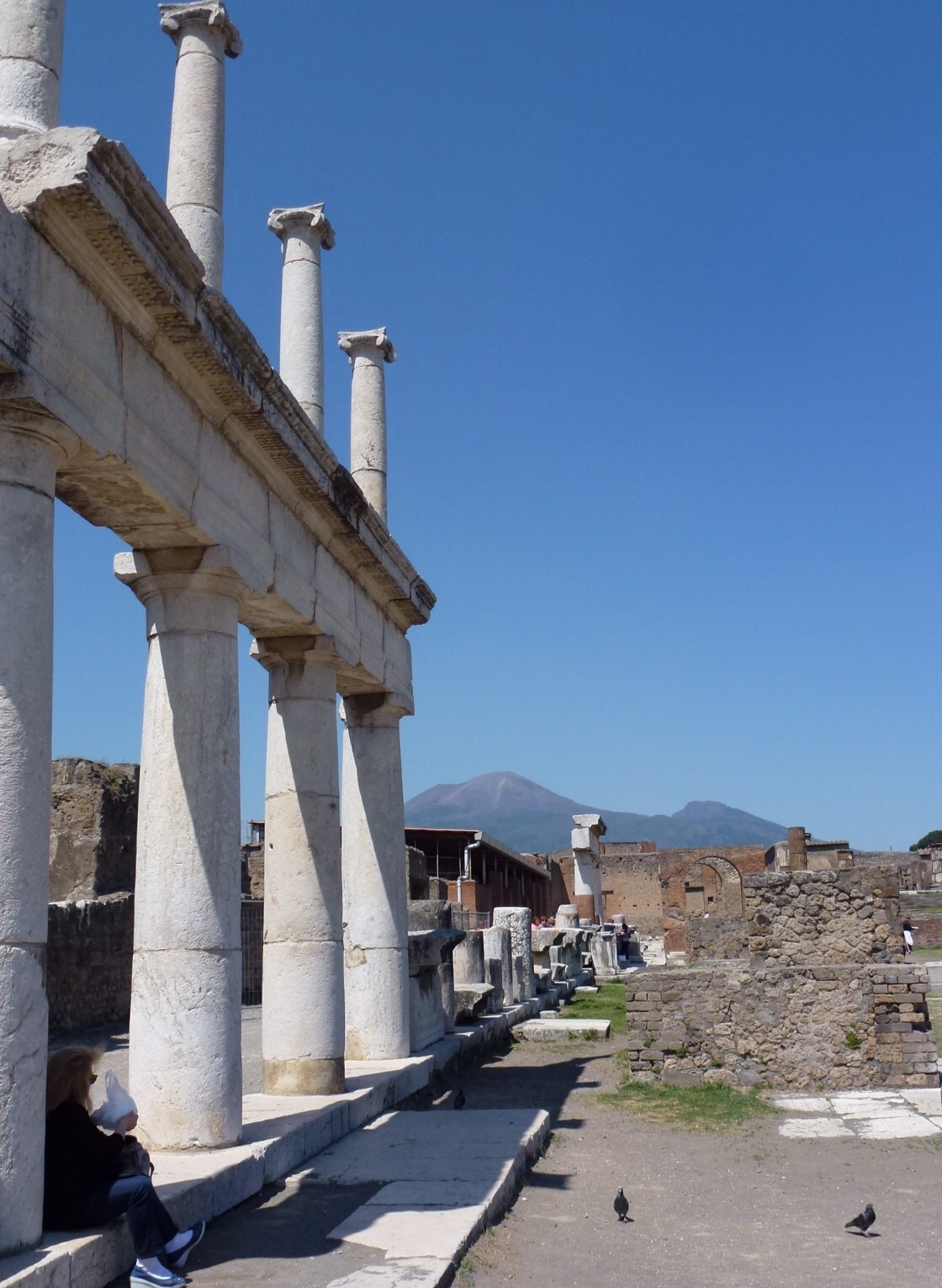
Due to the rapid and catastrophic nature of the fall of Pompeii (a volcano called Vesuvius adjacent erupted and buried it in meters of ash – you knew that right?) and the amazing state of preservation this ancient and extensive city was afforded by the thick volcanic blanket we were blown away by how much of the city is left.image
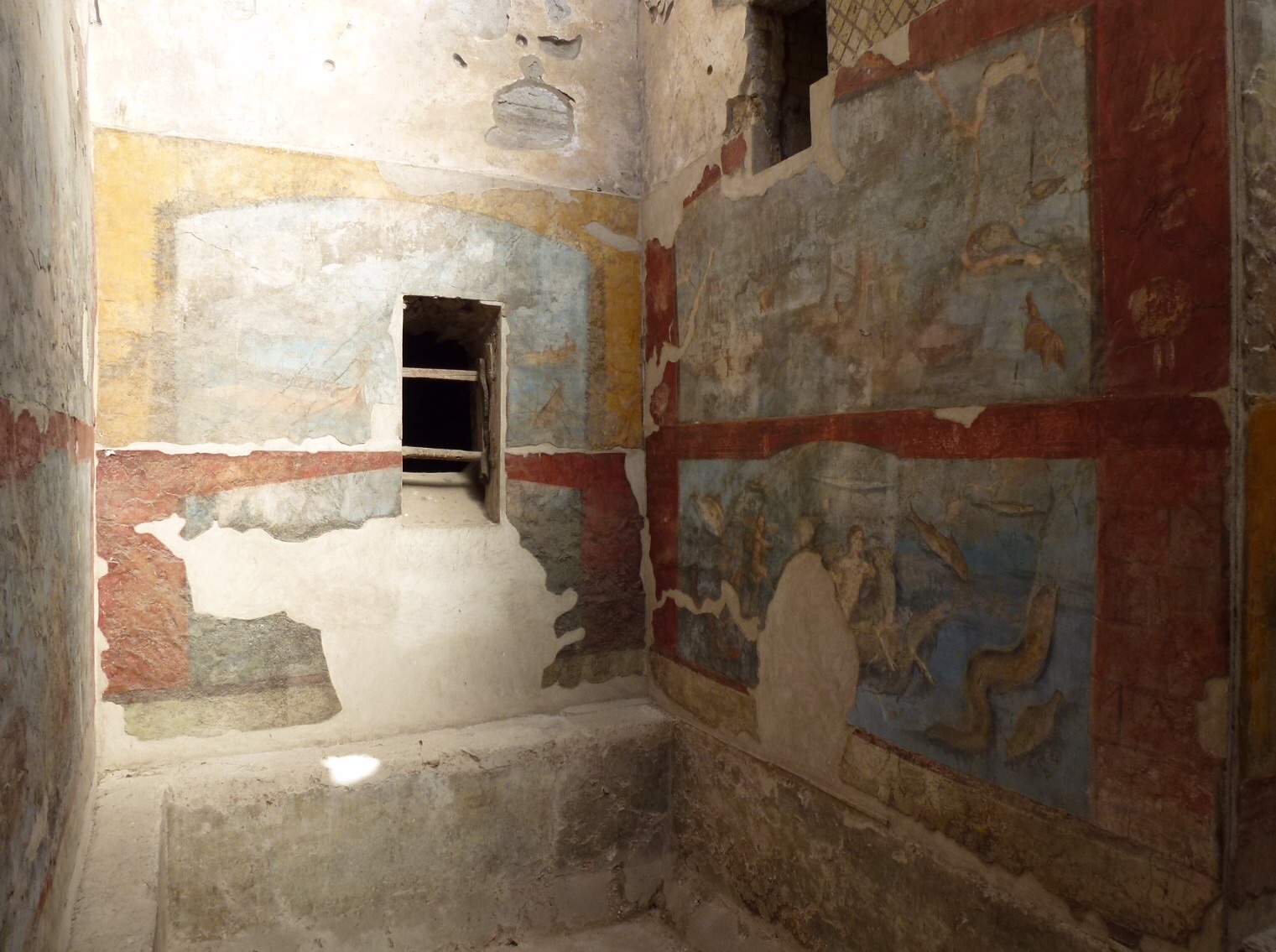
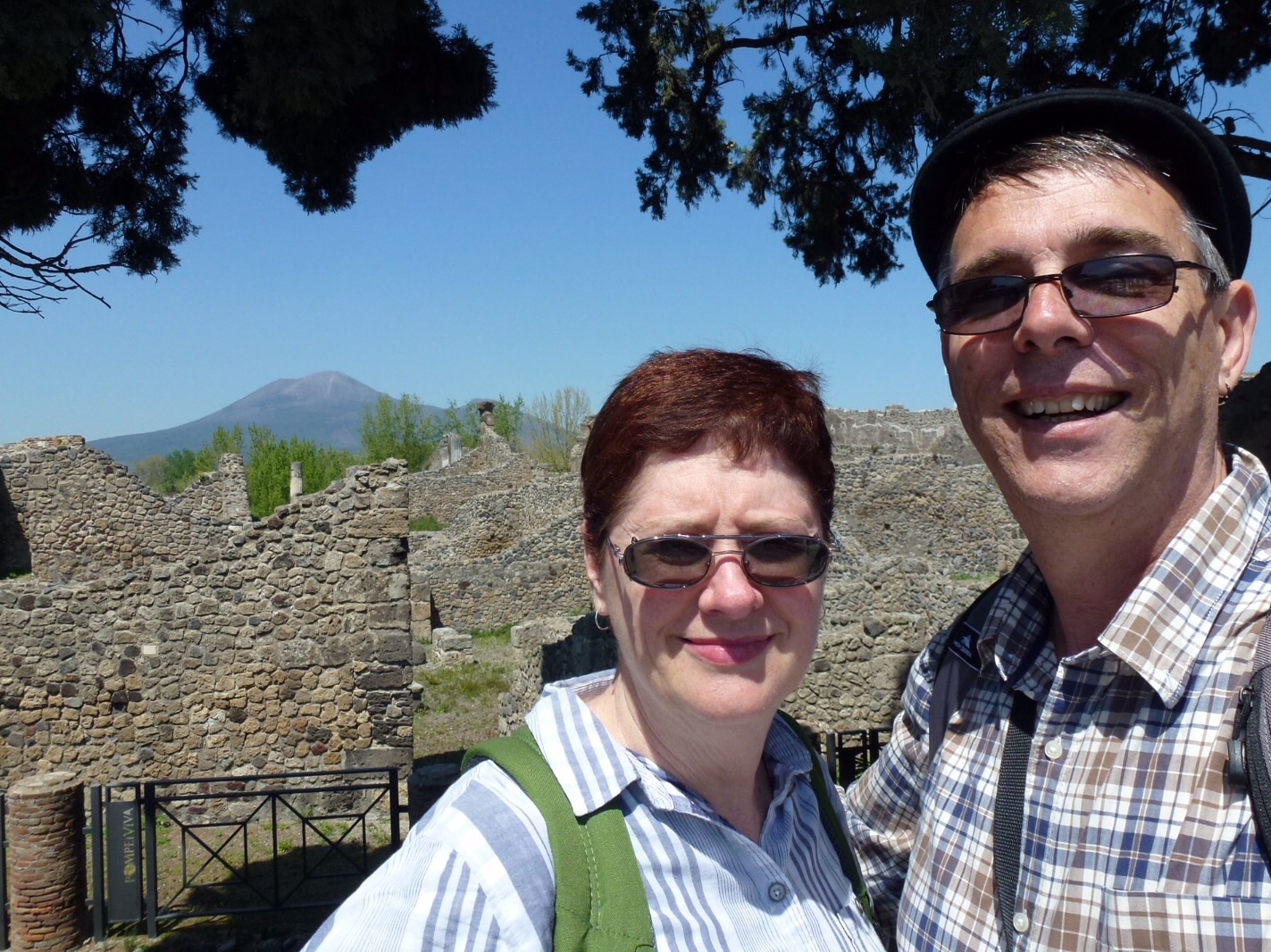
Both Jo and I had vague understandings of the town but were amazed and surprised by how much of the working city was so well preserved. Wandering the streets, entering buildings you really got a sense that people lived, worked and played here.image
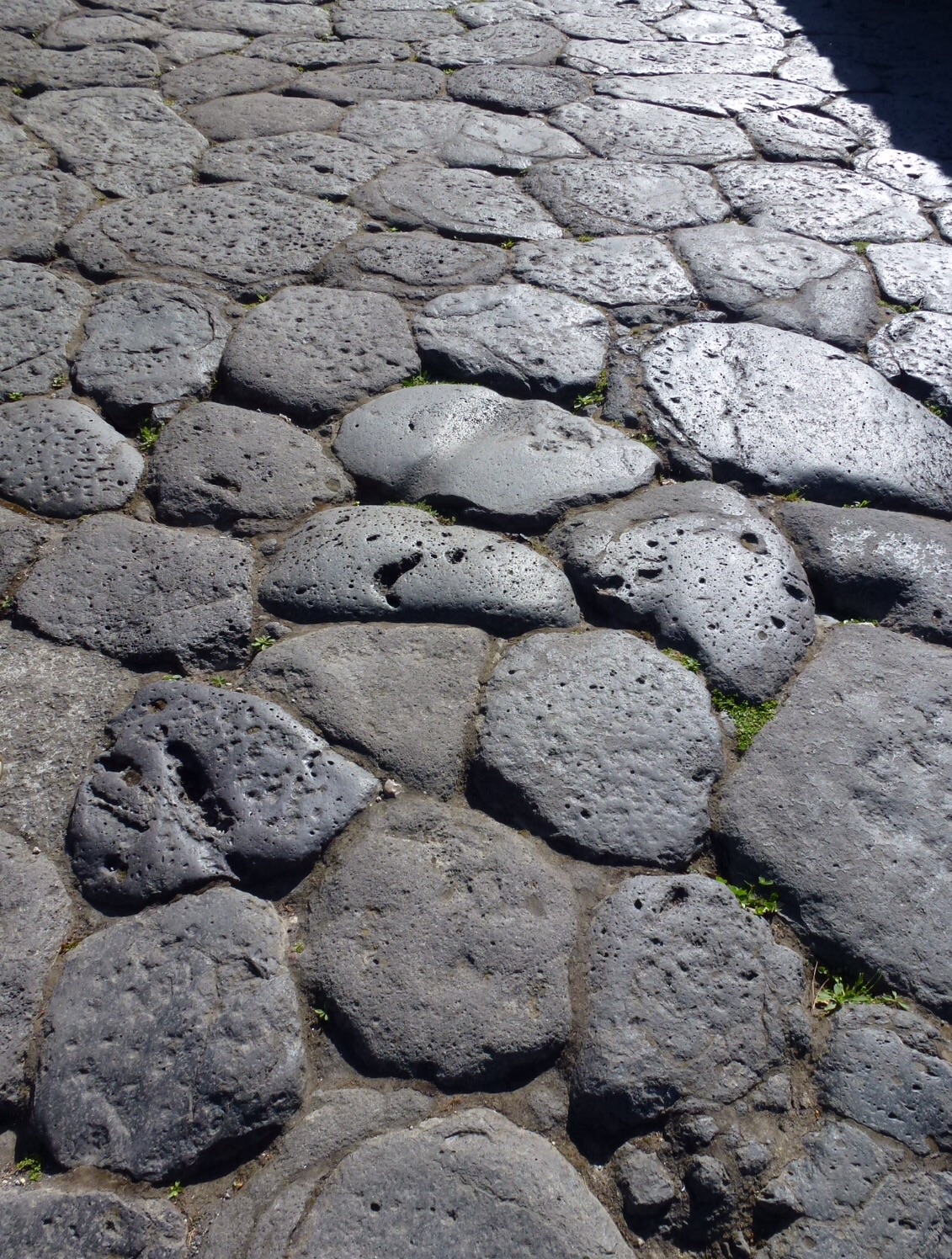
A well developed road network existed, paved streets and pedestrian walkways, when the streets got manky (markets and animals make a mess) they were sluiced clean, stepping stones allowed people to cross without getting feet or cloths dirty.image
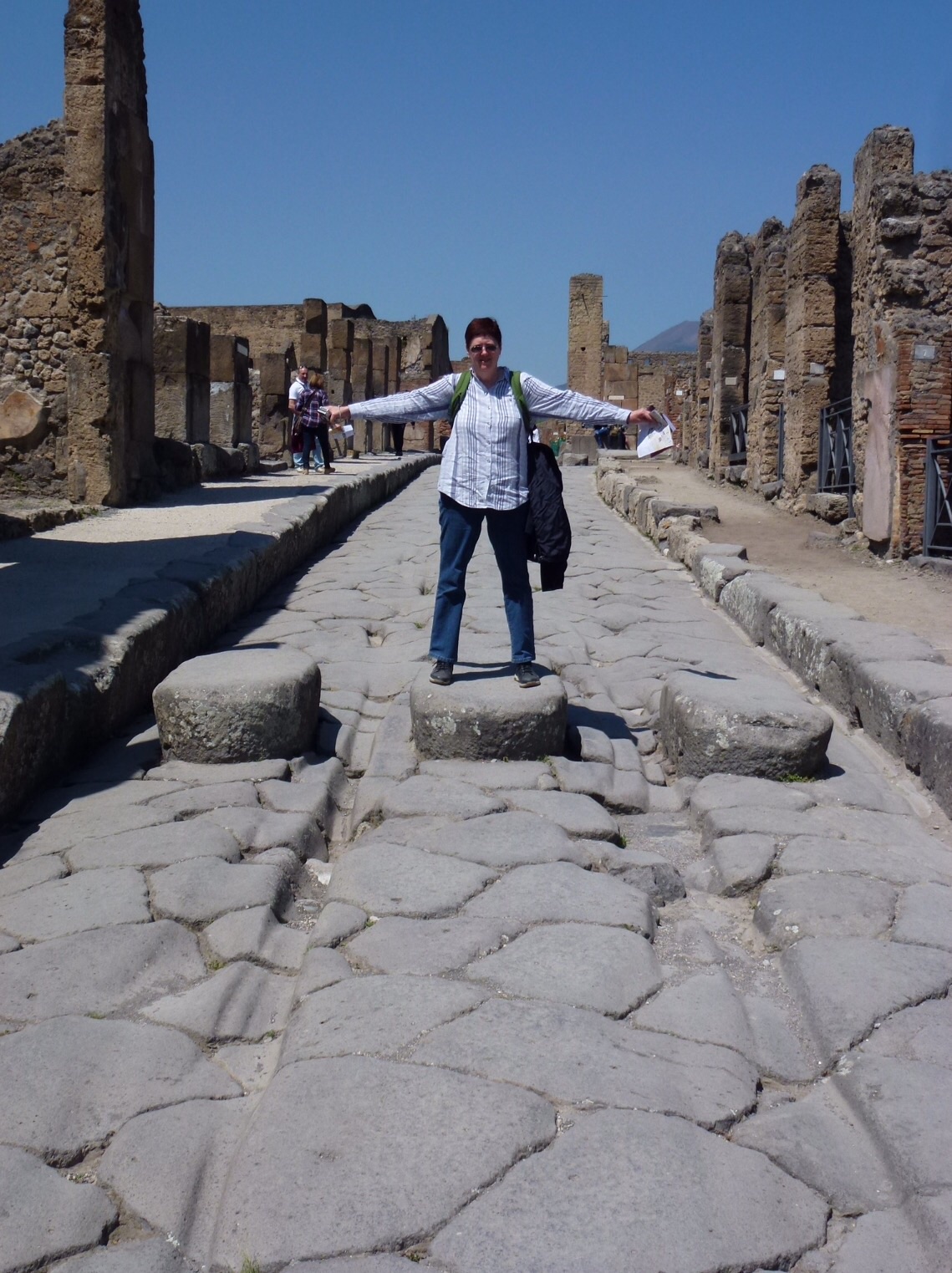
The stepping stones were wide and low enough to allow wagon wheels between them and we saw lots of wear tracks left by well used wagon trails.image
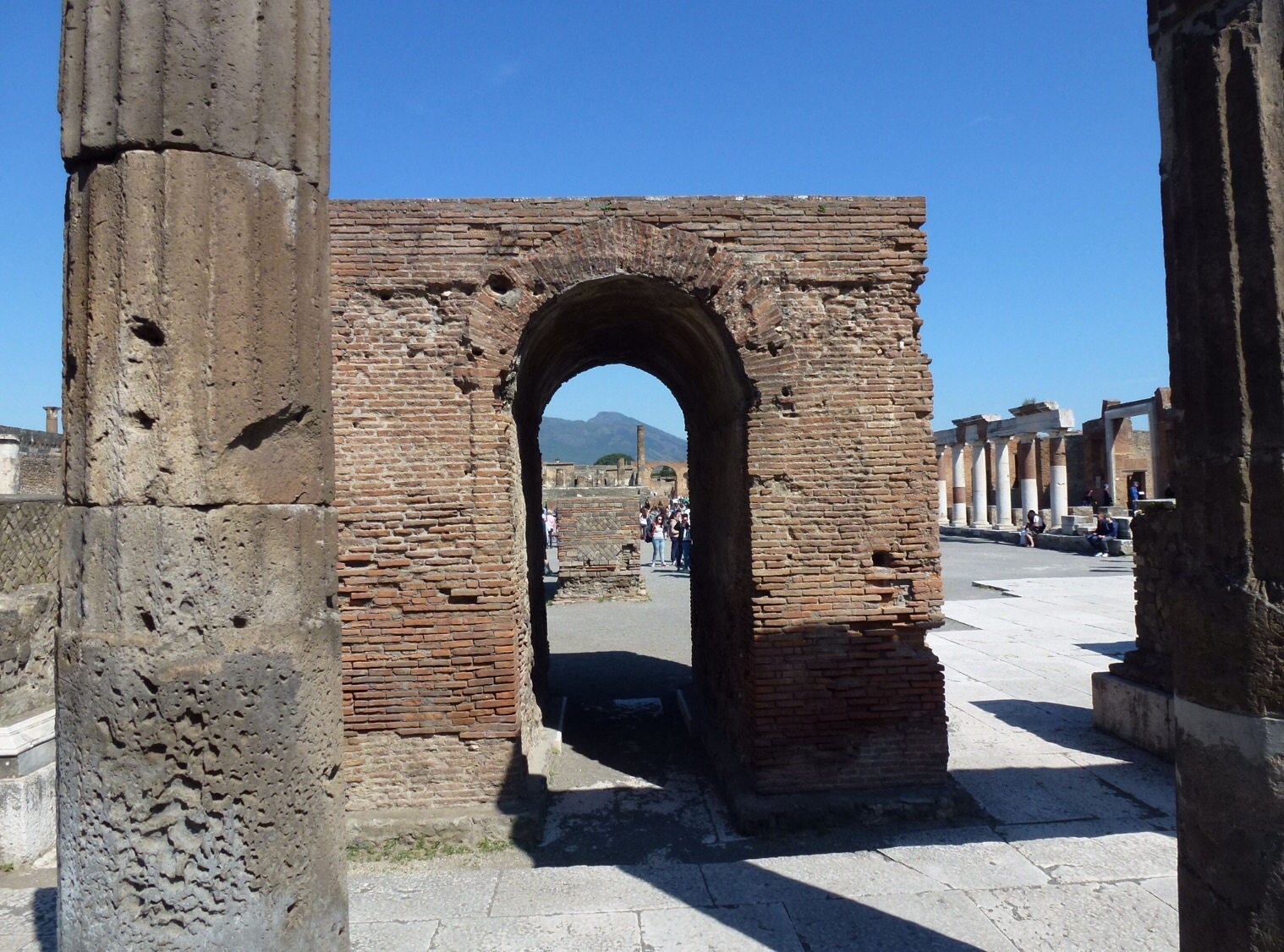
The city had a well developed water system, delivered by aqueducts and lead pipes, using springs and cisterns to allow a relatively water lush lifestyle to evolve. Many of the houses still had the original plumbing intact.image
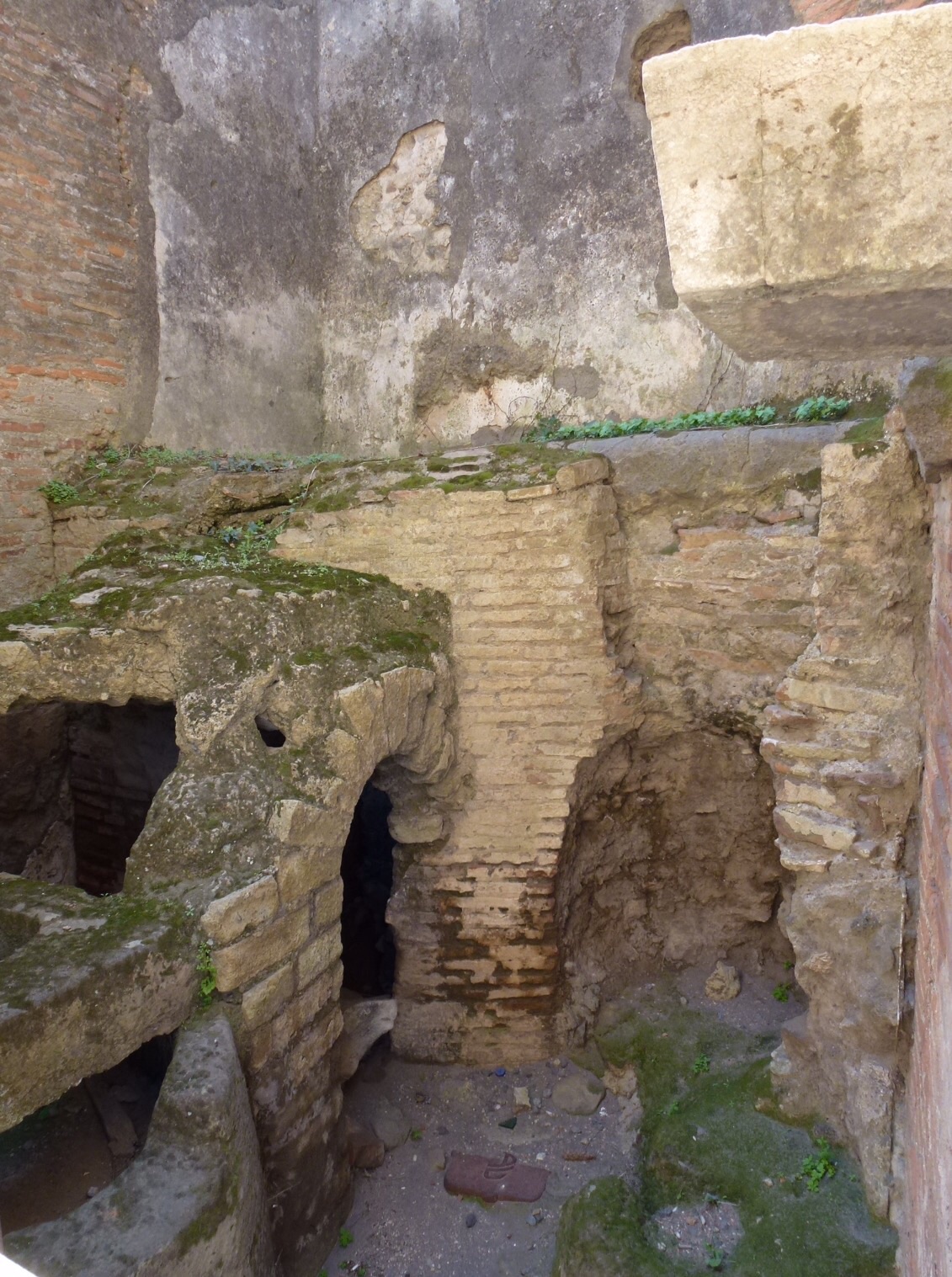
The city had a well developed market economy, we strolled though piazzas and courtyards that were so obviously markets and shops, vivid frescoes illustrated what was for sale (both in the food/drink markets and in the fleshpots).image
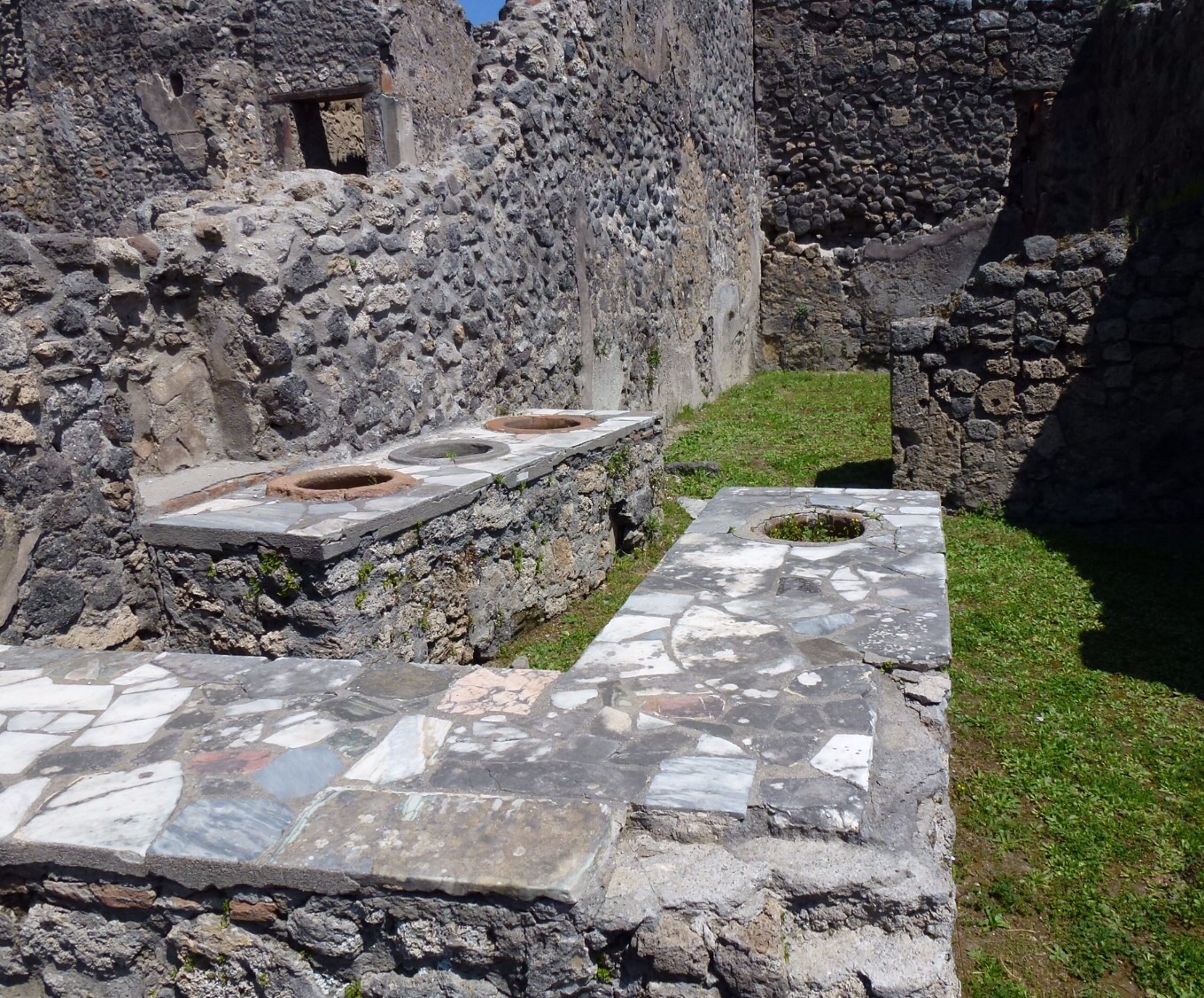
It was easy to imagine bustling food and wine vendors, we encountered marble countertops with holes to warm pots of stew and soup, amphorae to chill wine and vats for oil and vinegar.image
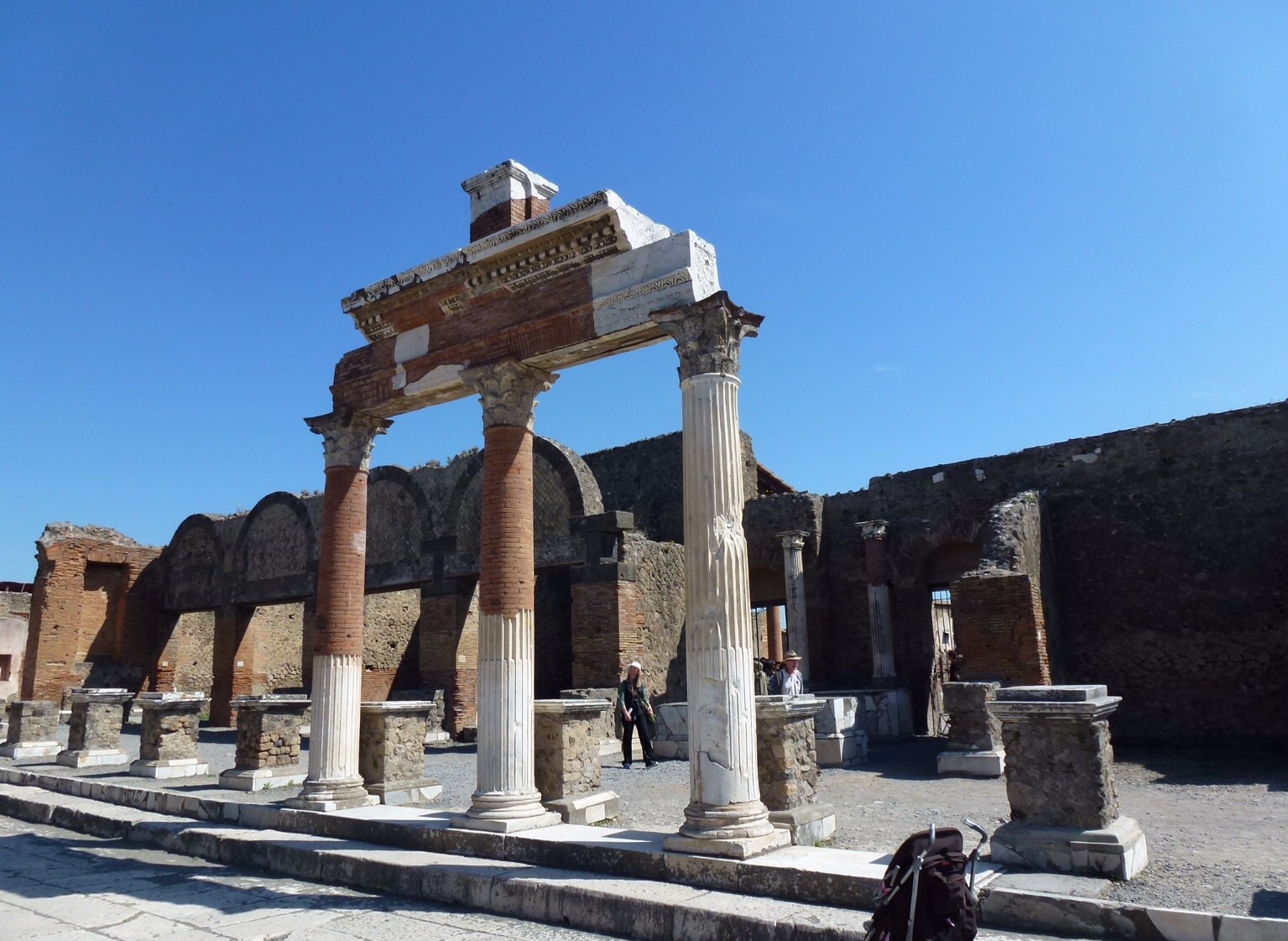
Religious life was clearly important as there were many temples, to all sorts of gods from discrete to monumental, in market squares, in private residences and atop hills overlooking public squares. Most the the statuary has been robbed (for Naples Archaeological Museum) and most of the ornate marble and mosaic floors and decorations have also been relocated but the traces that remain are amazing.image
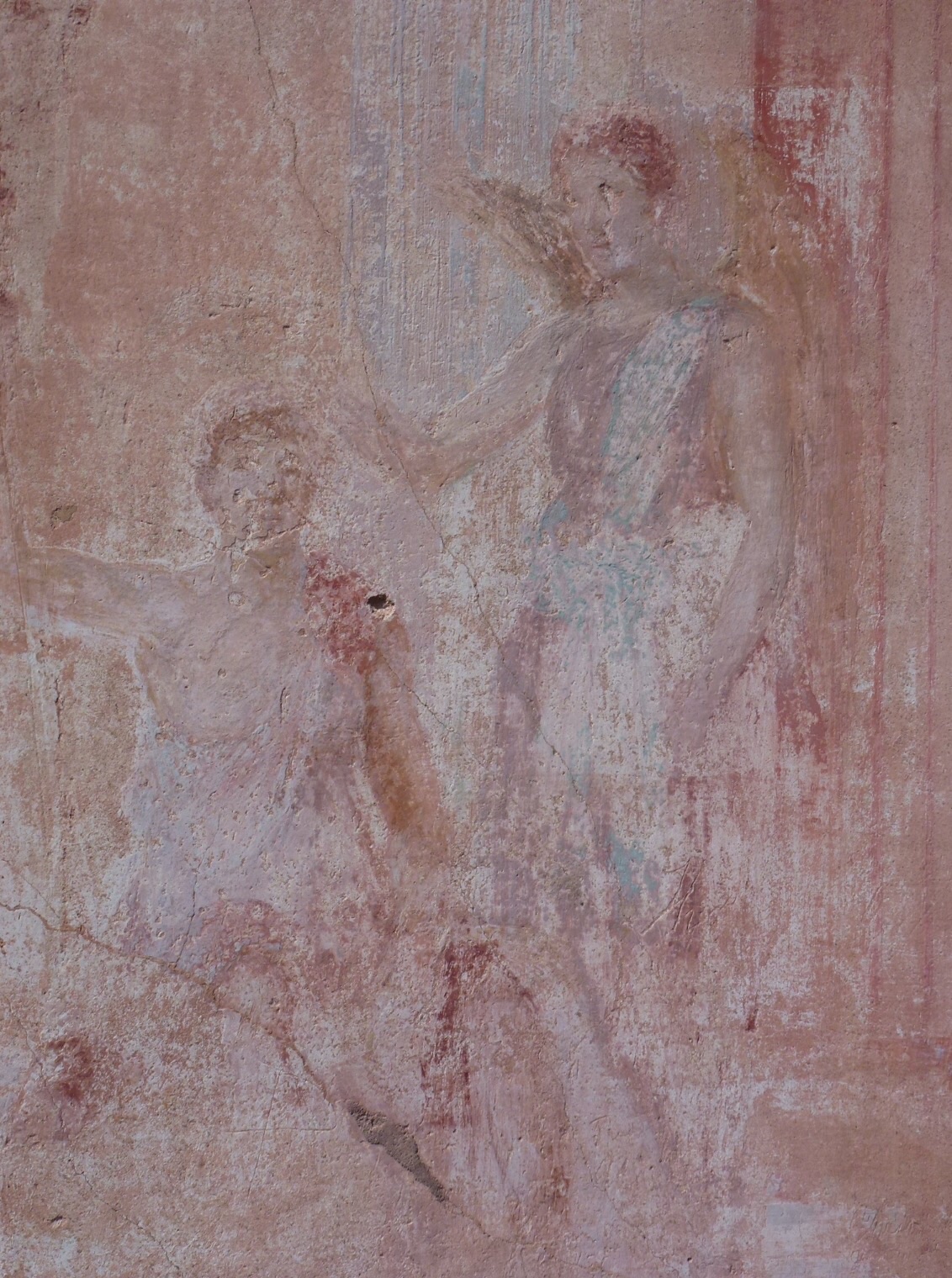
We wandered main streets, back streets, in and around residences, noticing the minutiae that go to make a working city. We saw a urinary (a place were urine was collected, a tax was paid apparently and the urine was used to tan leather and it had other public works applications – how practical and icky)  and also noticed a number of plaster casts of citizens – eerie echoes of people who had collapsed, been covered in ash and decomposed leaving a skeletal air pocket that archaeologists then filled with plaster before excavating.image
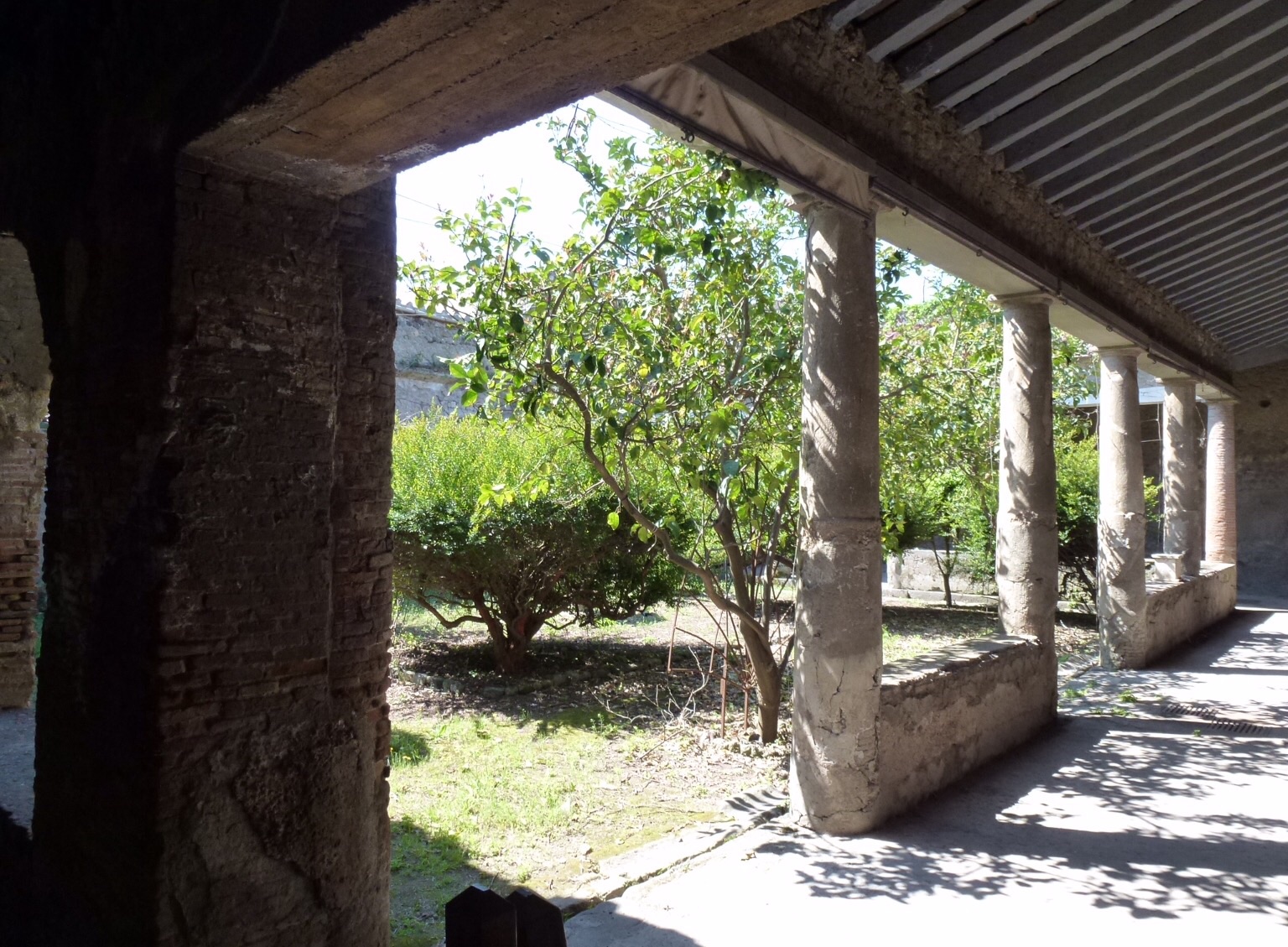
One can only imagine the horror suffered by such a lot of citizens busily praying the gods would calm down but the looming Vesuvius, ever threatening even today, had other ideas. It is clear from what has been dug up that they did not stand a chance and had very little warning of the impending eruption.image
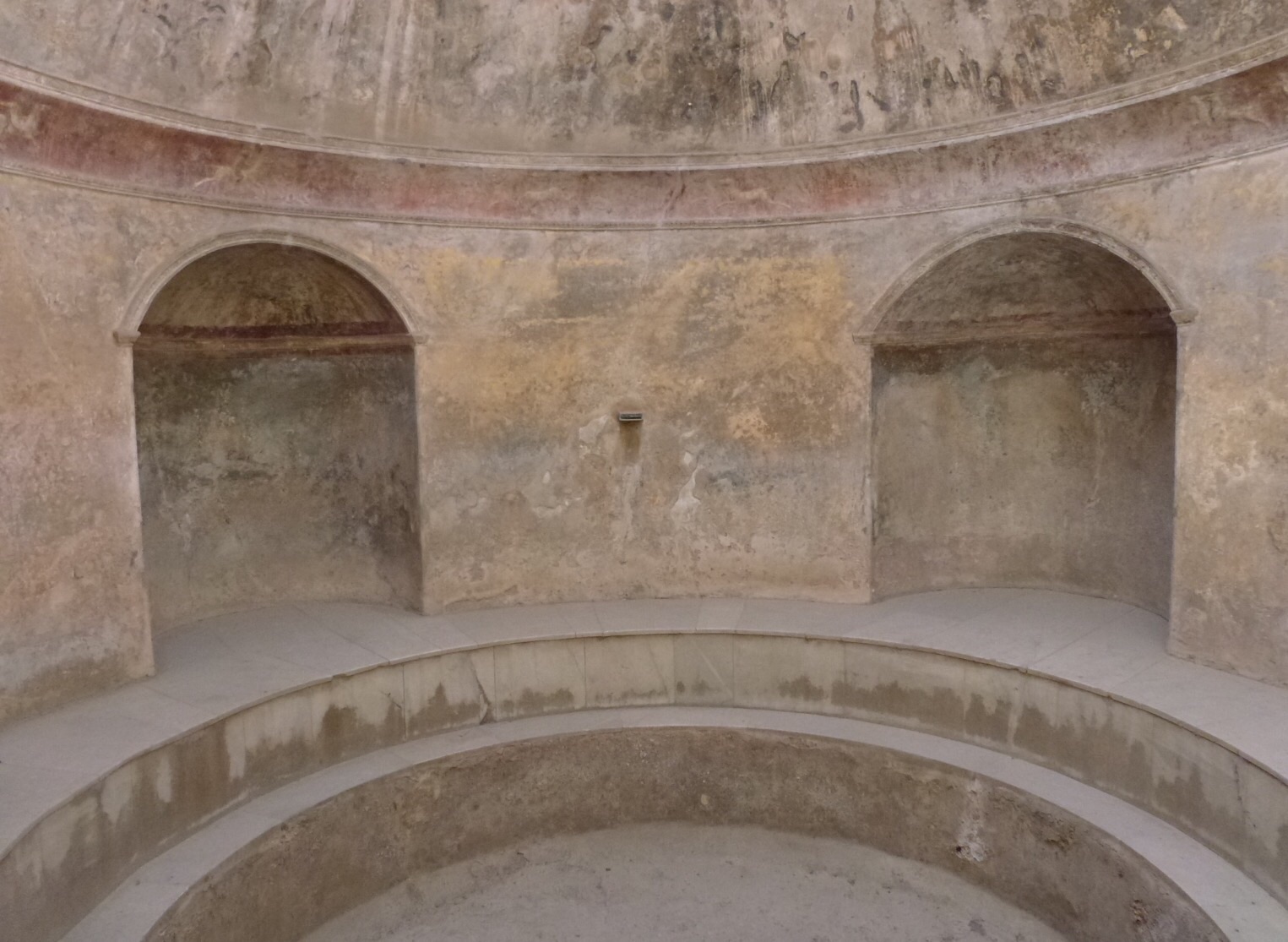
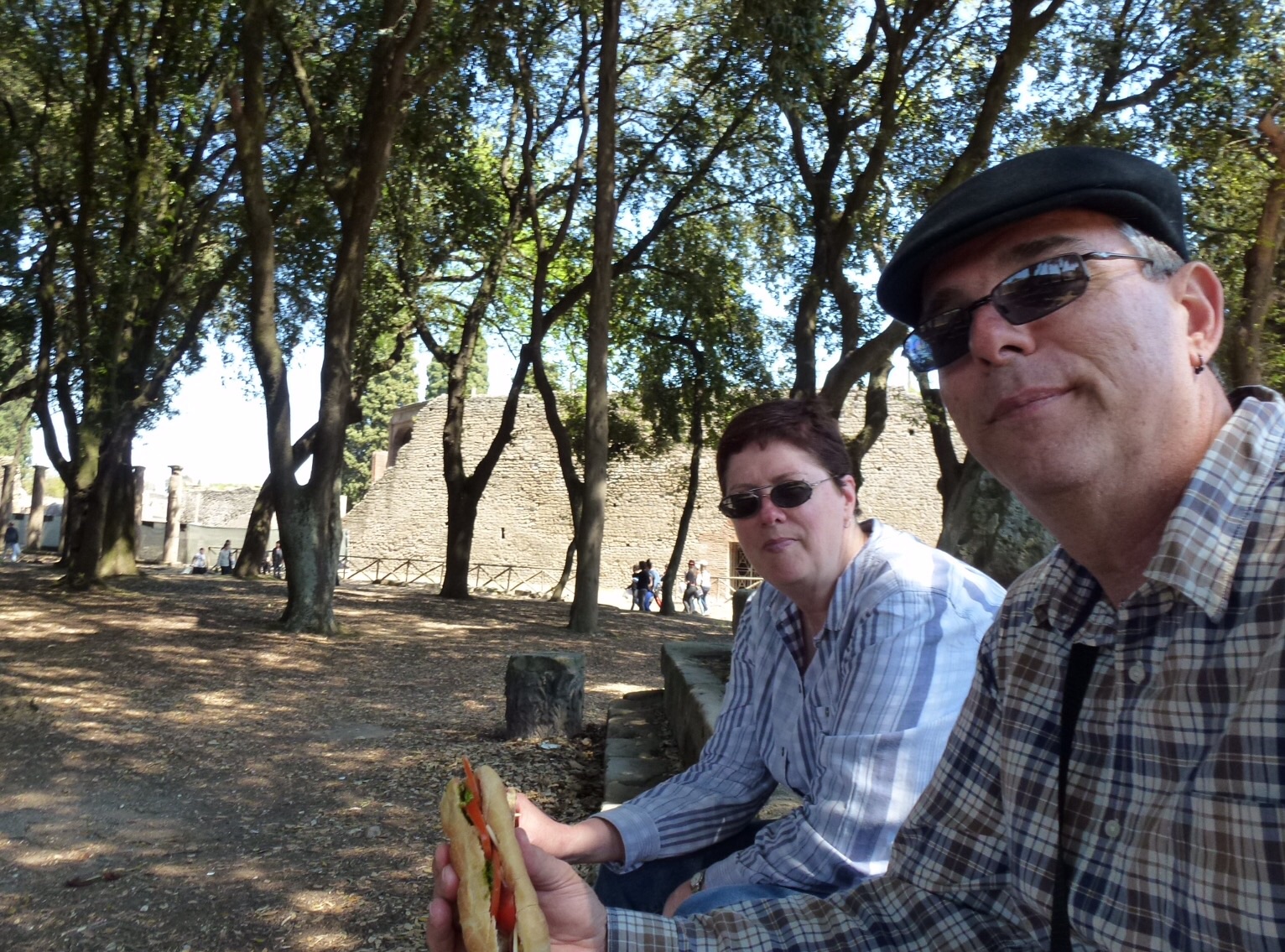
We lunched in a lovely shady garden. We had brought picnic fixings then explored beautiful and newly re-used amphitheaters and other public buildings. Looking at our maps it is evident how little of the city has so far been uncovered – it was a vast metropolis and I am sure it will keep archaeologists busy for years uncovering well preserved clues about life in the roman lifestyle.image
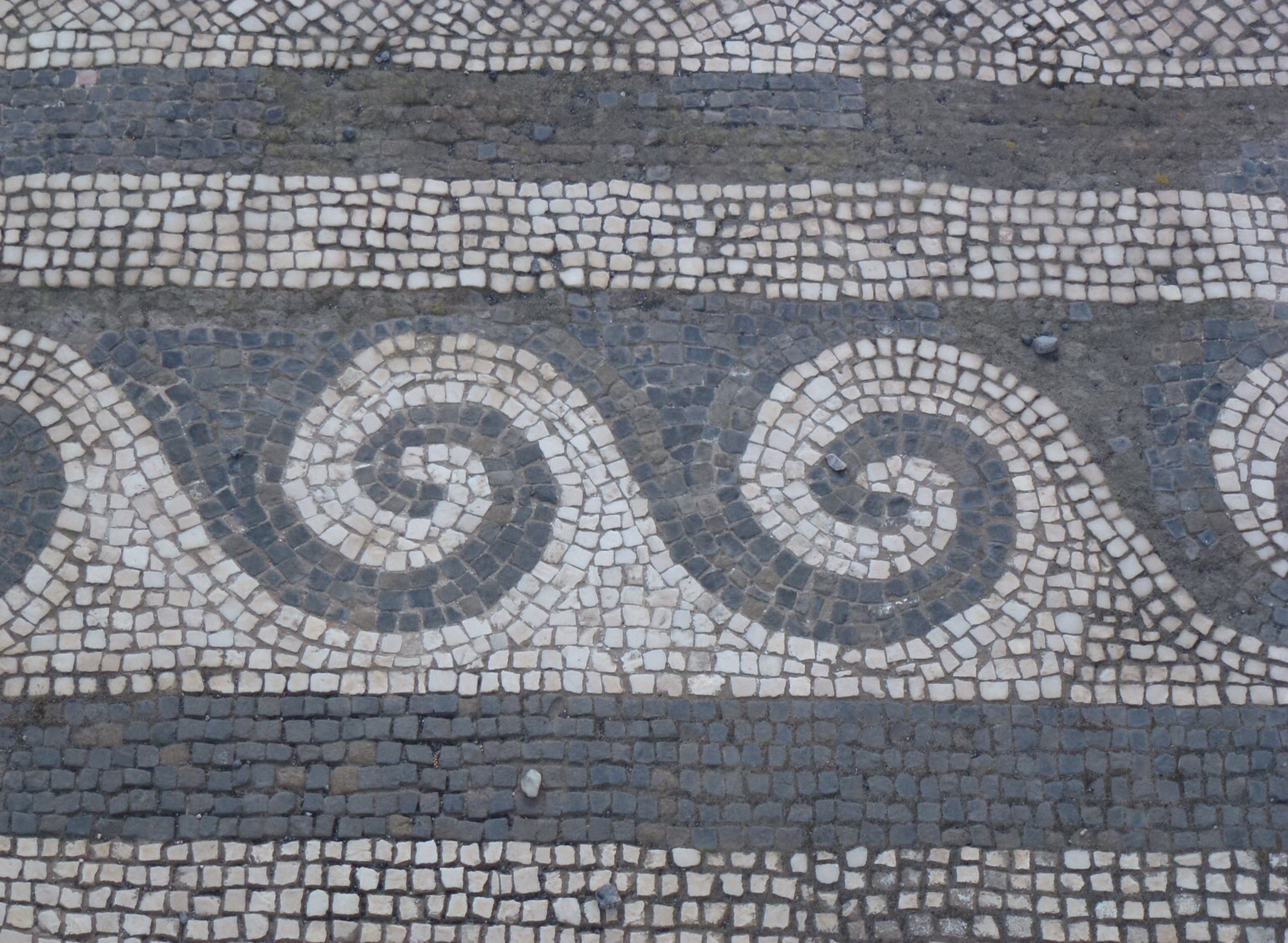
Imagine what would have been had the disaster not occurred. We conjectured that this city, being so centrally located in terms of trade, would have been a major modern force, giving Rome and Florence a run for their money in terms of size and importance.image
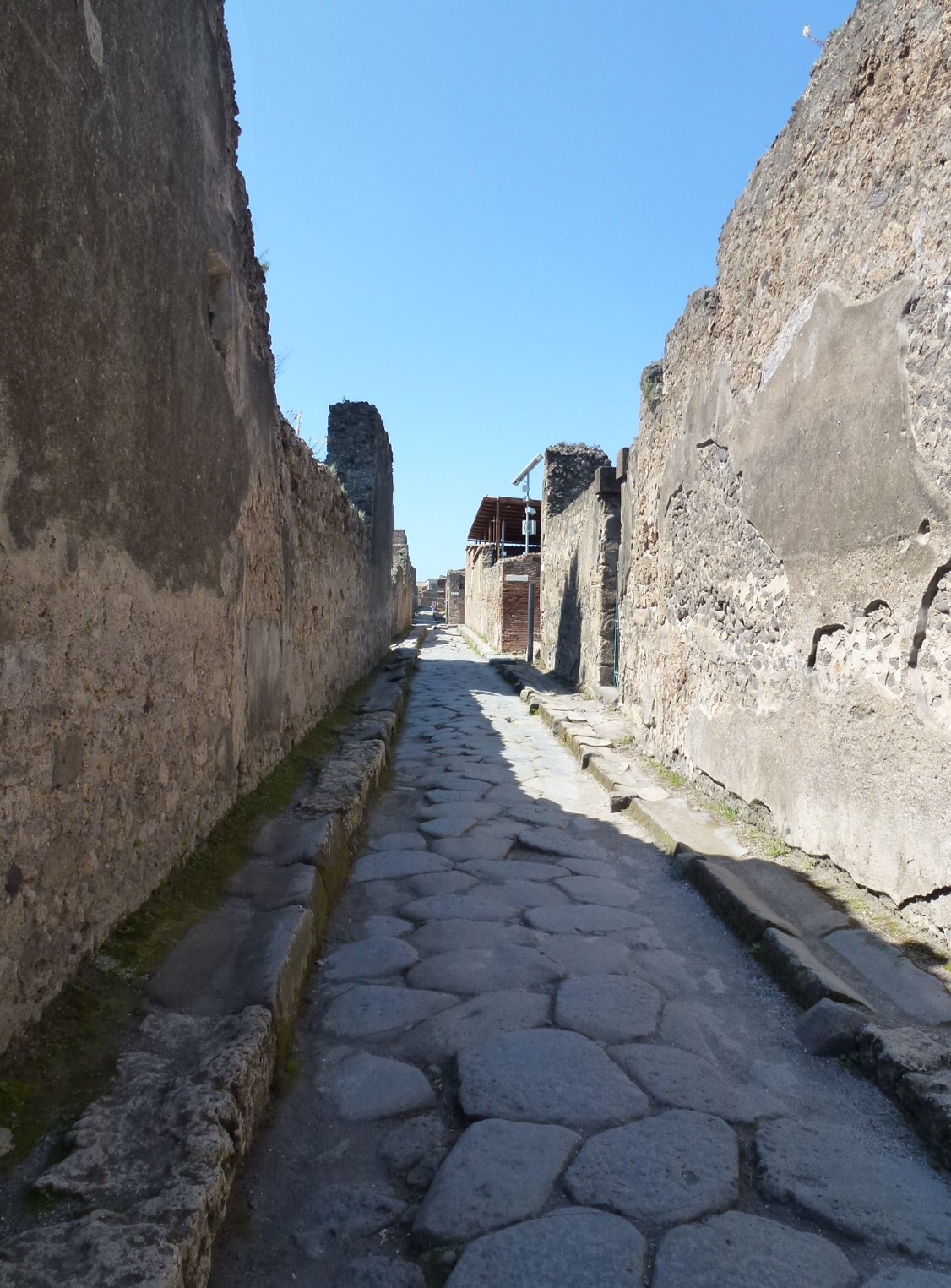
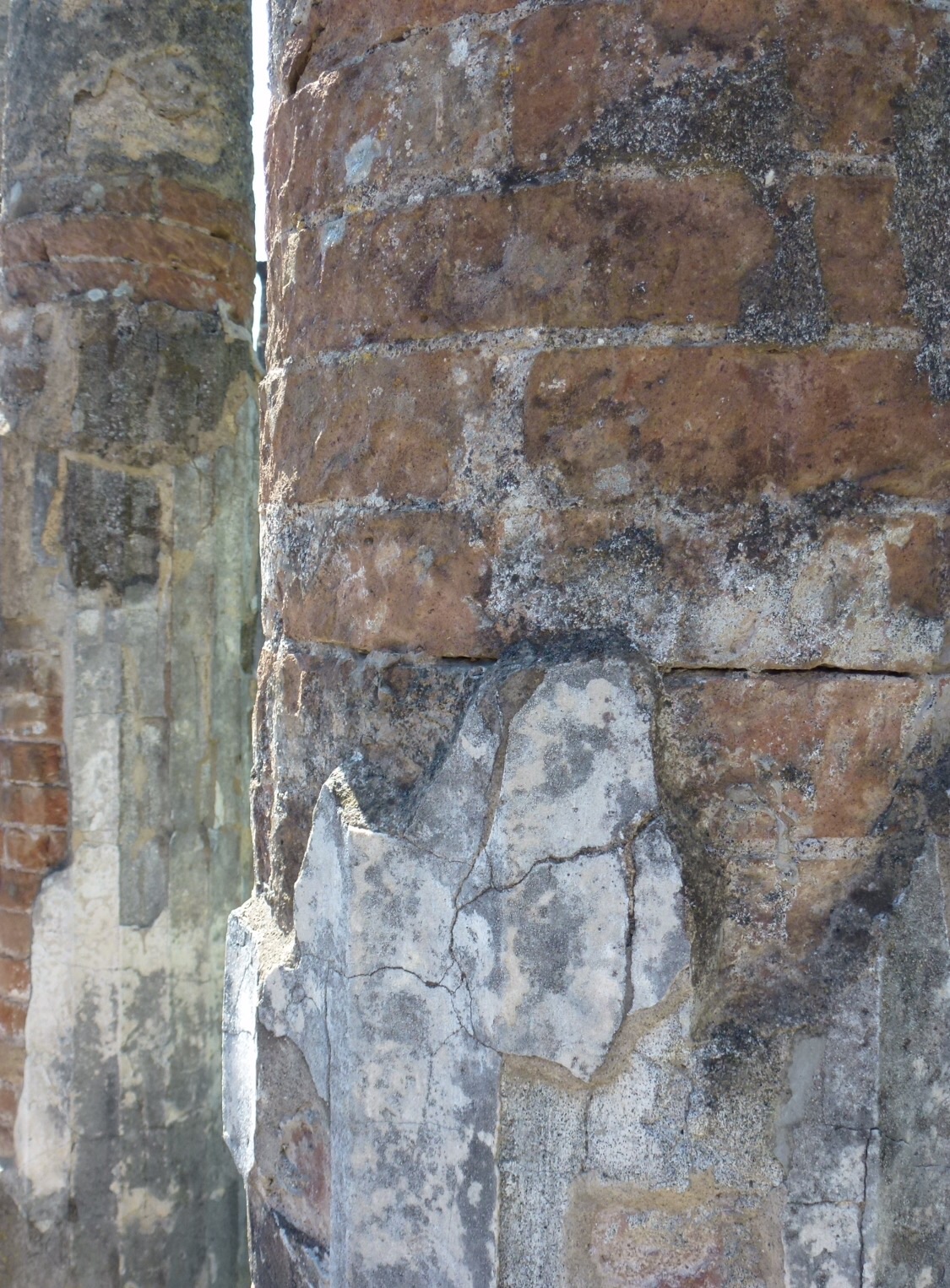
We learned about building techniques, how to save money on a roman style build- marble columns are expensive but if you make them from brick and then render them with marble dust stucco they look like marble without having to negotiate a fair price from the Carrara traders. Brick walls filled with concrete make strong buildings but few roofs survived the weighty bombardment and burial.image
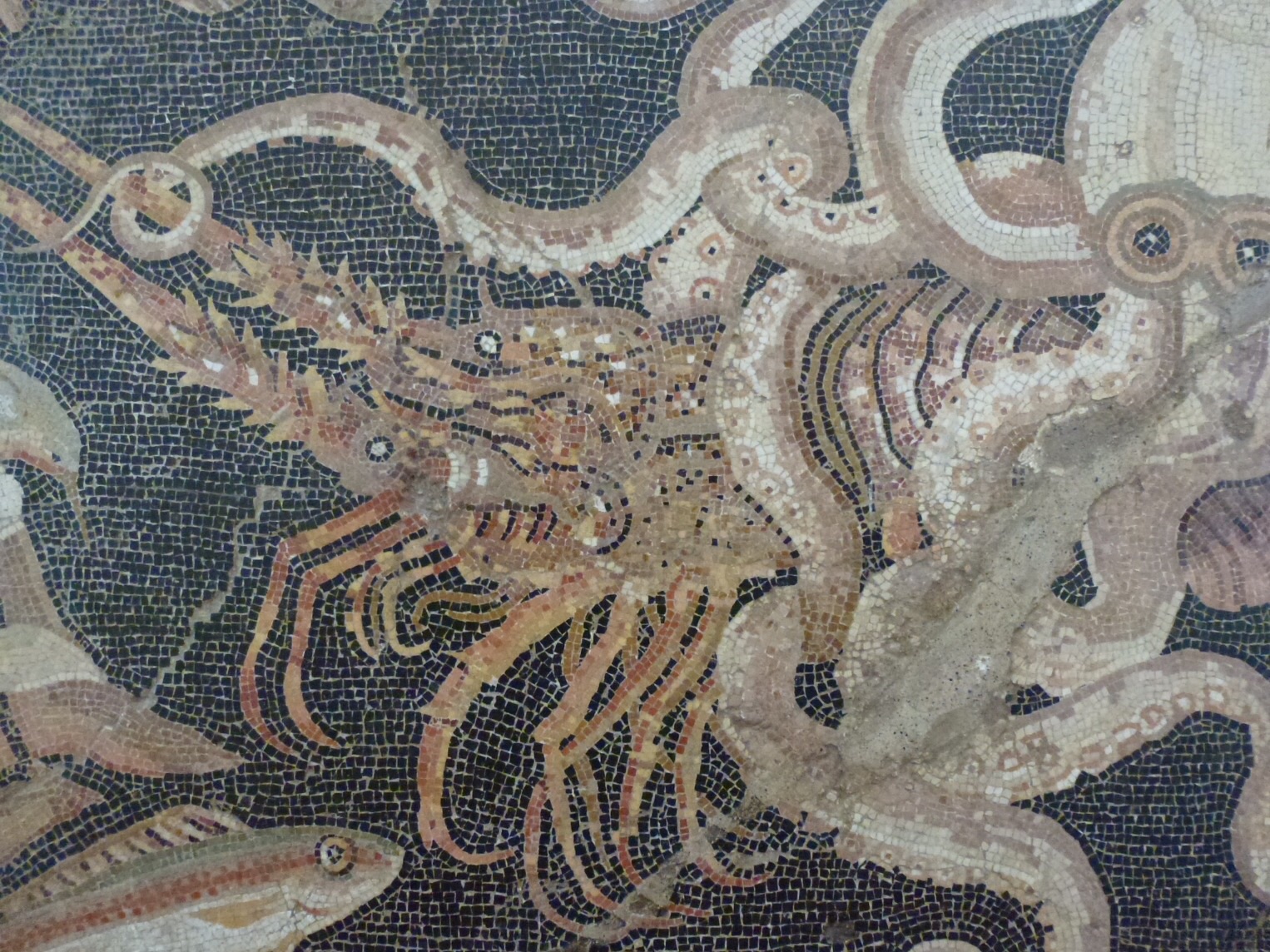
By mid afternoon our feet were sore and legs tired out, so opted to return to Naples and visit the archaeological museum, our short stay let us see some of the most amazing mosaics rescued from the diggings and statuary from many places.image
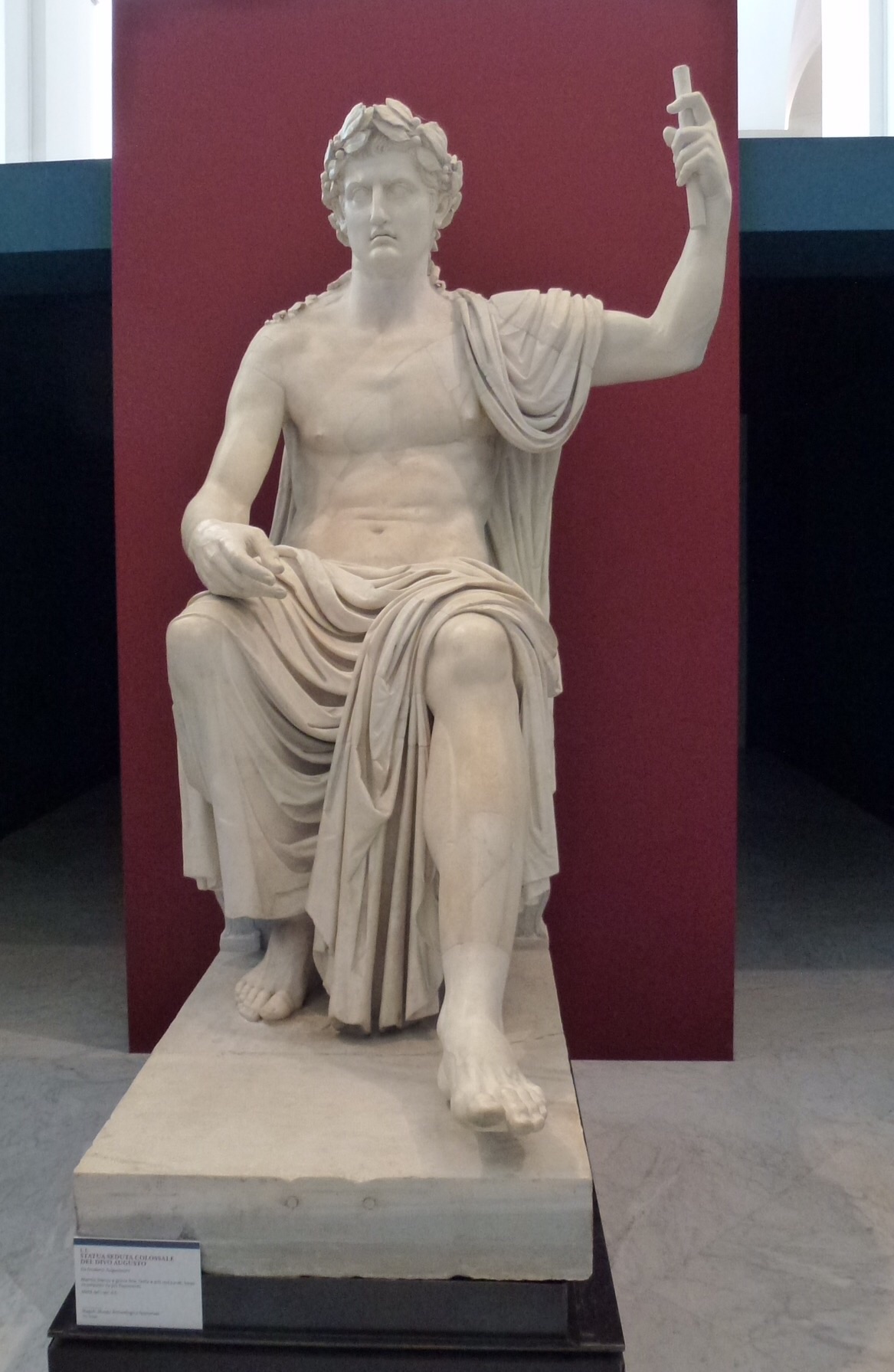
I was really interested in the Roman emperors, and was surprised how flattering 2 statues of Claudius were, given my readings suggested he was a hunchback club footed cripple. Perhaps history has been kind to him as I think he, and Augustus were the best of the lot.image
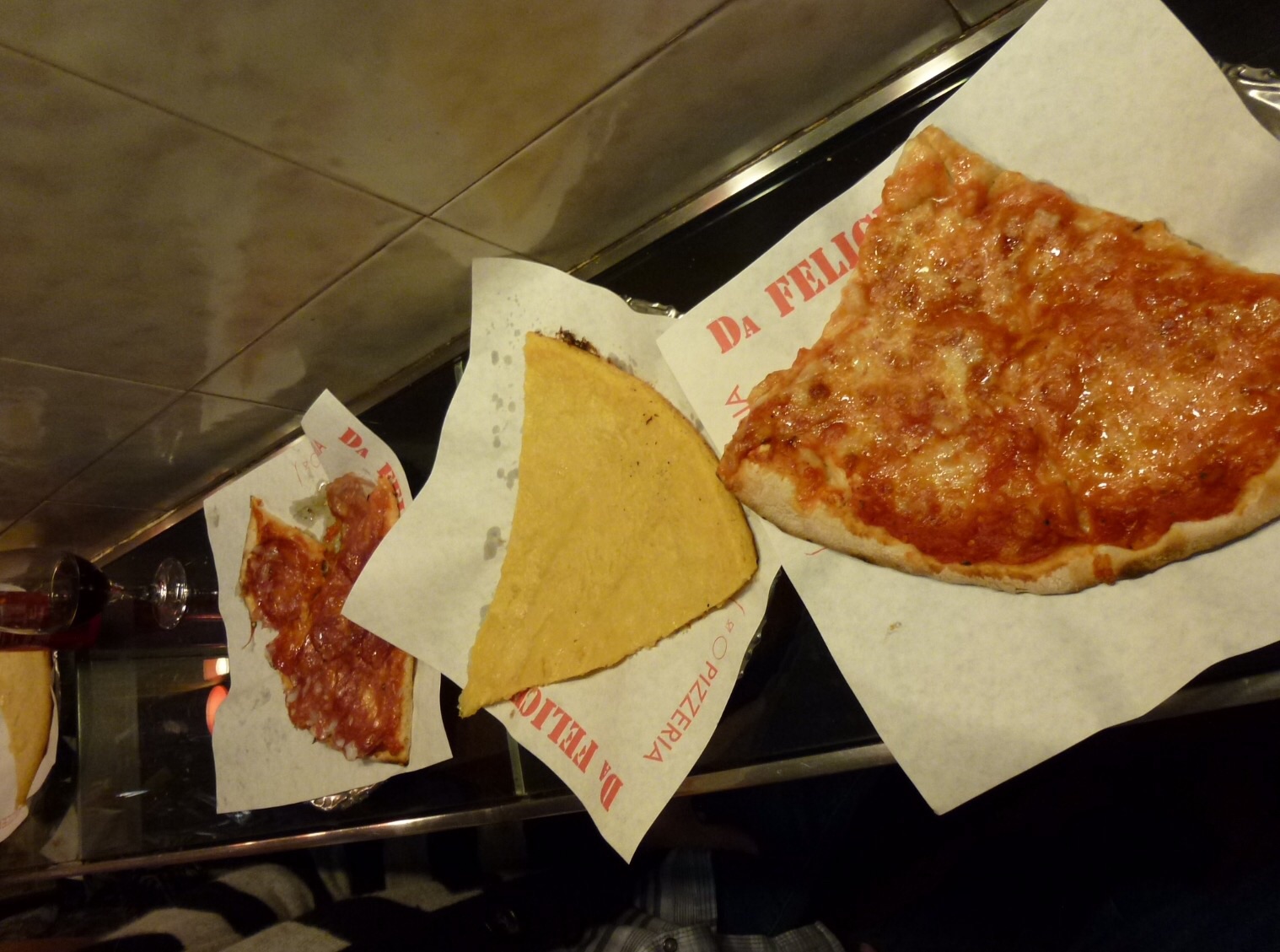
Before returning to Rome, we had planned to try Napoli pizza, apparently different but the original deal and trip advisor had suggested a little pizzeria not too far from the train station so we trudged there.image
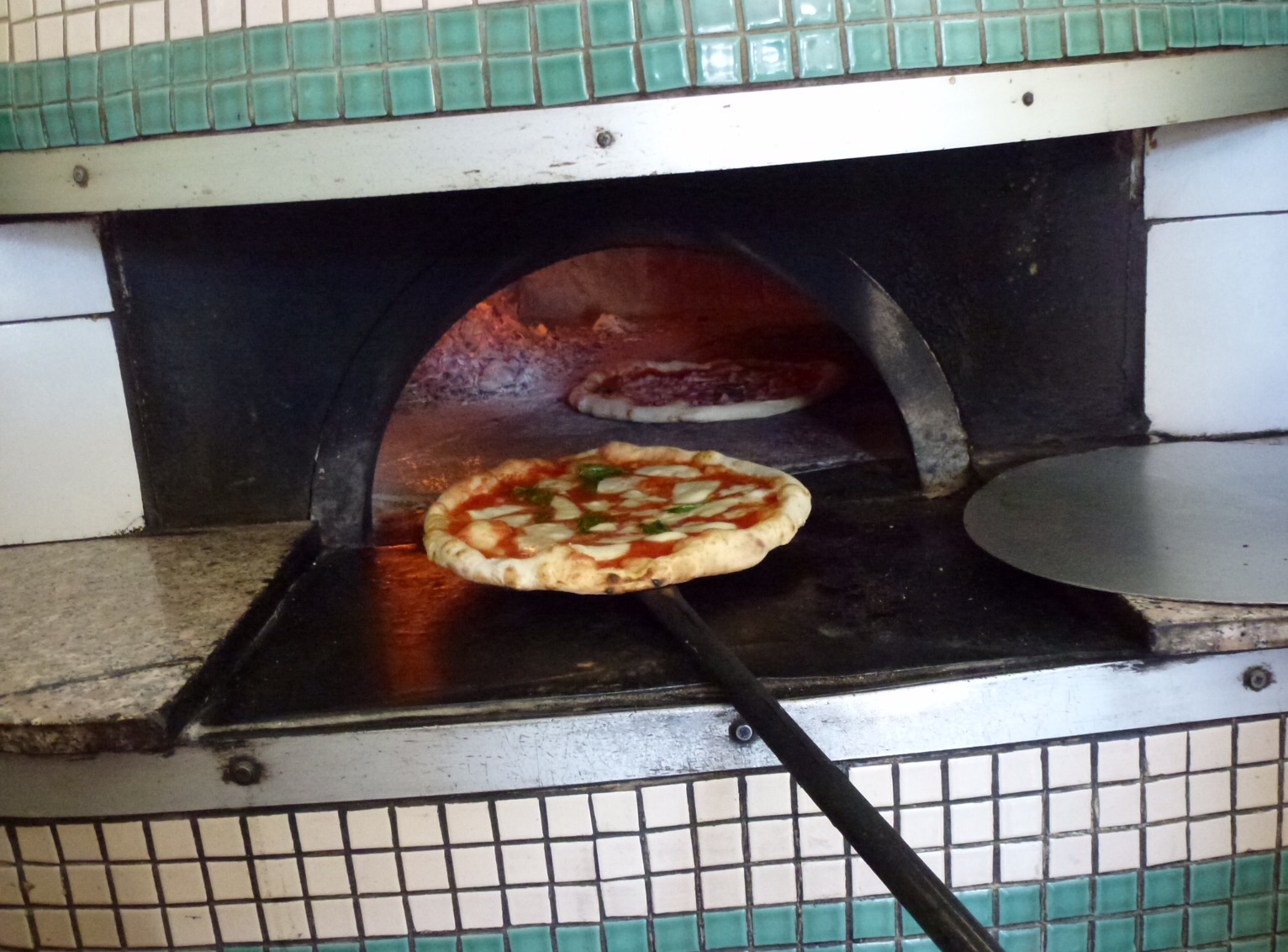
We watched as an old man delicately made the pizza and pan handled it into his wood fired oven. After a few minutes baking on the searing hot stone floor of the oven it emerged cooked to perfection.image
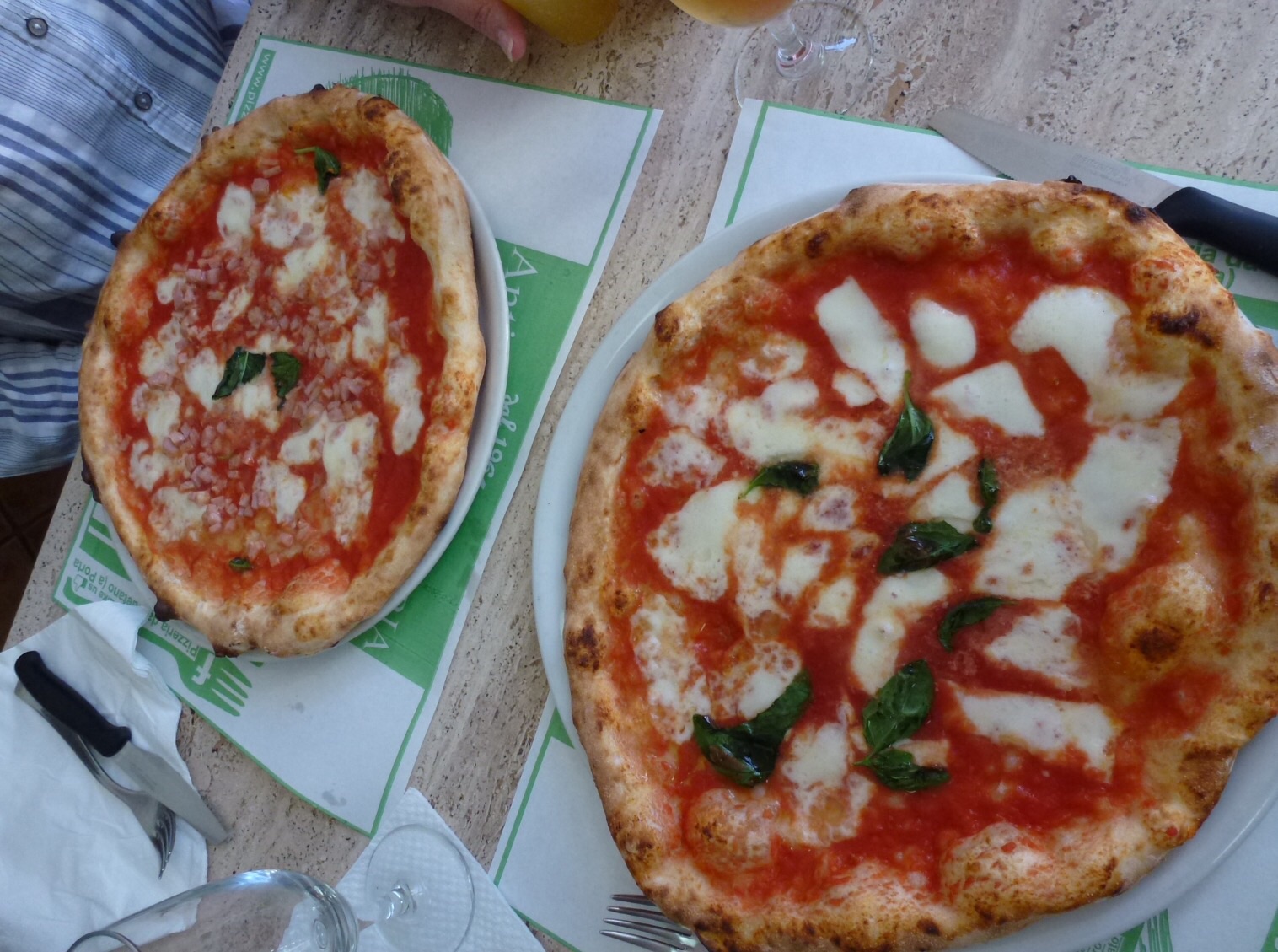
I have a new favourite thing – marguerita; a celebration of tomato and a small amount of mozzarella with some basil to finish – simple delicious.image
Unlike the Florentine pizza we had that was thin and crispy, the dough had a little chew and it was almost soupy in the middle – mmmmmm.image
Jo also had prosciutto on hers but we ate till we were full. I would drop everything and go back again, it was so good. Along with drinks it cost nearly nothing, the shop was not flashy and a little out of the way but wow, just wow.image
Exhausted and a little sozzled we wearily trudged back to the train station to catch our intercity back to Rome. We caught a taxi from the train station to our apartment because the though of more walking was dizzying. We arrived back just after 9pm – a huge day but wow it was interesting.

In no time we were asleep, a relatively easy day tomorrow (our “rest” day in Rome) before we fly out to Athens.image
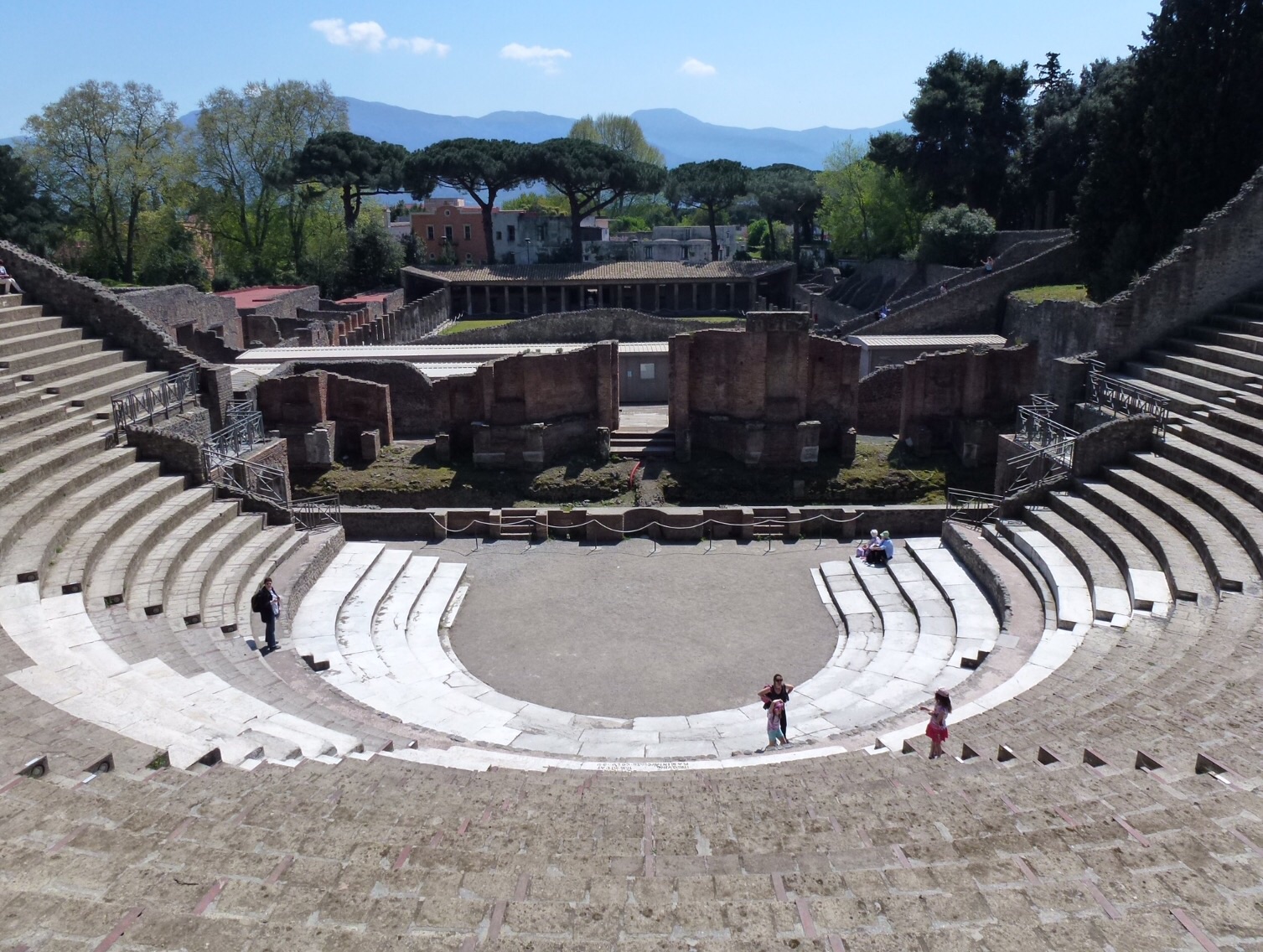
Postscript 1: I was actually looking for the arena that Pink Floyd played live back in the 70’s, thought this might be it only to discover subsequently that a second site, named “Villa de Mysteri”, has the arena they used – still, I felt suitably close to what was an important musical event for me and a much loved album by Winston O’Boogie and myself (waves to Michael).

Postscript 2: Generally I blog about the day before, so the blog is usually a day late in terms of when we actually do it, if that make sense. This post, for instance, has been the result of a lazy lunch and a third of a bottle of chianti (well, I cannot travel with it and it would be a shame to waste it, and it goes so well with the lunch…). Often it will post the words before I have vetted and edited the photos. My iPad client will not let me post full sized photos so I have invented a rather torturous but successful workflow for cropping / resizing that works but miss my full computer and its file system.
Categories: travel | Leave a comment

A Colossal thing happened on the way to the Forum

After a welcome night sleep on a wonderfully comfortable bed we breakfasted and headed out down the road to the Flavian Amphitheater (literally our home base is on the road that leads to it, 5-10 minute stroll).image

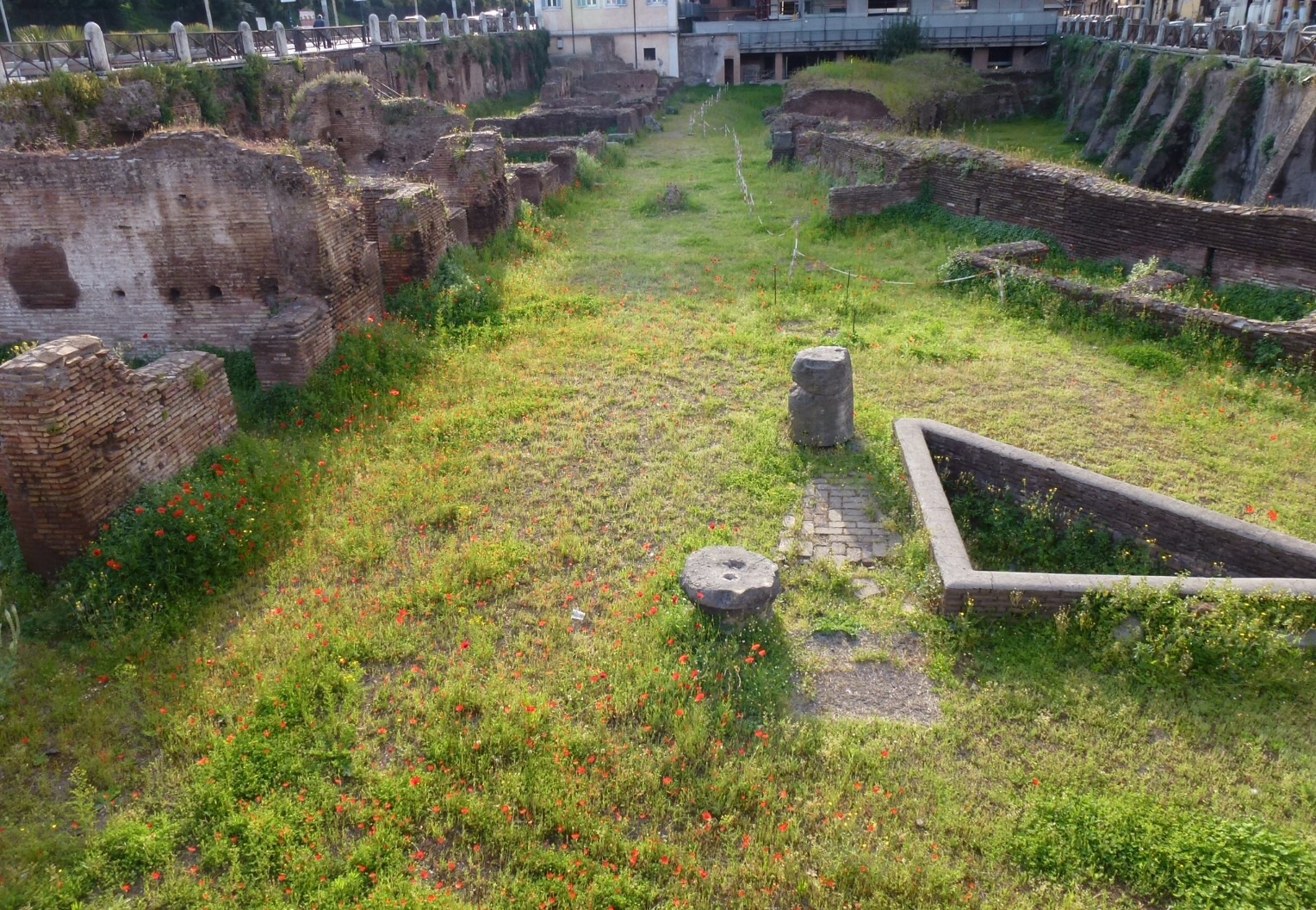
Getting there we also walked past the recently excavated section of an adjacent Ludus – a gladiator school, which was connected to the arena by an underground passage. The story goes that there was once a “colossal” bronze statue of Nero outside, the stadium complex inherited the name “Collos-aem” or Coloseum more modernly.image

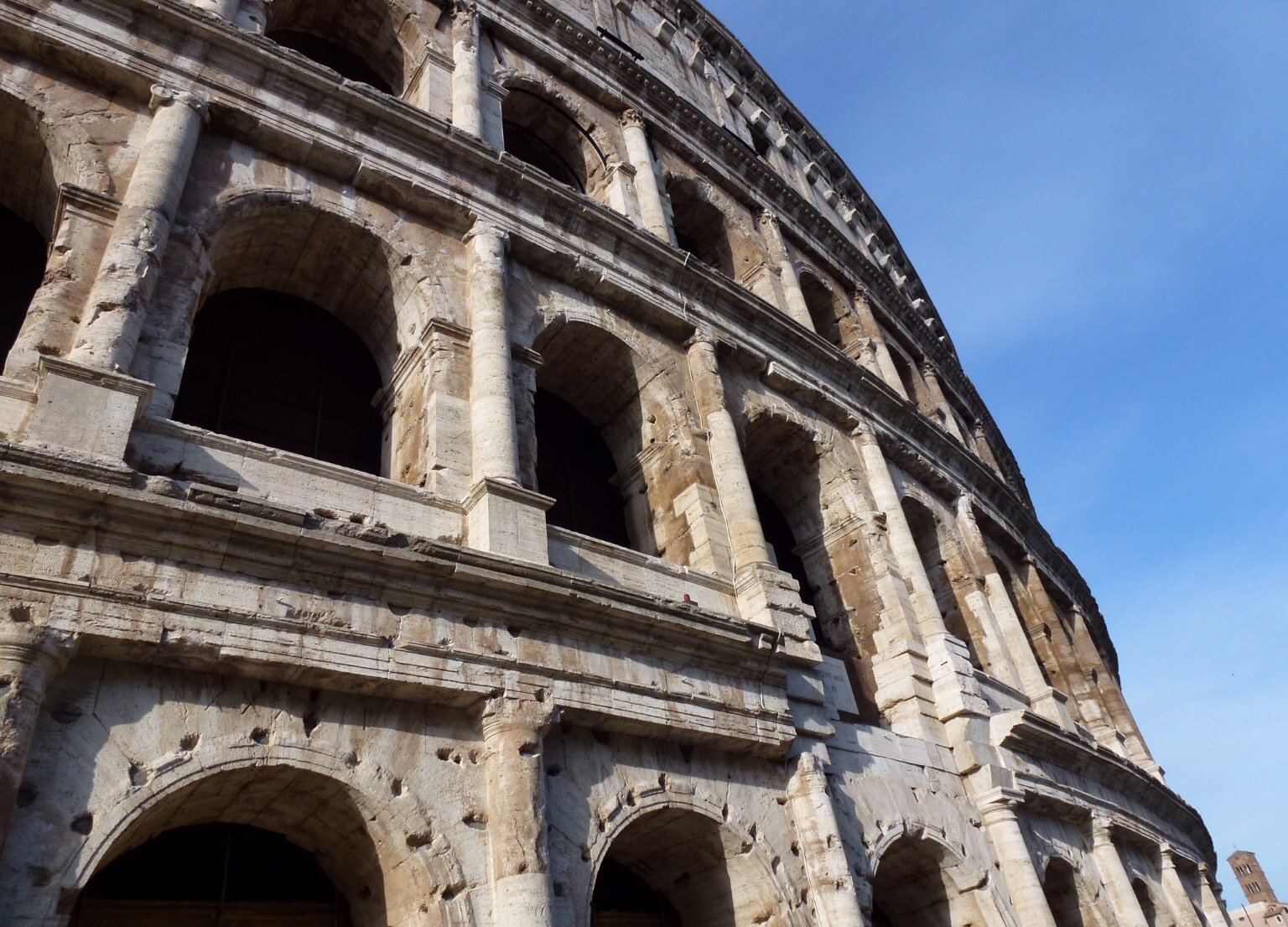
You do not get a real feel for the colossal scale of the building until you are up close and personal, on one side much of the original outside facade exists (minus the marble and Travertine stone cladding) not on the other most of the outer wall, which had collapsed in the Middle Ages, has been robbed out and forms building materials for many buildings all over Italy.image

We had a guided tour booked and our first challenge was identifying which queue to join to exchange the Internet voucher for tickets, once inside the bottom level a further challenge to find the appropriate ticket office – there were signs, they did not correspond to the function of each window which we were supposed to be able to work out, apparently.image

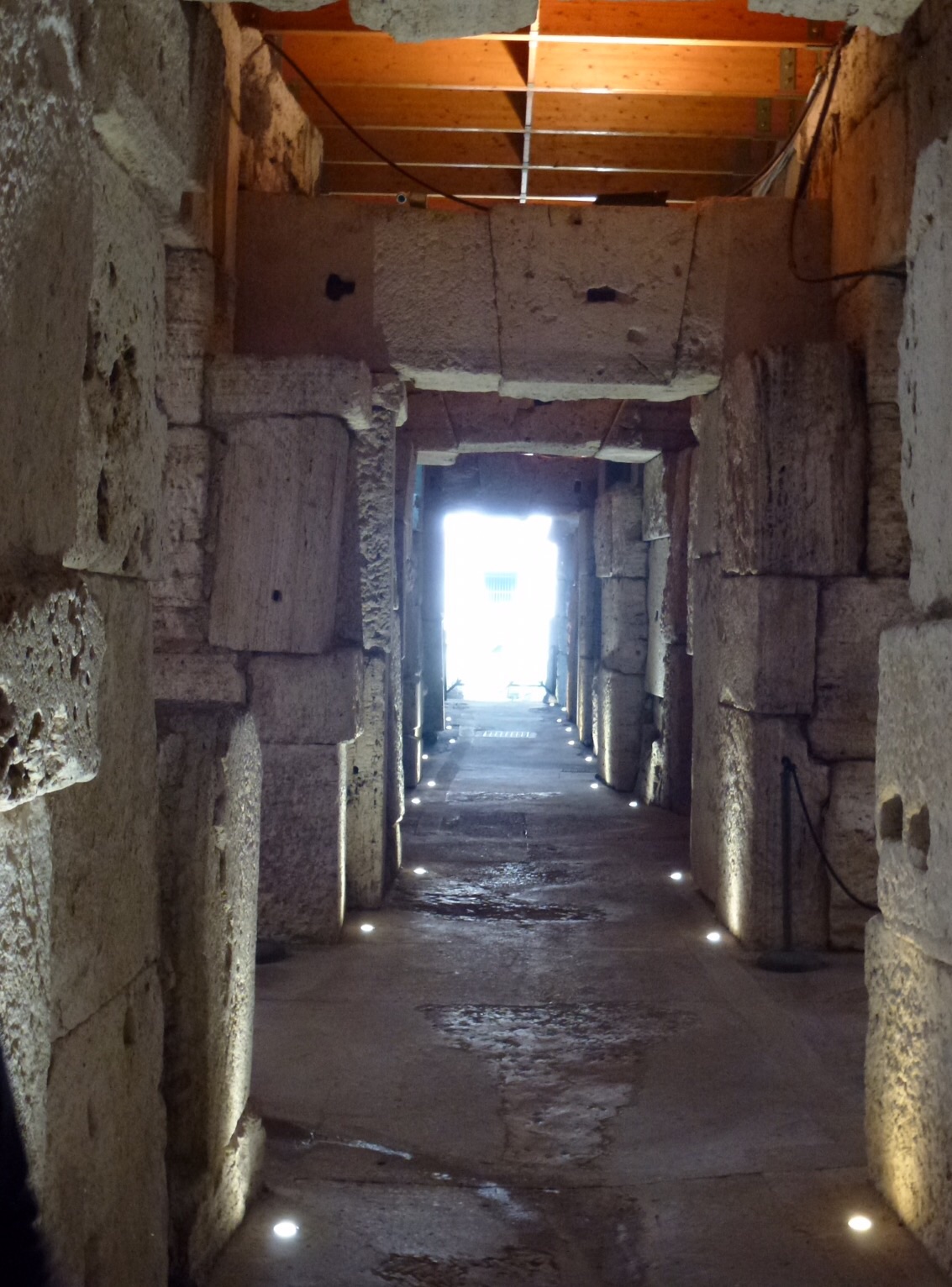
Armed with tickets and tour stickers we had a small amount of time to browse before our scheduled meeting so wandered the structure in awe, mouth open, more amazed with each twist and turn. We noticed that all the pillars (the structure is a collection of pillars and arches – Romans really perfected these) were pockmarked with holes at major stone junctures – apparently originally most of the stoned in the pillars and some arches were further secured with iron clamps and in the Middle Ages these clamps were robbed as iron was valuable. The resulting instability lead to many collapses and continues to be a challenge for conservators today.image

Inside the stadium you get the sense of the raked seating, 5 or more levels of it. The lower marble levels reserved for the bottoms of rich folk (even a supposed place where they thought the royal box was) leading to the higher seats, wood bleachers, designed for women and poor people. It seems the social class stratification started here.image

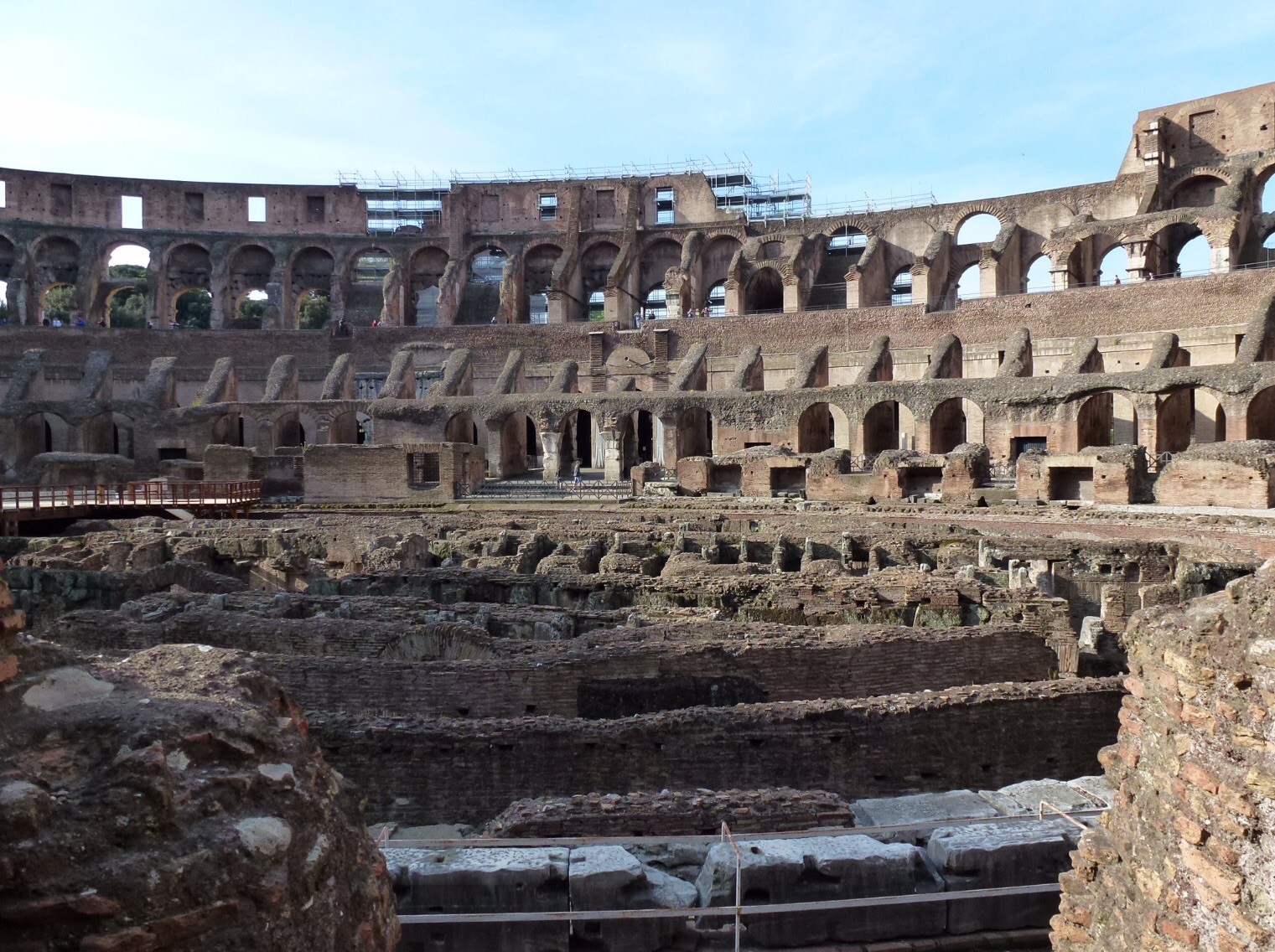
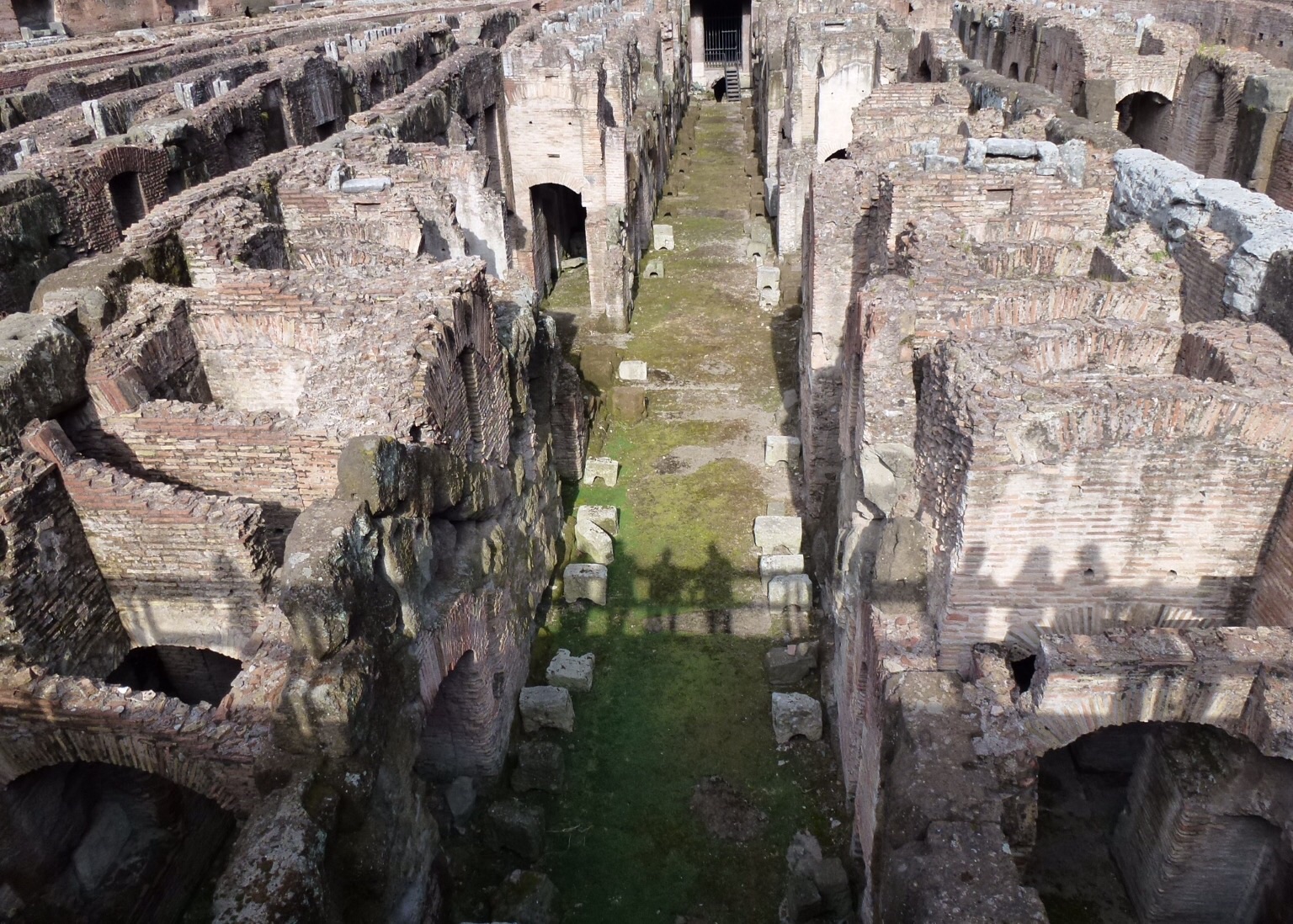
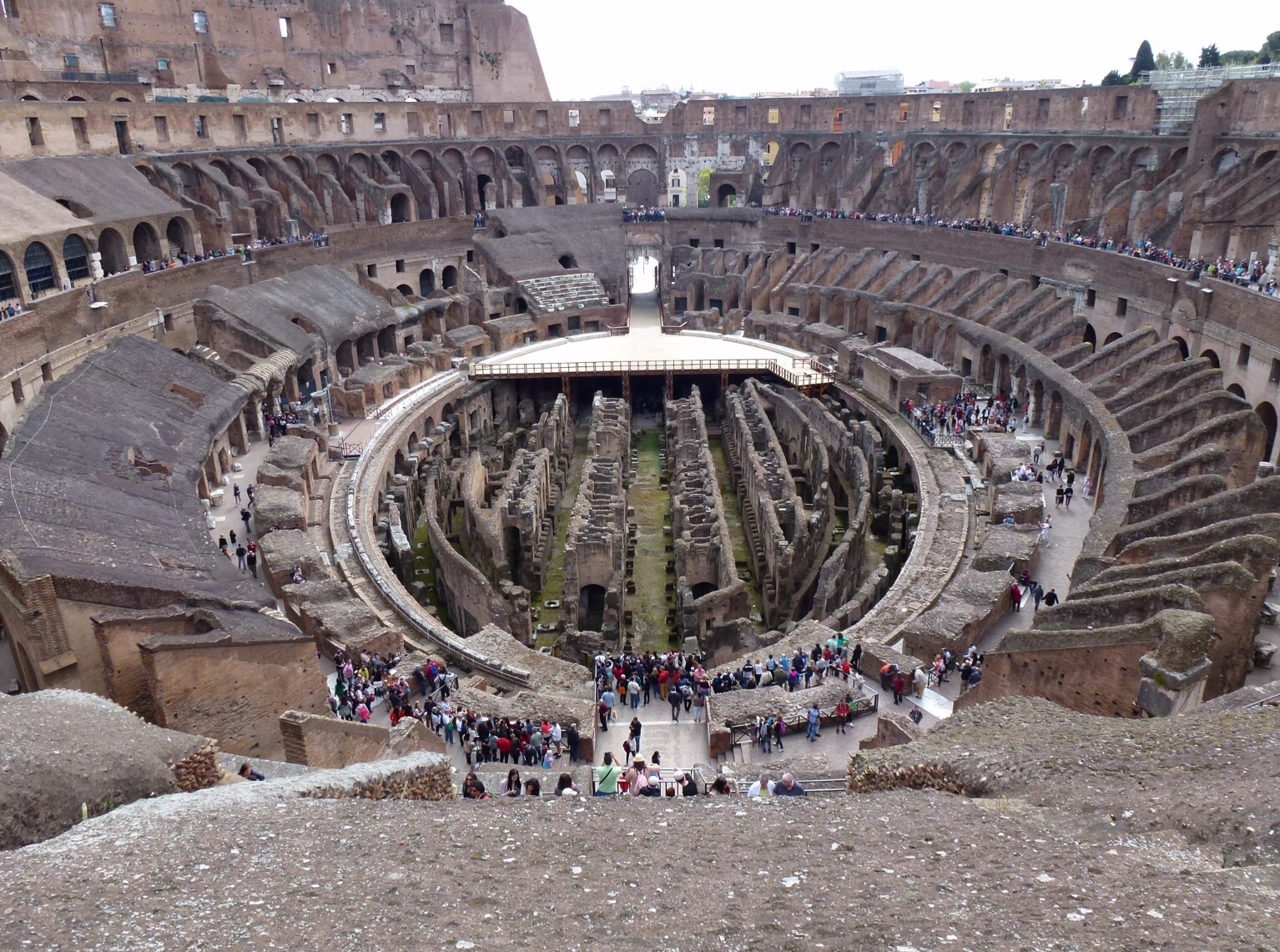
The arena floor, now a tangled maze of stone tunnels once was covered by a wooden stage, then covered with sand. You get a very real sense of the brutal spectacles that took place here and the howling mob craving more and more violent blood letting.image

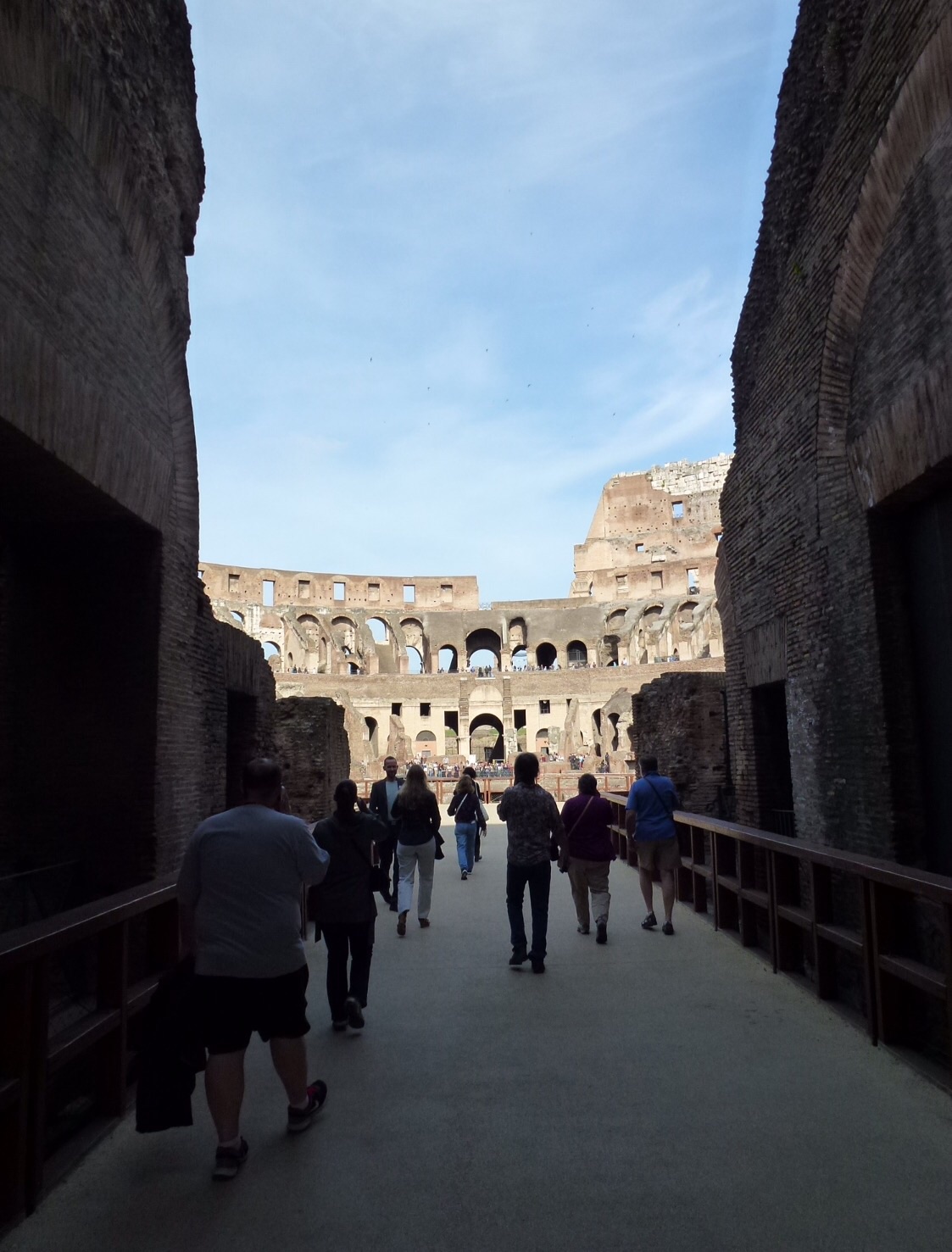
Our tour took us onto the partially re-constructed stage level – from here looking up I can only imagine the terror of contestants battling for their lives for the pleasure of a screaming public. They had also re-constructed a sample trapdoor – as part of the arena stage spectacular, combatants, wild animals and scenery “magically” appeared through a series of 60+ trapdoors and ramps built in to the floor. You do not credit such genius stage mechanics with something so ancient but if you can get past the blood and guts it must have seen many astonishing shows. Certainly all of the emperors, mad or otherwise, loved a good show and their citizens were dying to be in them. Something tells me also that working “backstage” would not be something anyone would have chosen as a career, but I guess it was better than starring in the show.image

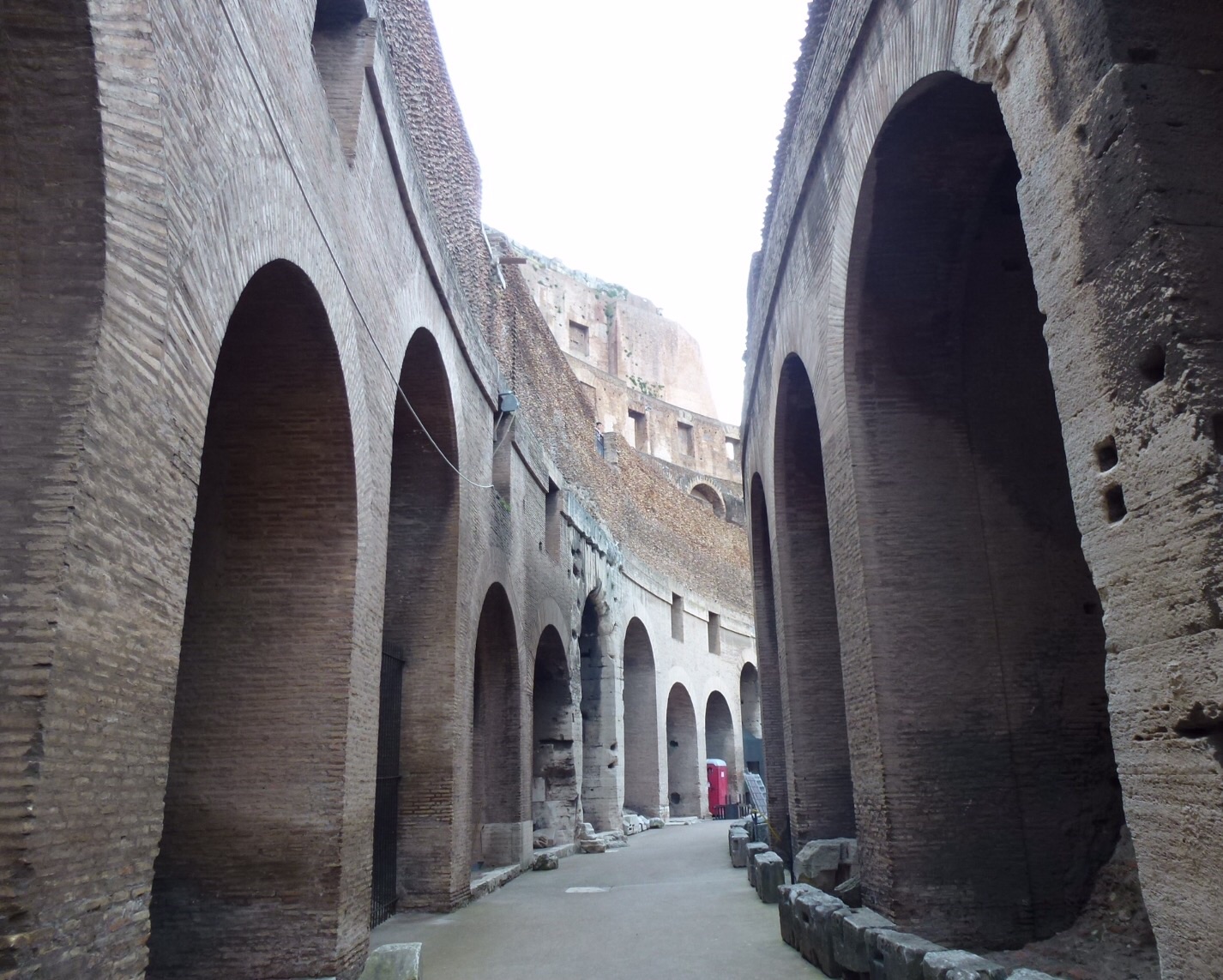
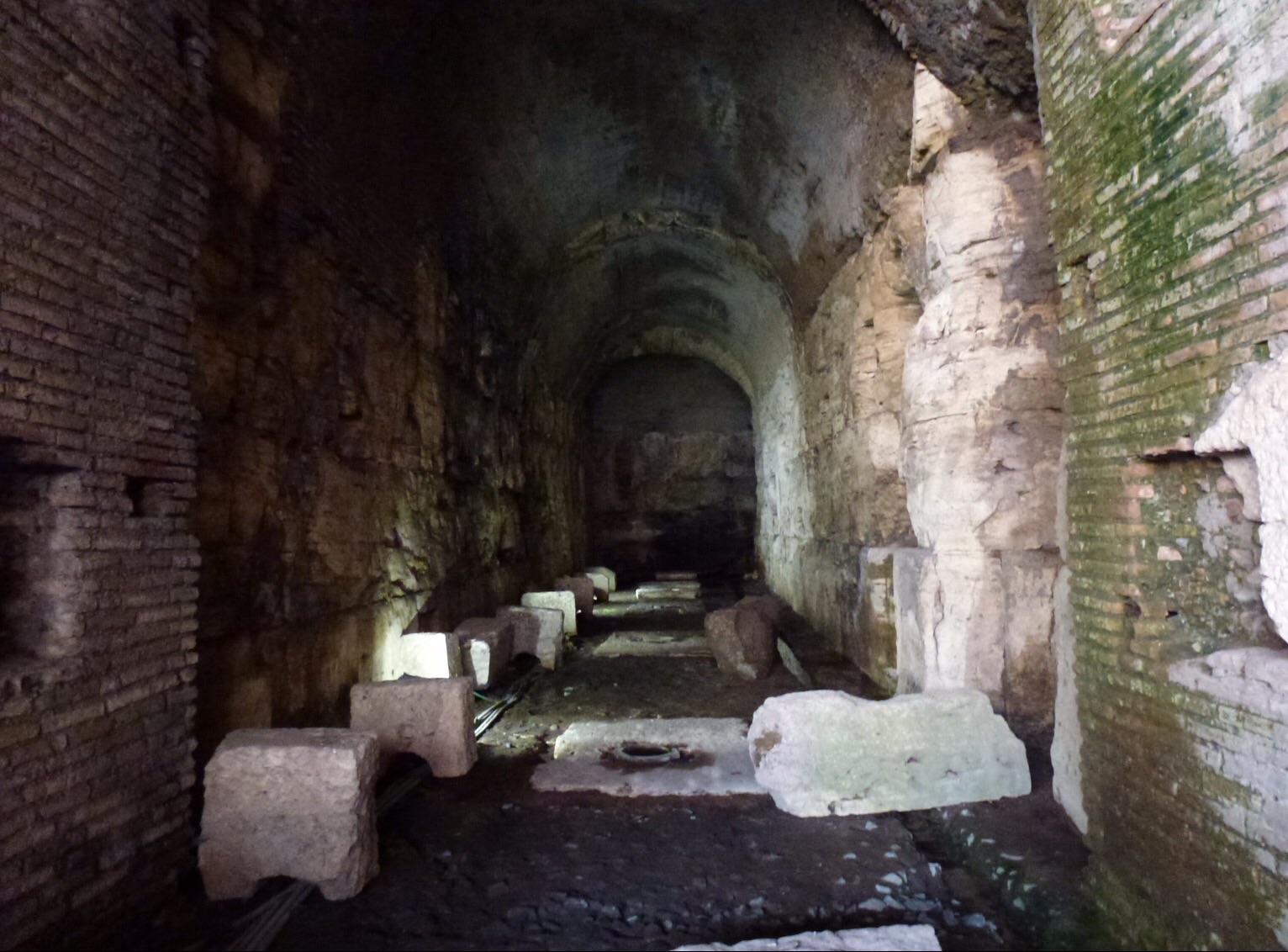
We then went below stage level to the stone corridors and tunnels under the arena. When this was a working building this must have been an horrific place to be. Teams of 8 slaves manned floor mounted winches that did the moving and shaking of cages and traps, animal transport and corpse remains schlurping. It was dark, labrinthal and must have smelt putrid – so much so that apparently above ground slaves would splash perfume around for the pleasure of the expensive seats close to the arenaimage

There are, apparently, anecdotal records of earlier under-arena structures made of demountable wood. There are records of the arena being flooded with water and symbolic mock naval battles taking place inside- a number of historical writers mention this but there is no archeological evidence to support it.image

After exploring the “bowels” of the building, we climbed up to the second level and then the third- an amazing viewpoint that seemed to dwarf the stage. We were told of a 100 day spectacle where 6000 animals and countless people were brutalised for entertainment. At the end of the tour we wandered for a while (again with our mouths open) then returned to our apartment for a welcome sit down and some lunch.image

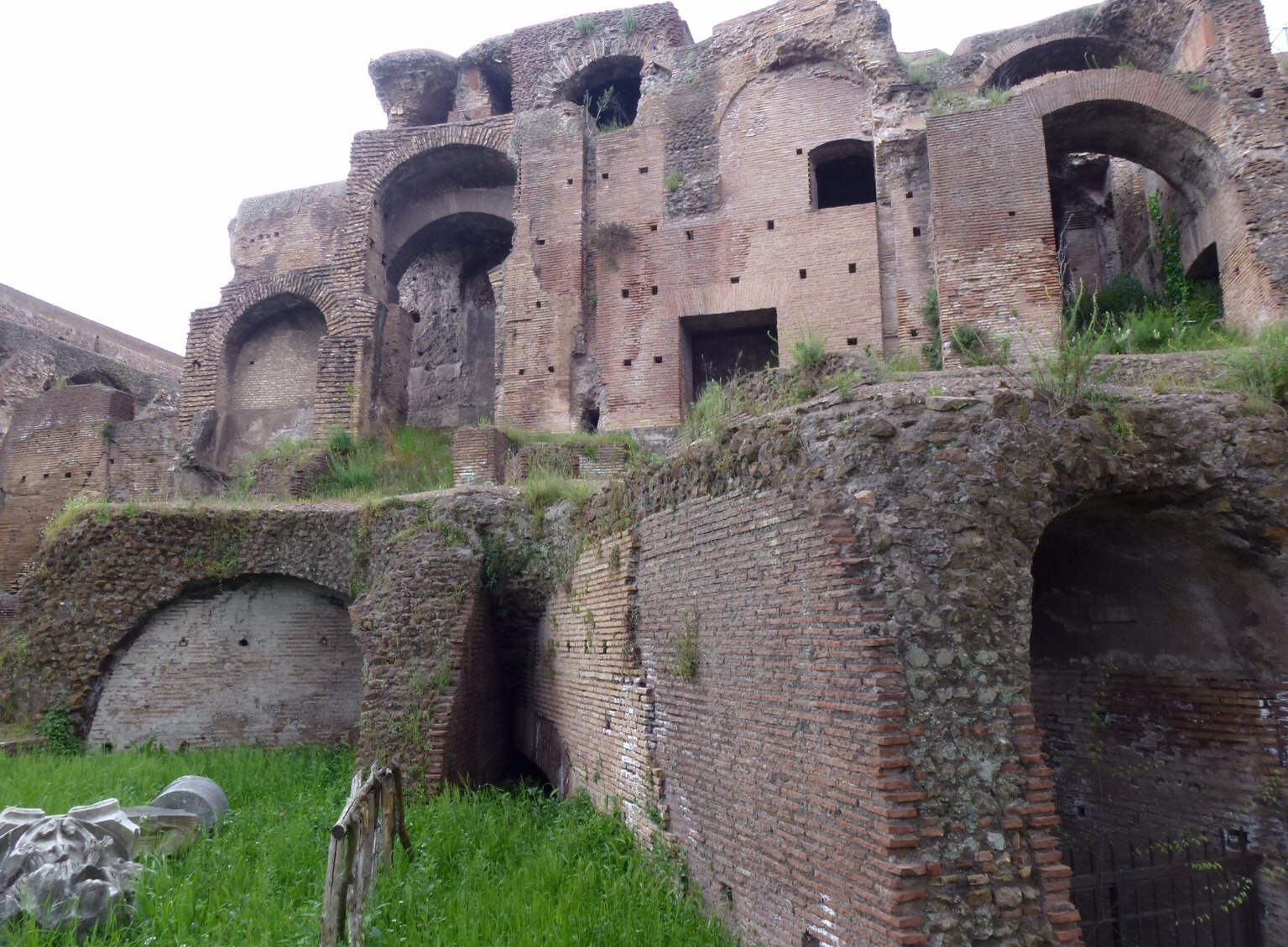
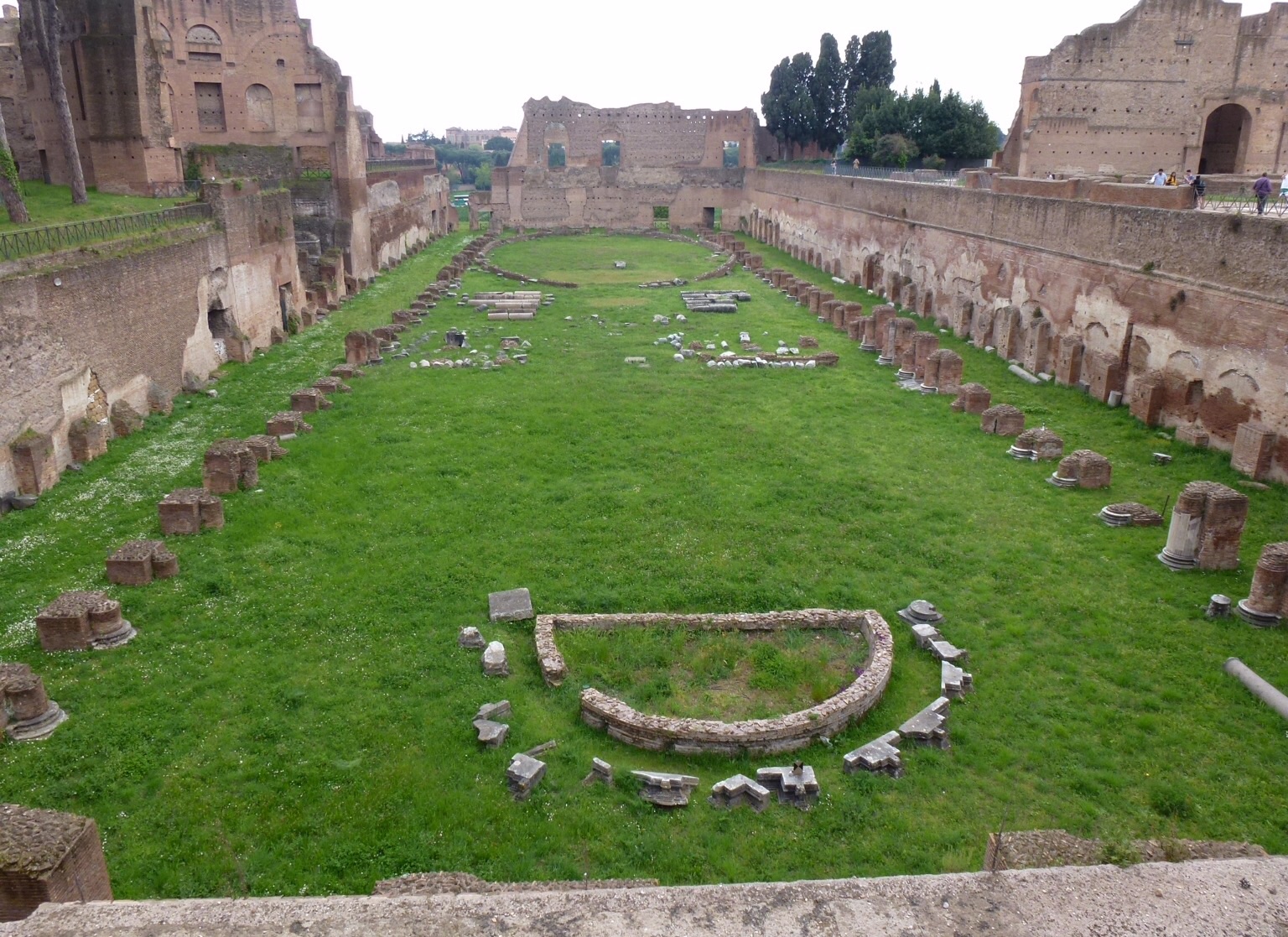
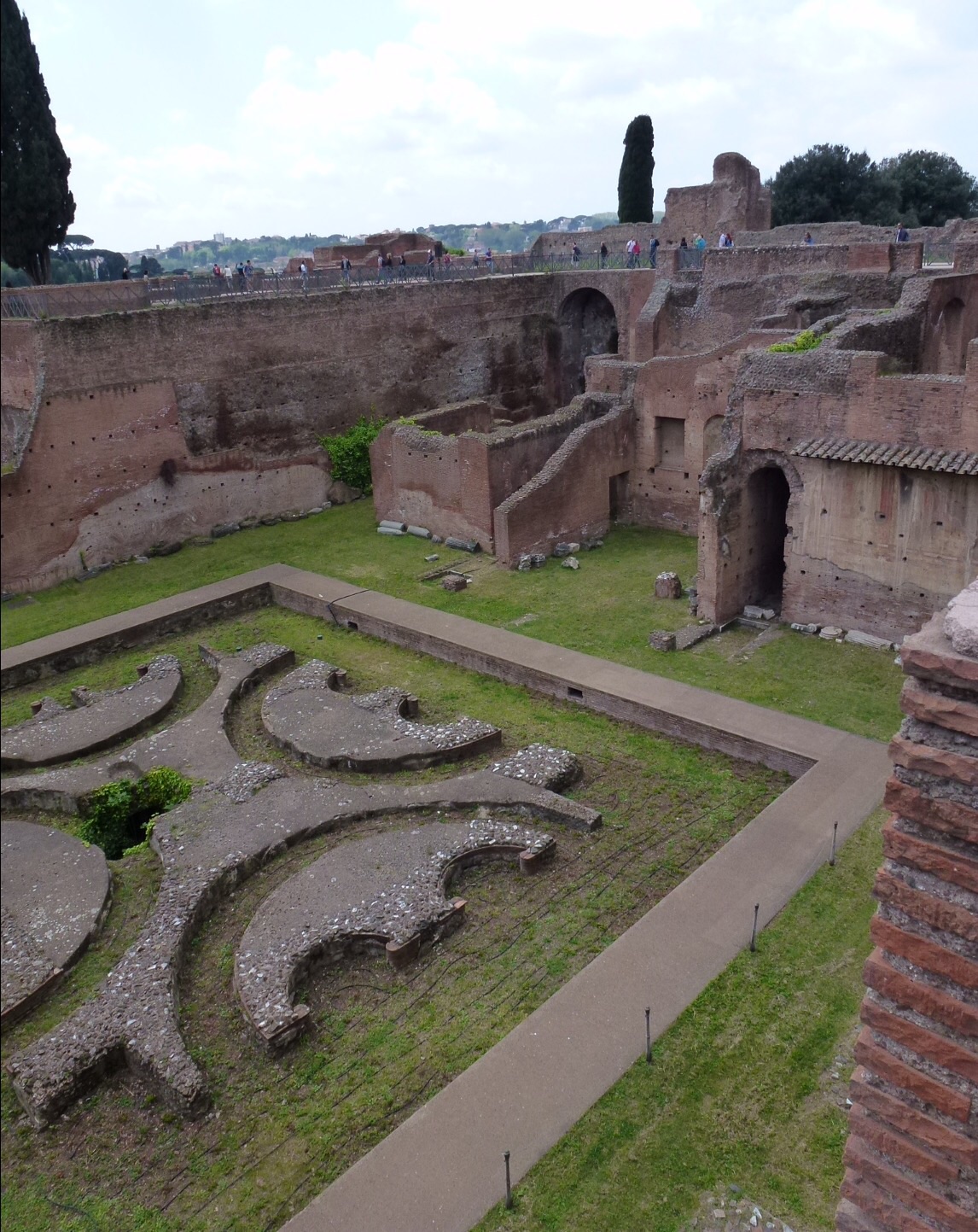
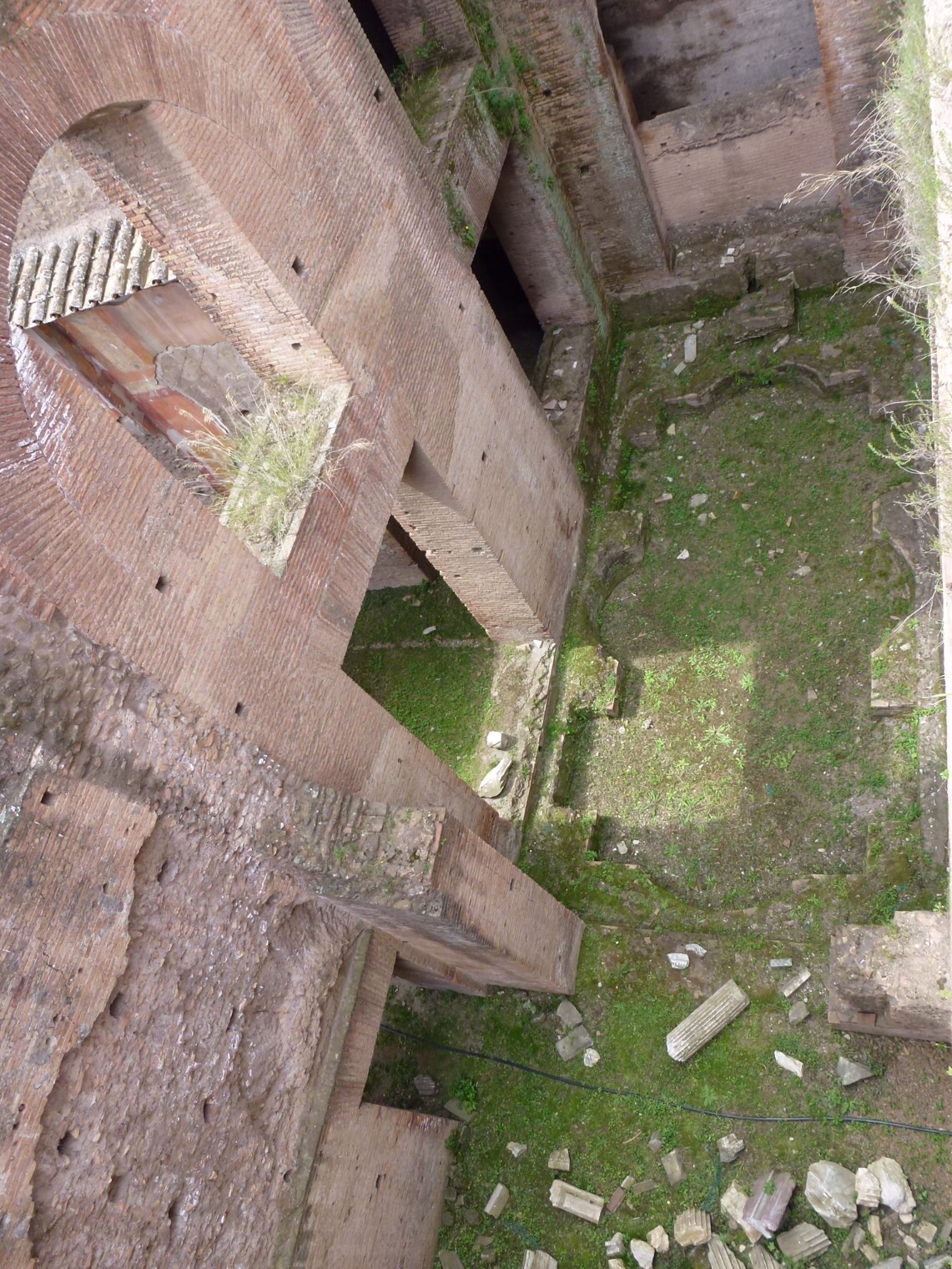
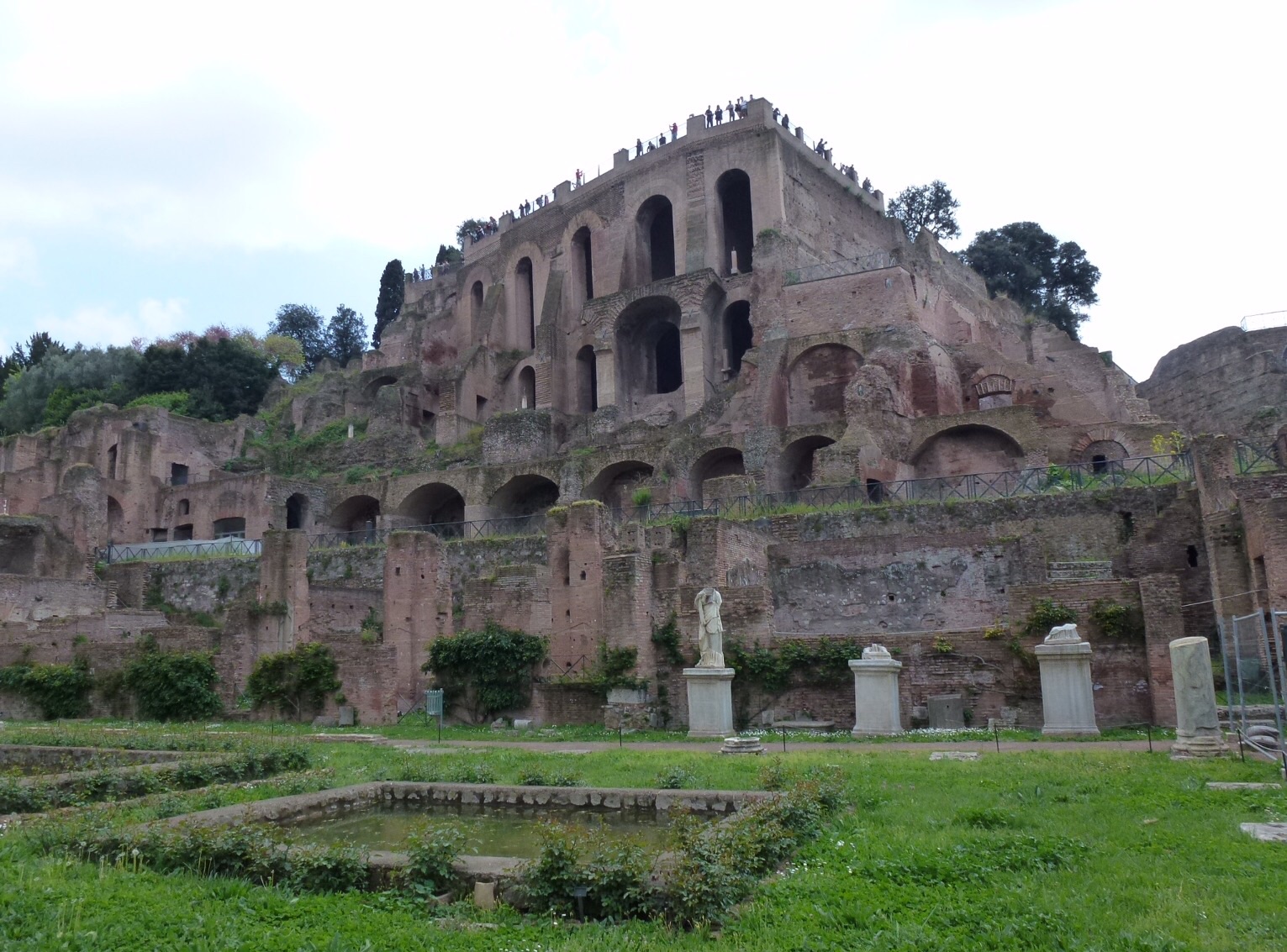
After lunch we returned to the general area we had spent the morning, it is just down the road from us. We walked around the Coloseum towards Palantine Hill- the home of roman emperors. Up the hill and we were amongst substantial remains of houses, piazzas, temples, gardens and more. image

For me, so many names sprang to mind, Augustus’s house, Livia’s garden and private temple, Tiberius’s apartments, Claudius’s Library and Caligula’s palace – all still present, some in remarkable condition, most complete enough to get a sense of the space and purpose of the parts of each building.image

We strolled through recreated gardens, on original surface pavements and were generally overwhelmed by the place.image

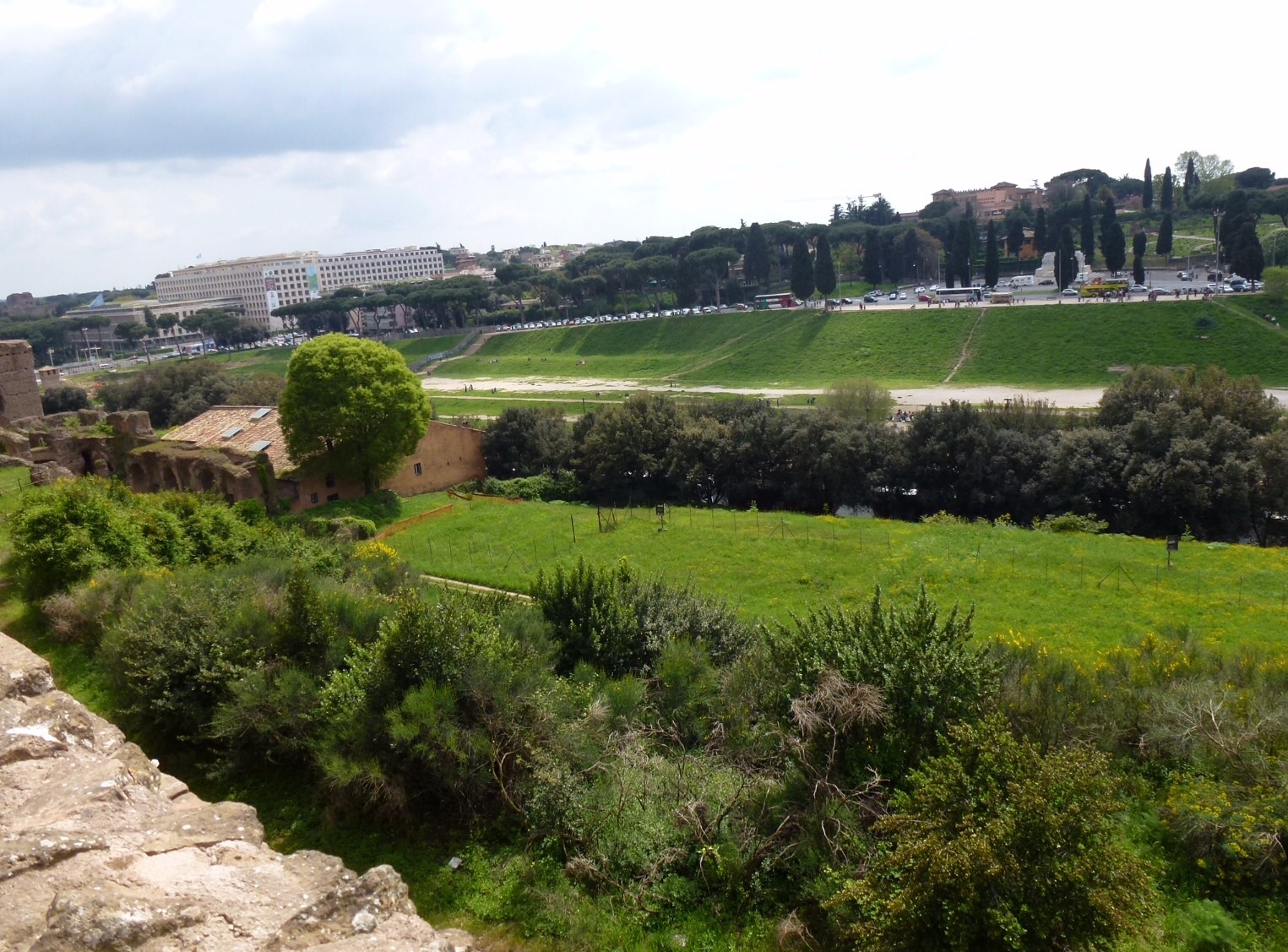
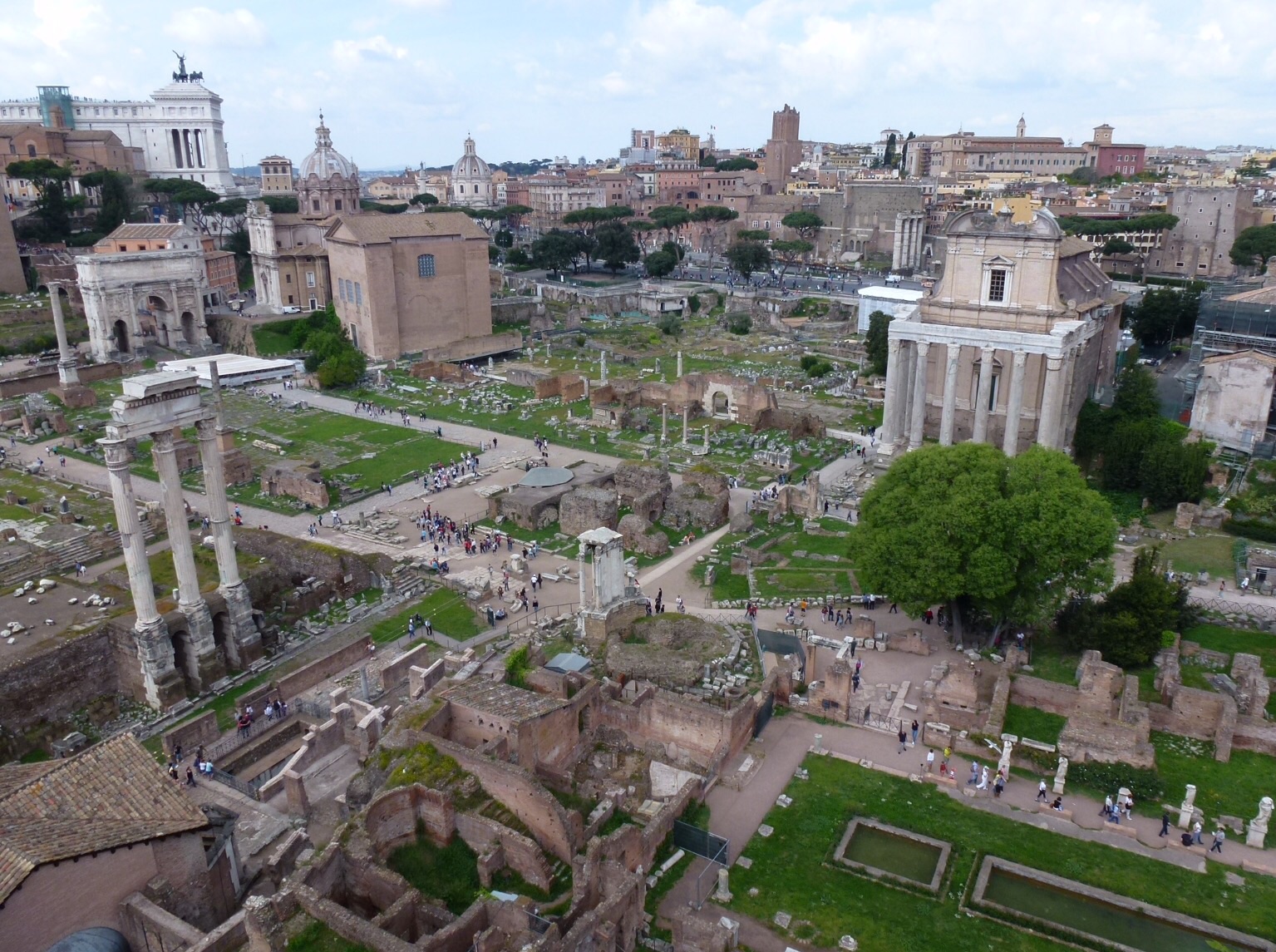
We refilled our water bottles from a bubbler that would have originally been fed by an aqueduct through lead pipes, found viewpoints that showcased the Coloseum and below us the Forum and associated buildings and noticed remnants of wall plaster decorations and mosaic floors. You can see clearly why the nobility chose this area as a residence far from the madding crowd – one side of the hill you had the sports arena that was the Coloseum and the other side of the hill was the clearly visible remains of Circus Maximus – the chariot race track that was one of Augustus’s favourite time wasters and must have been awesome in its day.image

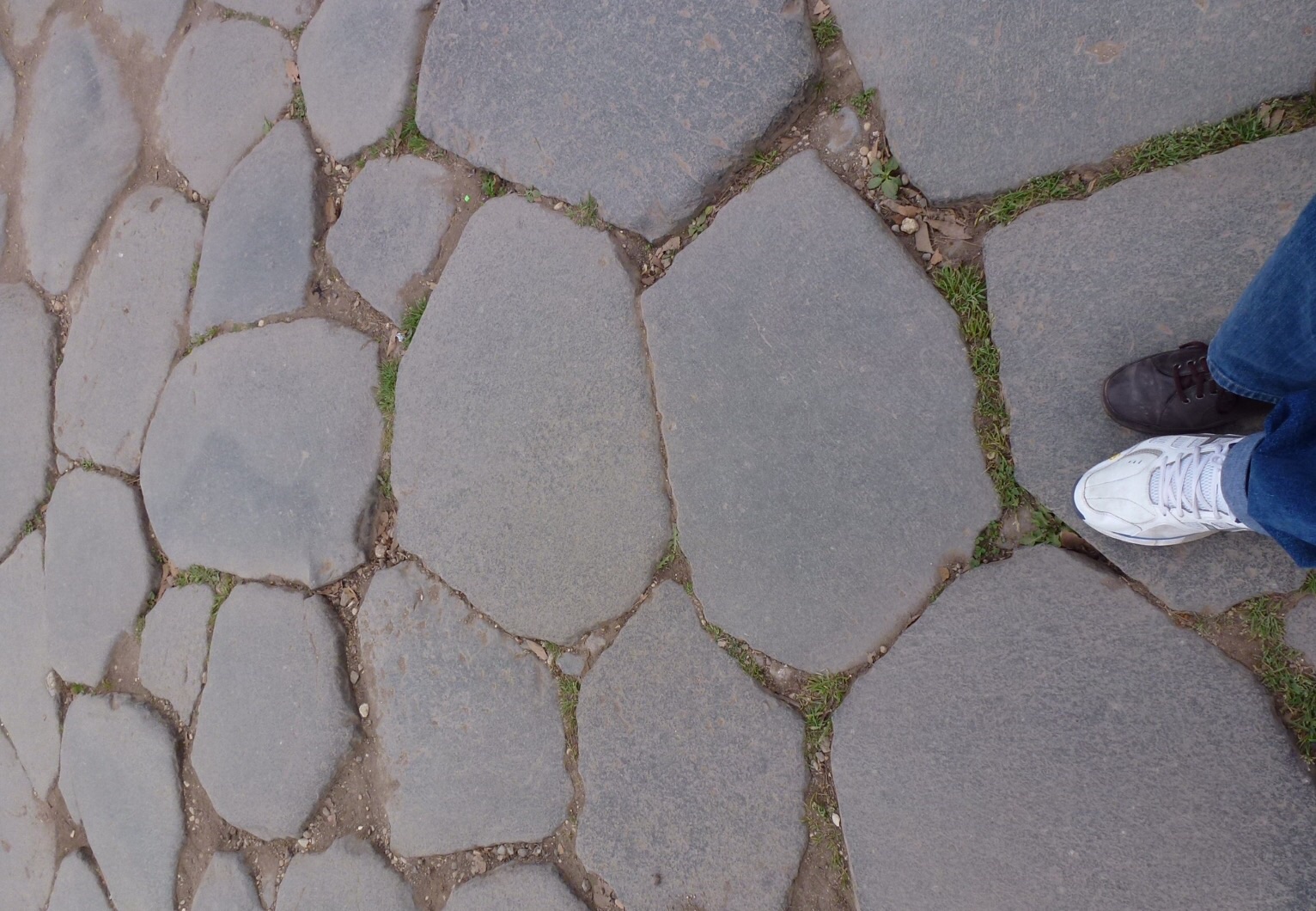
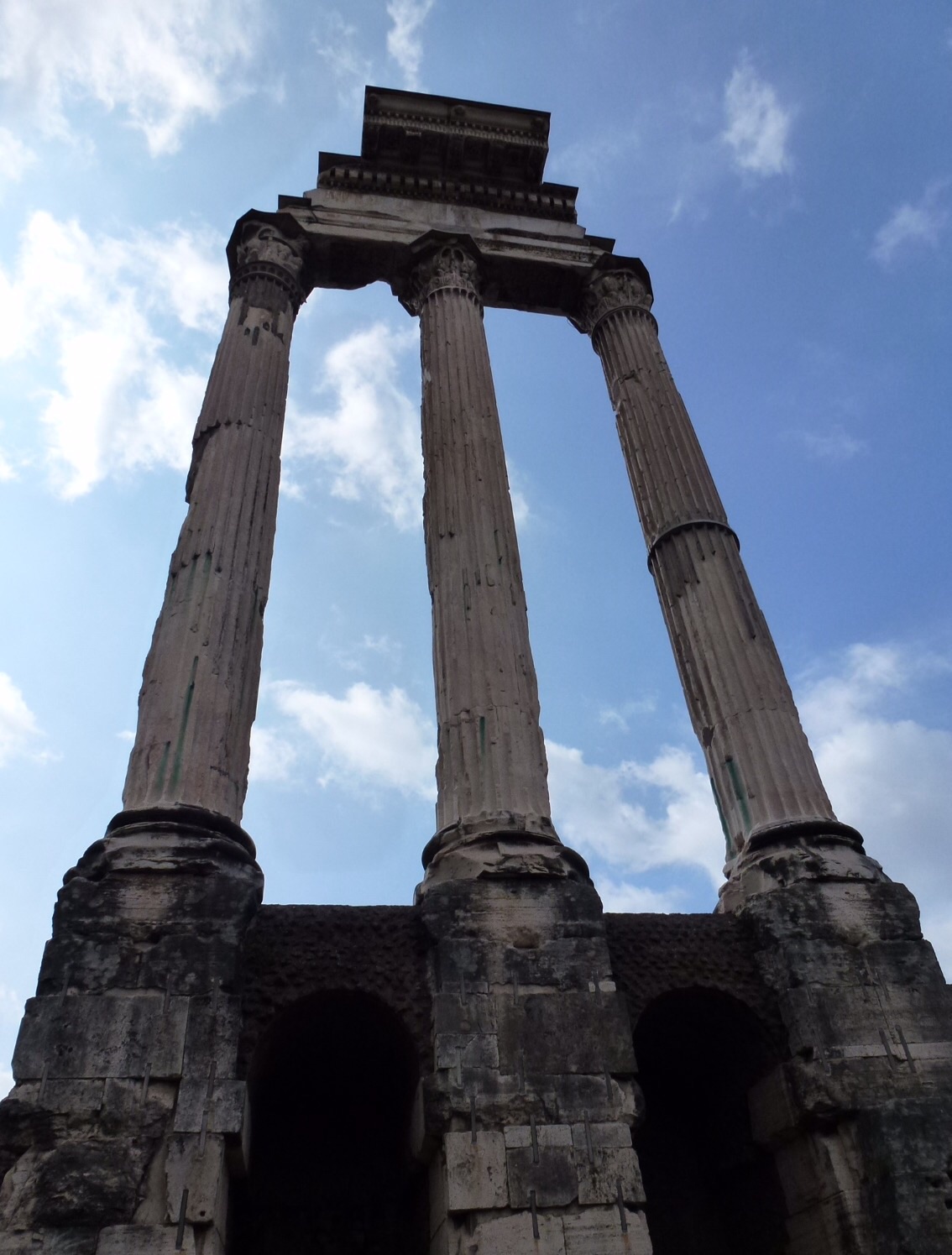
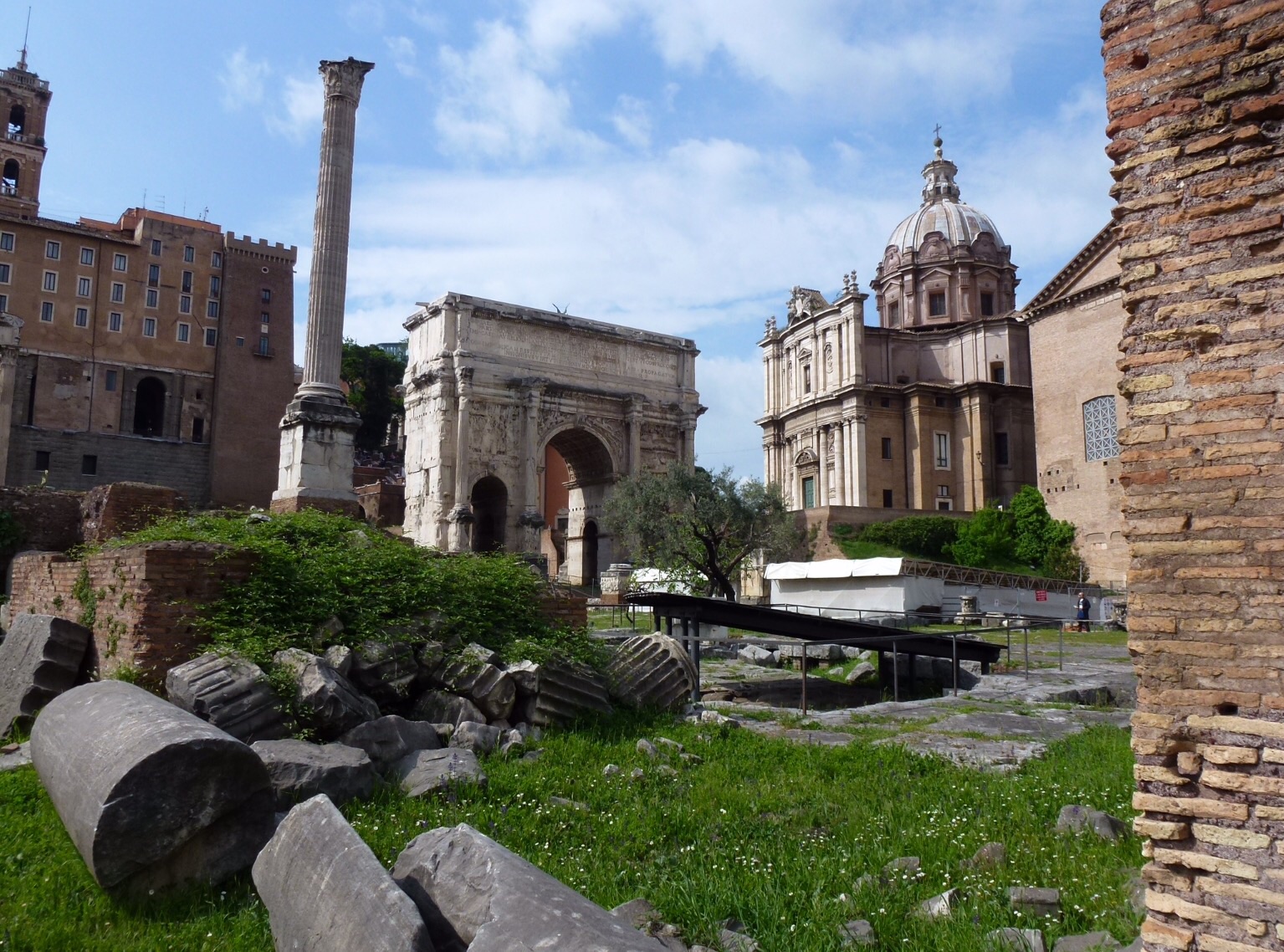
When we had had our fill of Palantine Hill, we followed one of the oldest roads that exist still in the original surface (now a fairly rough basalt boulder street, made difficult to walk on by tree roots, earthquakes and a vast amount of time). The road wends its way down from Palantine hill, past temples, basilicas, public works buildings, fountains, gardens and springs, towards the forum.image

The area is littered with marble column bases, laying out rectangular building blueprints and stray beautiful marble fragments left after robbing. Romans are a practical lot and when this area was abandoned (the aqueducts were breached, residents fled almost completely as siege after siege finally spelt an end of an empire), materials that were valuable (marble, bronze etc) became part of other building projects, reducing the cost of having to mill from scratch.image

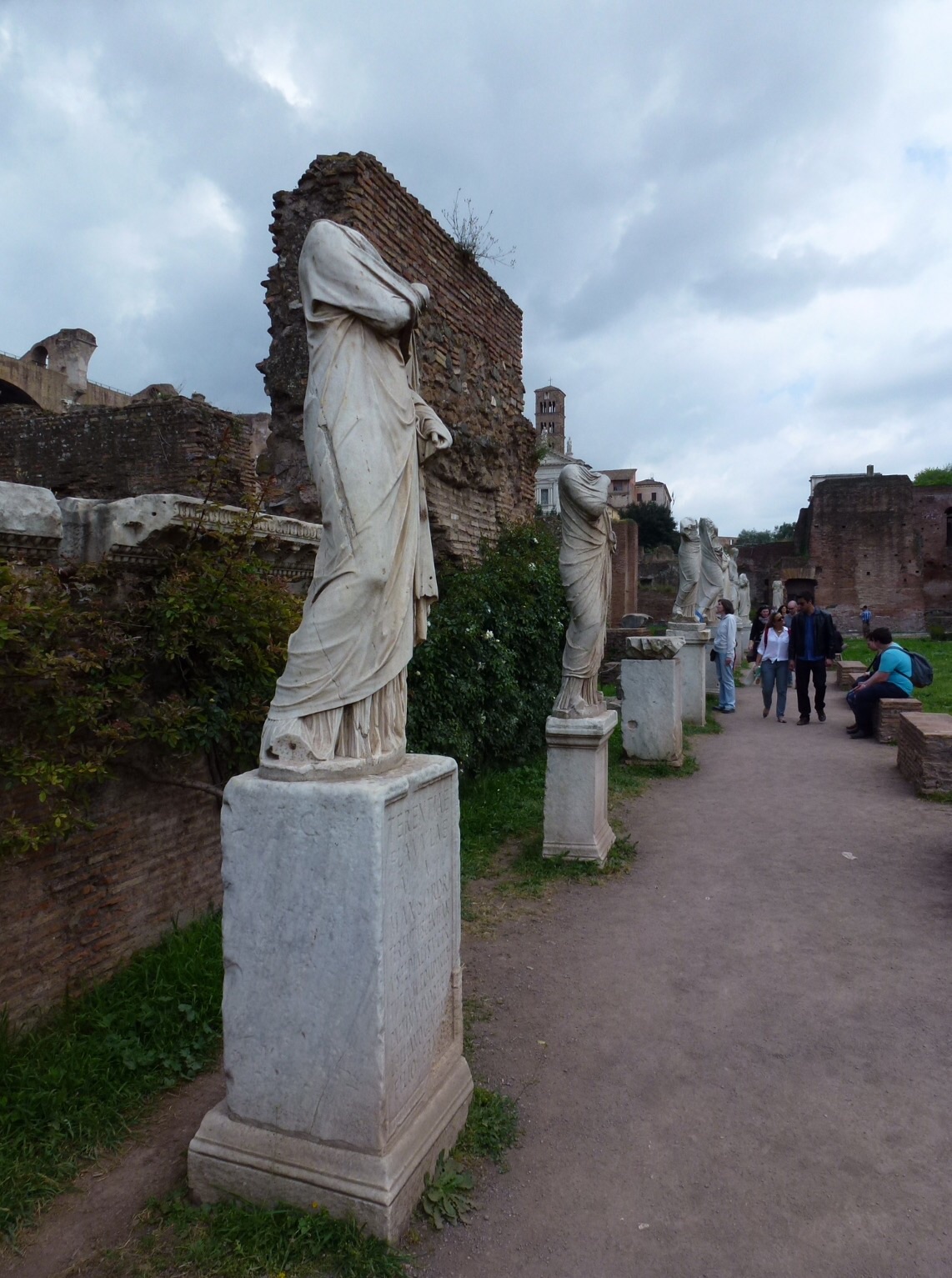
What was left was a confusing jumble of columns, carved marble decorations, arch fragments from once great basilicas and ancient annexes to more recent churches, Christian and pagan iconography, statues in various states of dismemberment and this jumble came from a really long time in history because the area was used for such a long time. I am not sure how you could better show it off as the combination of signage, audio guides and spoken tours made it a bewilderment of history amongst a microcosm of madness and excess.image

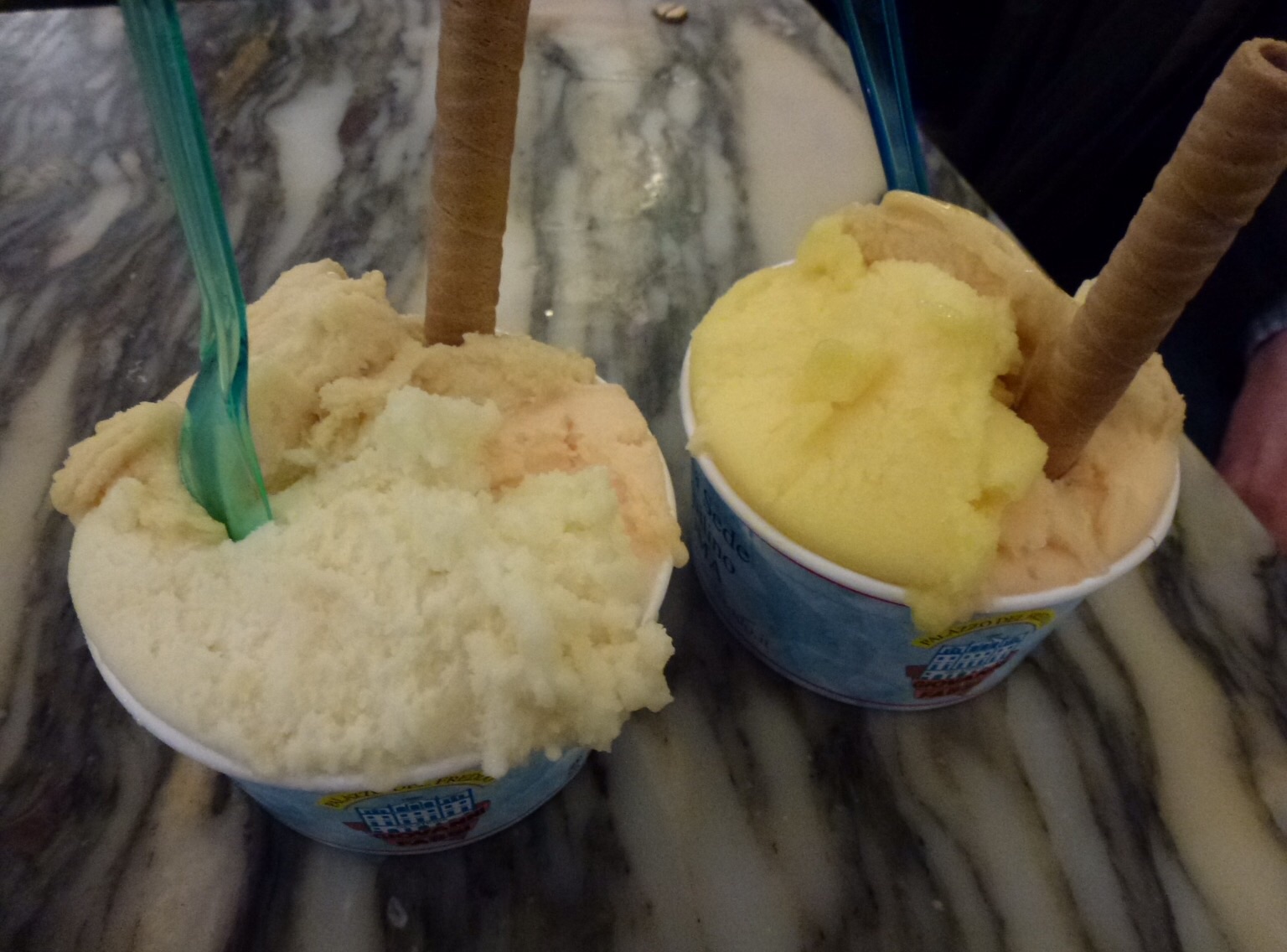
The area in the lower section deteriorated into a jumble of remains and column bases and our feet and legs were in worse shape. Walking on hard uneven stone is hard work, worse on our legs, knees and feet. We reached “ruin overload” or as we prefer to call it, we got “ruined” so decided to head for a restorative gelato at a niche gelato shop called ‘Fatamorgana’ that specialises in ‘odd’ flavour combinations, but our choices were nothing short of delicious, providing the rejuvenating fuel necessary to get home.image

A simple dinner of mushroom tortellini with a fresh tomato sauce, accompanied by some wine we had picked up the previous day was a perfect end to a ruinous day.image

Early to bed because we have a huge day tomorrow in Naples and beyond

Categories: Italy, travel | Leave a comment

Pisa (it’s just a tilt to the left) and on to Roma

imageAfter a lovely rest day in Lucca, we reluctantly packed, slept solidly and awoke for a dreaded transfer.image

We say dreaded because they are hard work – our suitcases are awkward up and down stairs, in and out of trains and we had a bit of that to do. We called a taxi and in broken italian managed to explain where we were and that we wanted to go to the train station.image

On time he arrived, helped us in the rain get the bags in and headed off. In nearly no time (or money) we were at the train station.image

image

image

We opted for a regional service to Pisa, they are cheap, reliable(ish) and we managed to purchase tickets from a machine so all was ok. I think we were probably rude in that we stacked our suitcases but there was no where really that offered an option. Arriving at Pisa Centrale we found “left luggage” and stowed both suitcases and the biggest backpack, opting to travel light to the Tower.image

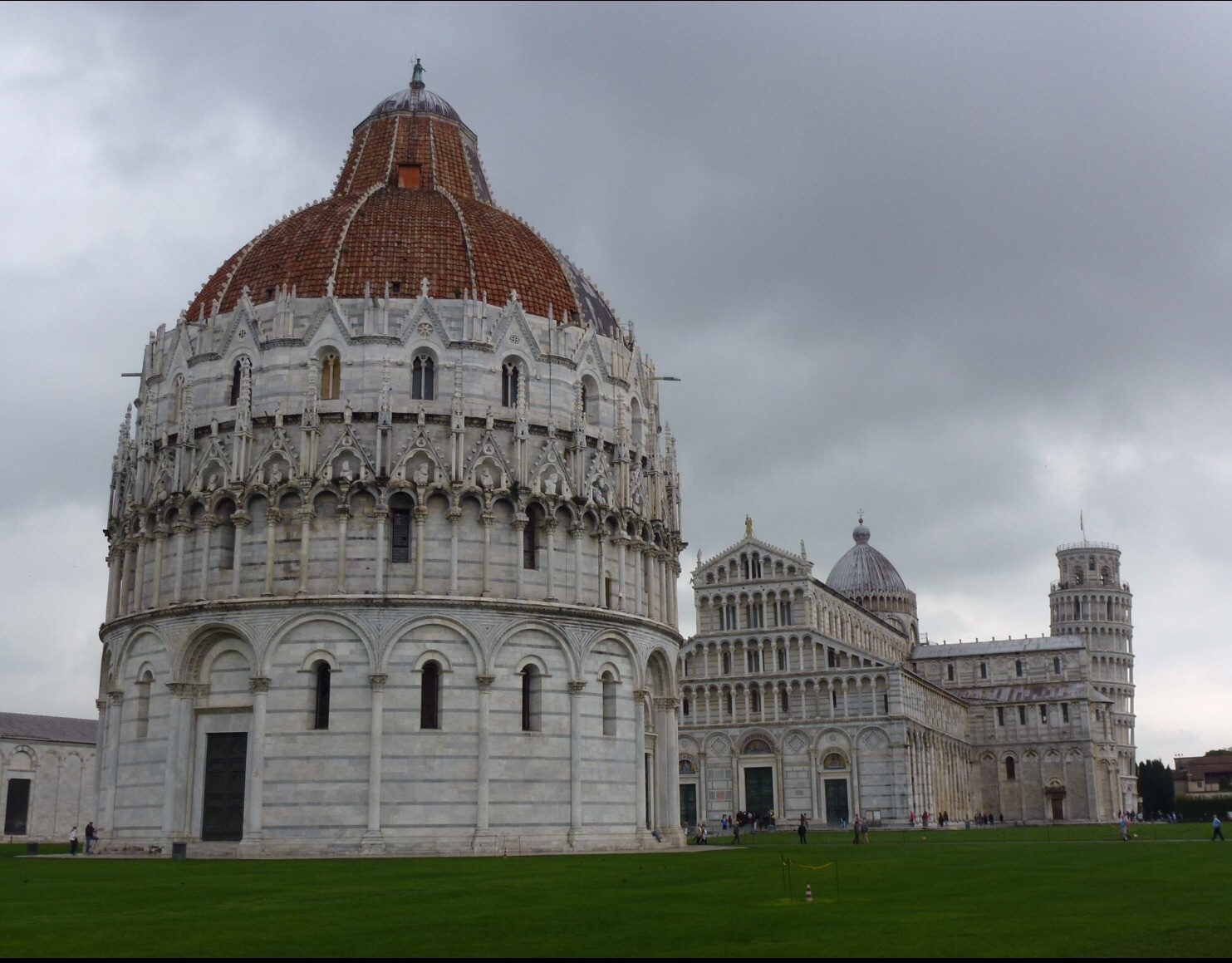
From the train station, we took an easy to find local bus to the site of the tower and began the ritual of taking photographs that each were more amazing than the next – you approach the tower by walking a piazza that starts at the Baptistry and right away something about the Baptistry seems not quite “right”.image

Pisa subsoil is very wet apparently, foundations are a problem and the lovely domed Baptistry has a slight lean on it when referenced by the adjacent cathedral which seems to have spread its weight a little more evenly over its foundations. The leaning side of the Baptistry has a lighter roof (zinc or lead) than the other side (terracotta)image

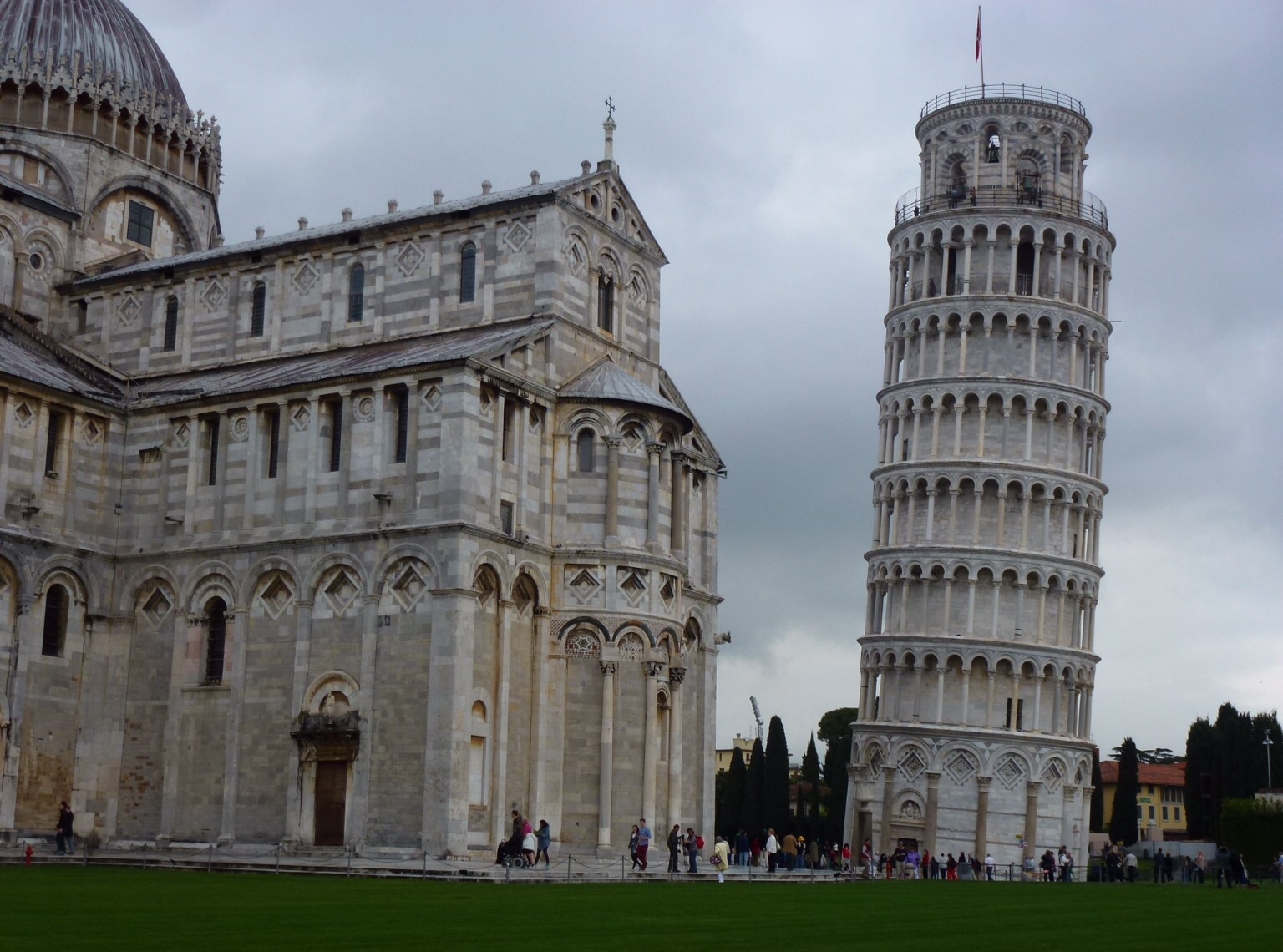
Walking further along the Tower, which is actually supposed to be just the bell tower for the Cathedral but has taken on a life of its own, pokes its head around the far end of the Cathedral. The closer you get the more eccentric the lean becomes and the more hilarious the tourists are also. Taking a photo trying to “hold up the tower” seems something we need to do. It is almost more entertaining watching people do it but we moved on towards the tower.

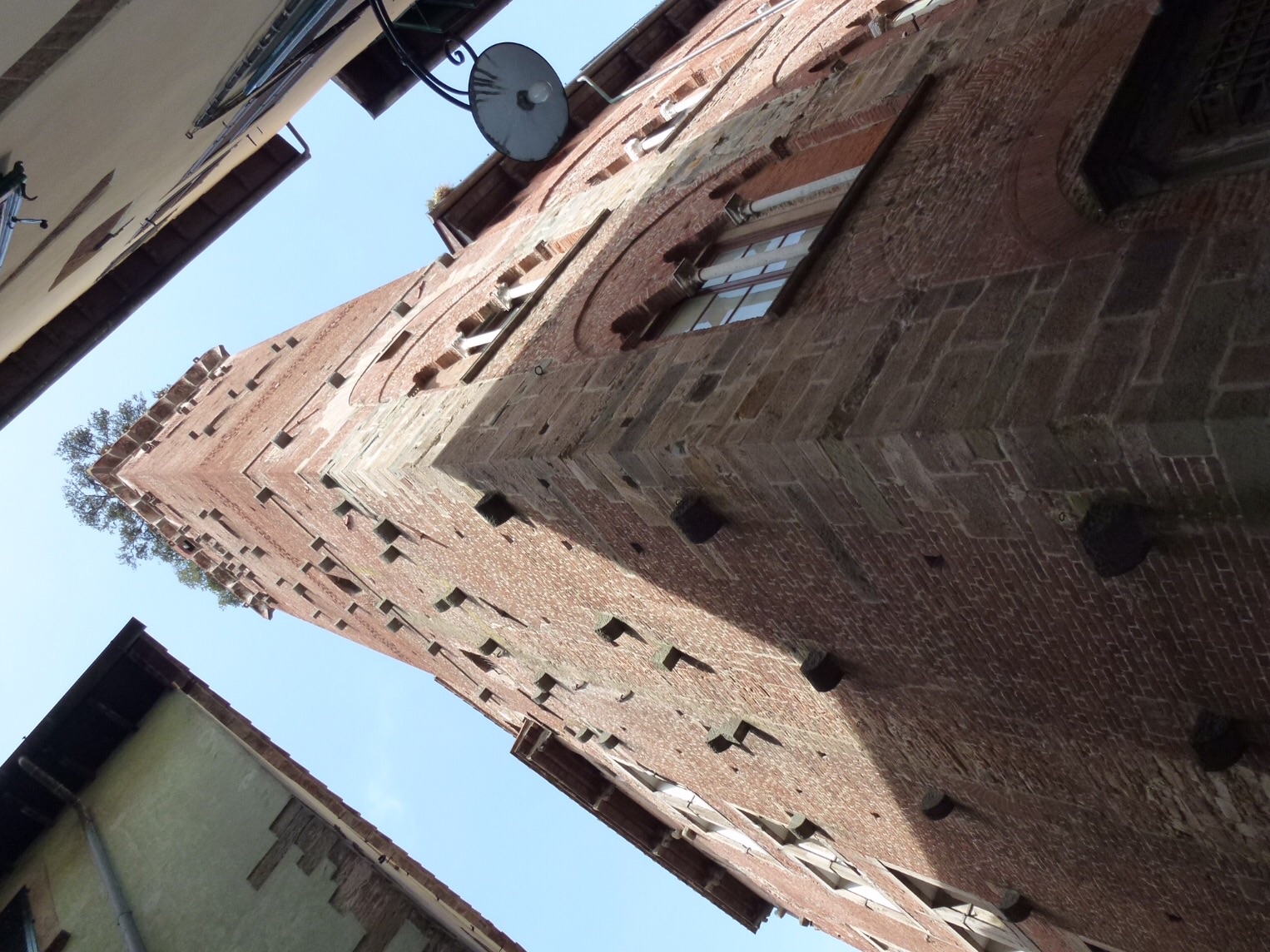
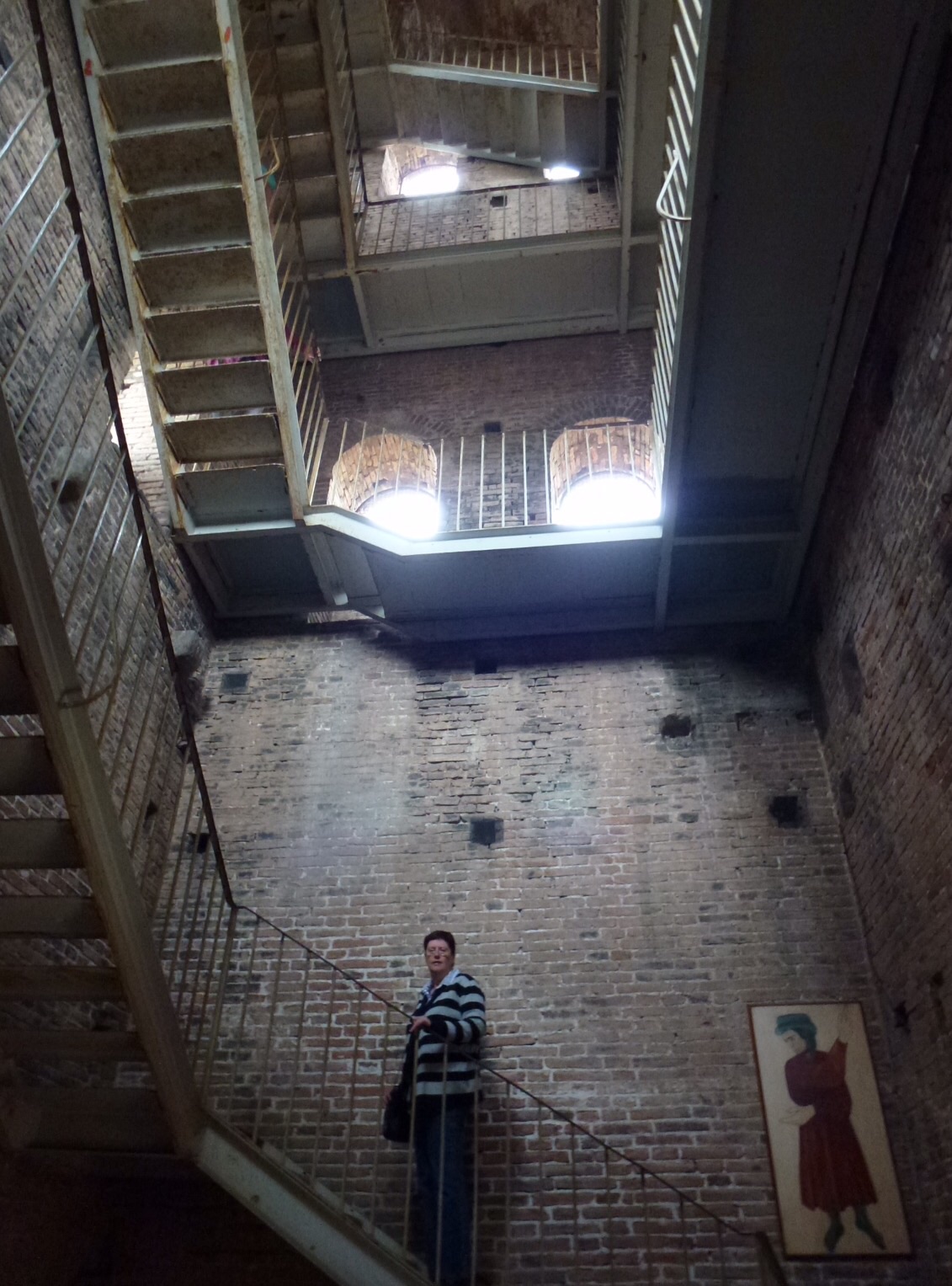
Originally we had decided not to climb. Since the year our legs broke, Jo has has an uncontrollable irrational fear of slippery surfaces and all research suggested the way up the tower was bannister-less marble. Given our recent escapades up towers of all shapes, sizes and difficulties, the 400 steps of the leaning tower seemed simple, so we headed off to buy tickets and stow our backpack (no bags allowed in the tower).

Managing to secure tickets that let us climb at 10, we headed off the a cafe for breakfast – deliciousa italian hot chocolate and jam-filled croissants. Suitably fortified, we girded our loins, joined the then short 10 o’clock climb line and waited as the sky lightened and the sun fought to come from behind the clouds. Although it had been raining that morning in Lucca, it had stopped by the time we reached Pisa and continued to fine up for the rest of the day.image

When our group was let in we were briefed on history of architect, design and phases of building. Apparently by the first few levels it had started to tilt, architects resigned citing the building an embarrassing mistake only to be resumed later. Adding the heavy bells (oddly the heaviest bells are on the lean side – madness) the tower was complete and continued to lean more eccentrically until it was closed as a hazard.

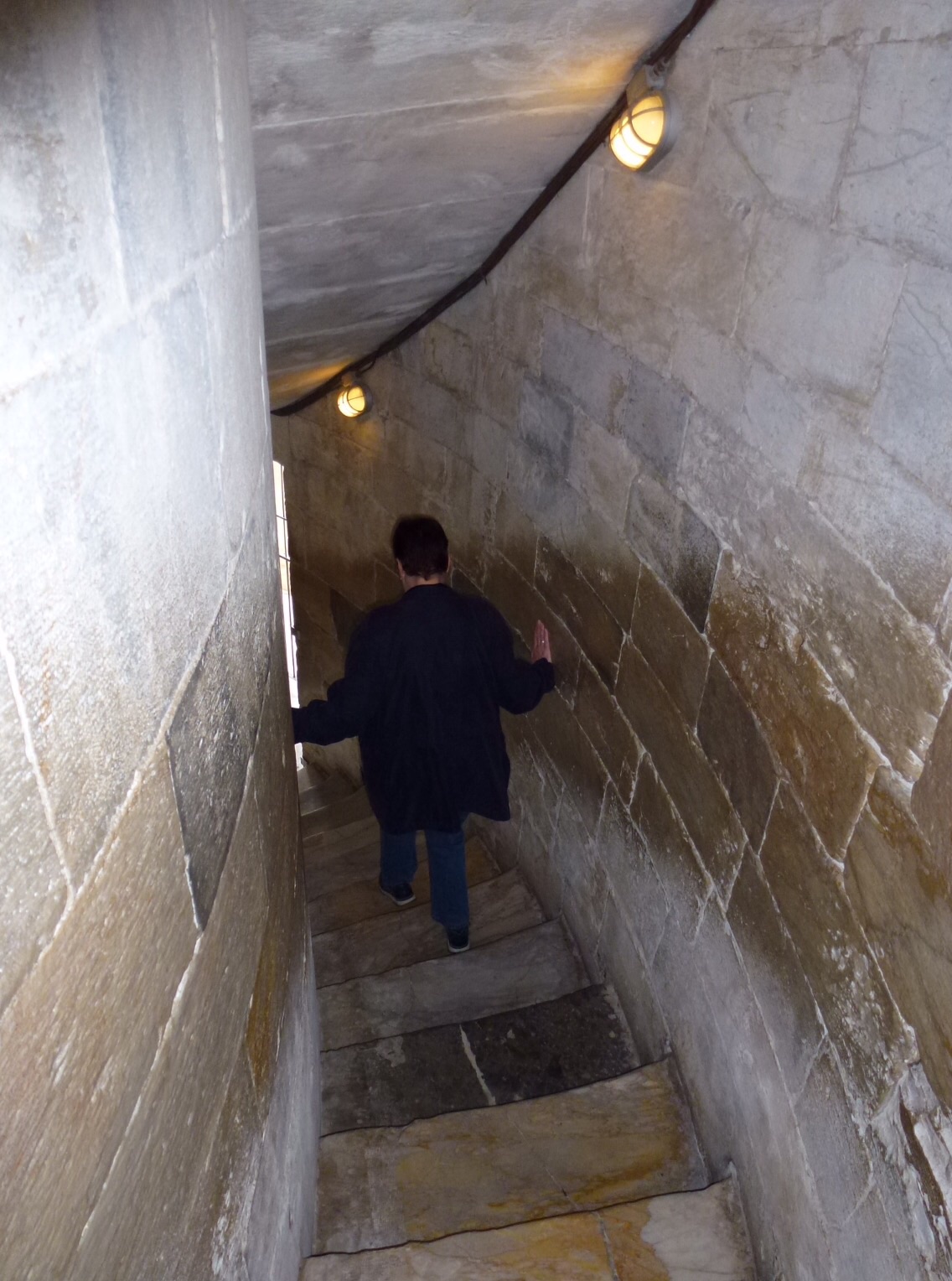
Relatively recently, structural engineers have slowed the towers lean, reworking the foundations but it is nuts and looks like it will fall over any moment. The tilt it so eccentric that when you climb the steps there are sections where although you are walking up steps, you are nearly getting lower, more obvious on the way down where down steps go uphill. It is a little twisty Turney and you get a little seasick as you climb the stairs that run the outside skin of the hollow tower.image

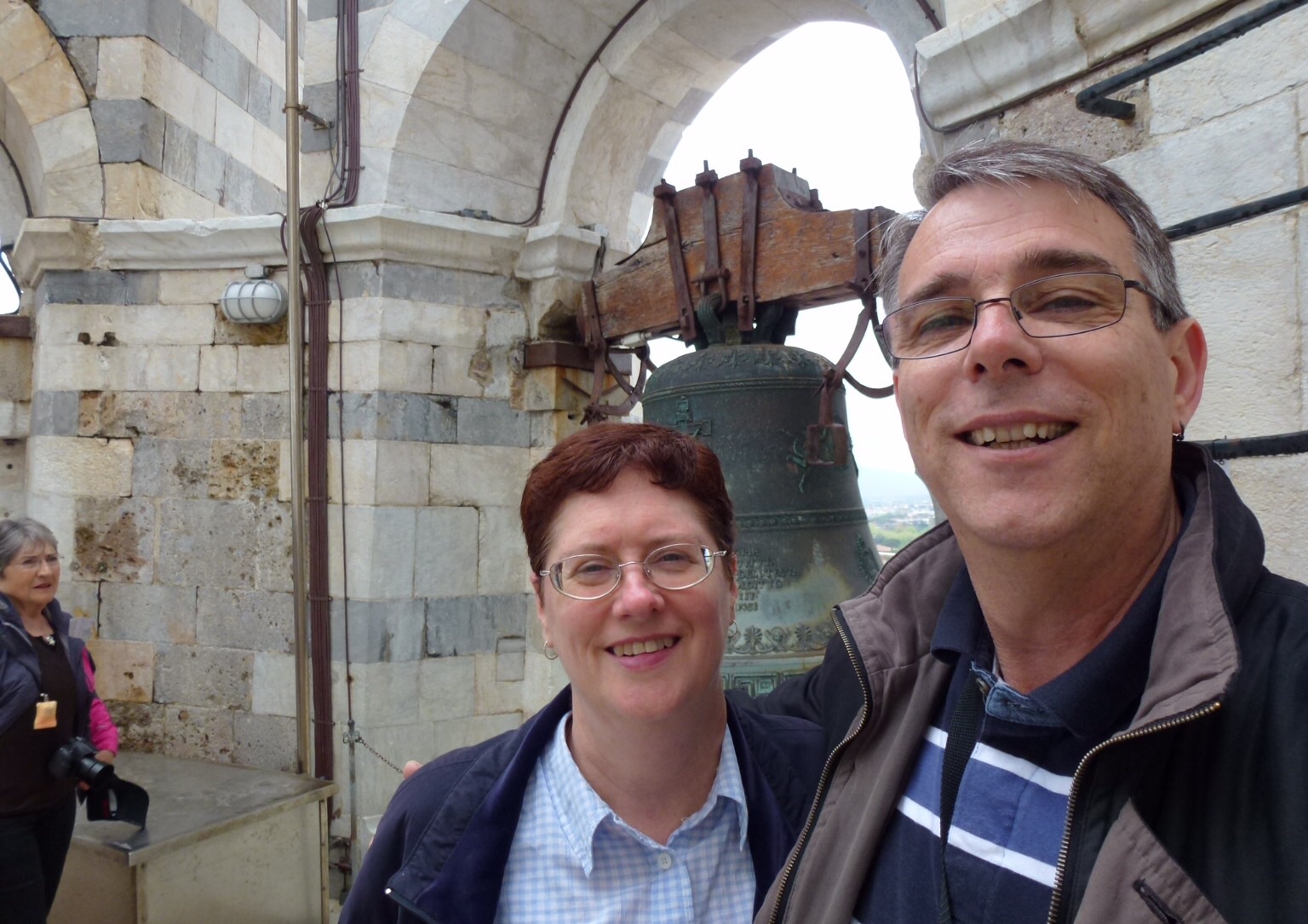
The view from the top is is wonderful, panoramas of Pisa, the people,on the ground look like models, all contorting while others photograph them helping to hold up,the tower.

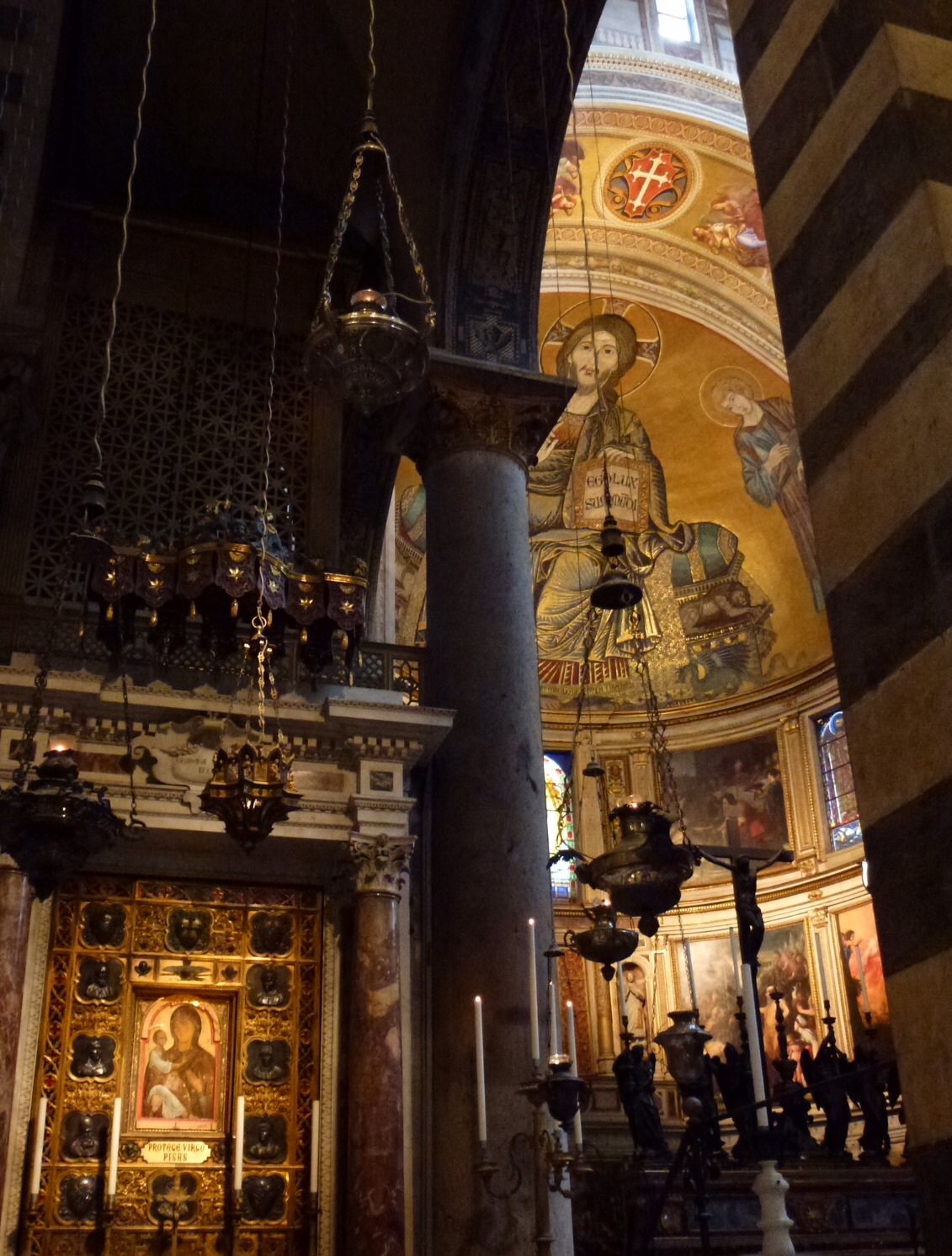
We visited the cathedral, a grand and beautifully decorated church and were once again reminded of how these old churches seem to dwarf people, their scale seems to render us unimportant. The roofs were richly decorated as were the altars, niches and other associated parts of a working church.image

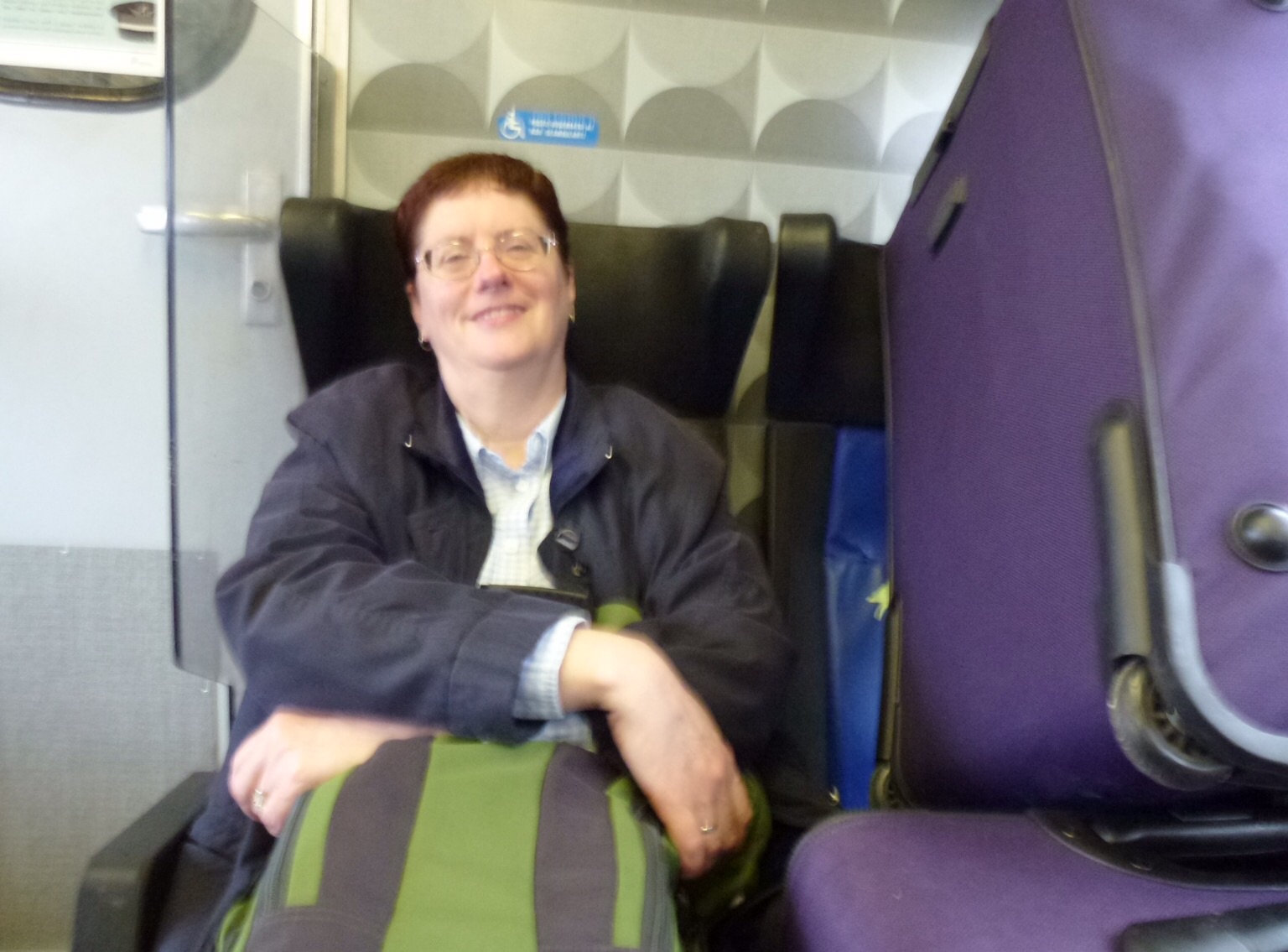
Returning by bus to the Pisa train station, we bought a warm drink (and got free wifi for doing that) then retrieved suitcases and found the correct platform for our train to Rome. Our experience of italian trains is that they arrive but so far never on time (retardo 10′ to ’25 meaning 10 to 25 minutes late). We has 2nd class tickets, heaved our bags aboard and collapsed into our seats for a 2ish hour journey to Roma. We both dozed, it is tiring being tourists when you want to,see lots and experience as much as you can in the time away.

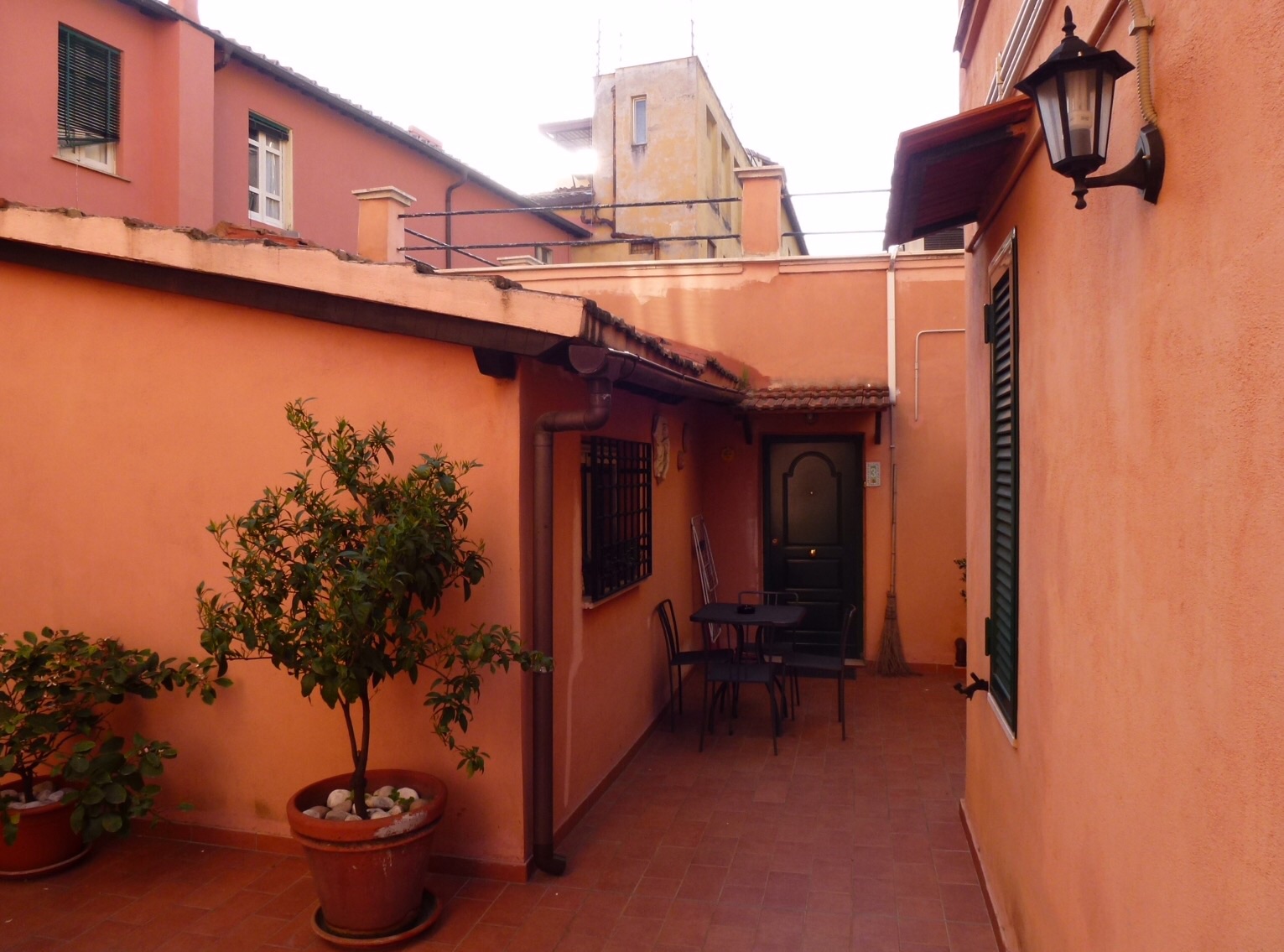
Arriving in the late afternoon in Rome, a taxi ride to our apartment, home for the next 4 nights. We were greeted by our host, shown around and given maps and local advice, then we set off in search of the supermarket for supplies and the makings for dinner. We had picked up a fantastic jar of pesto while on the Liguarian Coast and decided simply to toss that through some fresh egg pasta, a deliciousa dinner.image

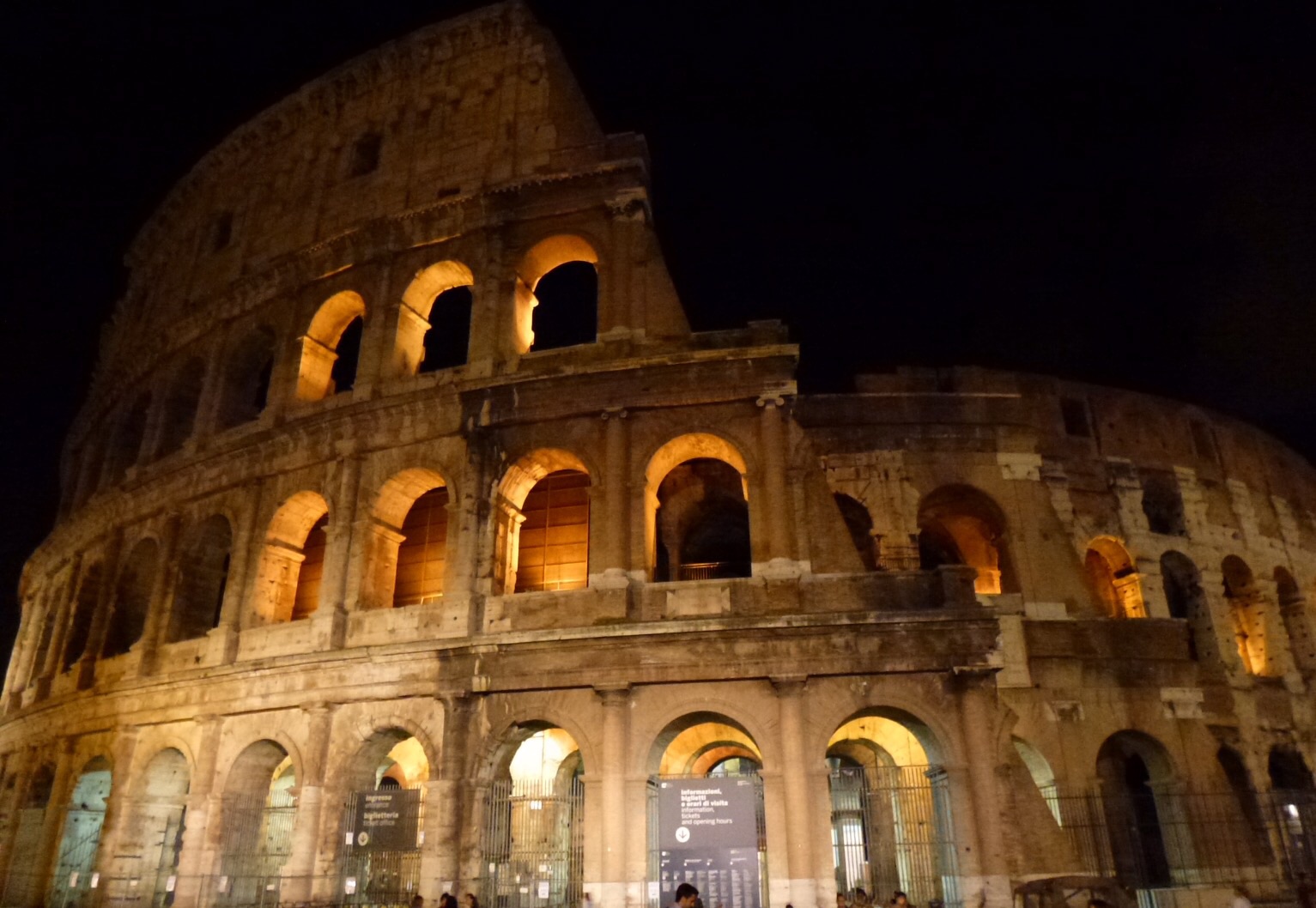
After dark we set off again, just for a walk around this section of Rome, first stop the Coloseum lit at night in very dramatic ways. We will tour the building as part of a tour we pre-purchased off the internet but seeing the scale and majesty of the building at night was breathtaking. image

We then made a pilgrimage to a gelataria for a frozen fix- properly made the fruit gelato here is simply delicious, with such variety in flavour we are continually spoilt for choice.image

Tomorrow we begin our touring of Ancient Rome – a couple of ruins exploring ancient ruins, we are looking forward to it.

Categories: Italy, travel | Leave a comment